 Back
BackNutrition: Linking Food and Health – Foundations and New Frontiers
Study Guide - Smart Notes
 Tailored notes based on your materials, expanded with key definitions, examples, and context.
Nutrition: Linking Food and Health
What Is Nutrition?
Nutrition is the scientific study of food, focusing on how food nourishes the body and influences health. It is a relatively new discipline that aims to support health and prevent or treat chronic diseases through research and evidence-based recommendations.
Key Areas of Study: Food consumption, digestion, absorption, storage, eating patterns, recommended food amounts, food safety, and the global food supply.
Nutrition Research: Focuses on supporting health and preventing chronic diseases.
How Does Nutrition Support Health?
Nutrition is a critical component of wellness, which is a multidimensional, active process involving choices that enhance life. Wellness includes physical, emotional, social, occupational, and spiritual health. Both nutrition and physical activity are essential for achieving optimal wellness.

Nutrition and Chronic Disease Prevention
Good nutrition can prevent nutrient-deficiency diseases (such as scurvy and pellagra) and plays a significant role in preventing chronic diseases like heart disease, stroke, and diabetes. Obesity is the primary link between poor nutrition and increased mortality.
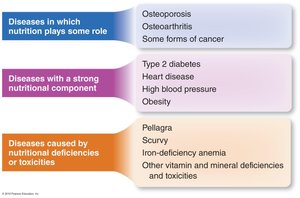
Diseases with a strong nutritional component: Type 2 diabetes, heart disease, high blood pressure, obesity.
Diseases in which nutrition plays some role: Osteoarthritis, osteoporosis, some cancers.
Diseases caused by nutritional deficiencies or toxicities: Pellagra, scurvy, iron-deficiency anemia, other vitamin and mineral deficiencies.
Leading Causes of Death in the United States
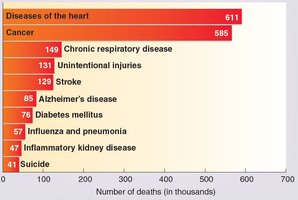
Many leading causes of death, such as heart disease, cancer, and diabetes, are influenced by nutrition and lifestyle choices.
Increase in Obesity Rates
Obesity rates in the United States have increased dramatically over recent decades, highlighting the importance of nutrition in public health.

Essential Nutrients and Their Functions
What Are Nutrients?
Nutrients are chemicals in foods that are critical to human growth and function. There are six groups of essential nutrients:
Carbohydrates
Fats and oils
Proteins
Vitamins
Minerals
Water
Macronutrients
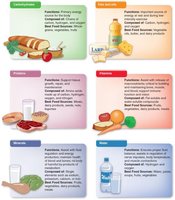
Macronutrients are required in large amounts and provide energy. They include carbohydrates, fats and oils, and proteins.
Carbohydrates: Main energy source, especially for the brain. Provide 4 kcal/g. Found in grains, vegetables, fruits, and legumes.
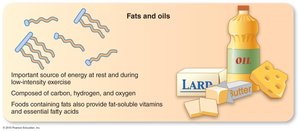
Fats and Oils: Energy source during rest and low-intensity exercise. Provide 9 kcal/g. Found in butter, margarine, vegetable oils.
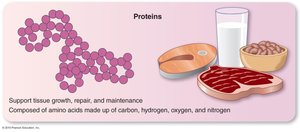
Proteins: Build and repair tissues, maintain bones, regulate metabolism, and fluid balance. Provide 4 kcal/g. Found in meats, dairy, seeds, nuts, legumes.

Micronutrients
Micronutrients are required in smaller amounts and do not provide energy but are essential for normal body functions. They include vitamins and minerals.
Vitamins: Organic molecules that regulate body processes. Classified as fat-soluble (A, D, E, K) or water-soluble (B vitamins, C).
Minerals: Inorganic substances needed for fluid regulation, energy production, bone and blood health, and elimination of metabolic by-products. Examples: sodium, calcium, iron, potassium, magnesium.
Water
Water is an inorganic nutrient vital for health and survival. It is involved in fluid balance, nutrient transport, nerve impulses, waste removal, muscle contractions, and body temperature regulation.
Determining Nutrient Needs
Dietary Reference Intakes (DRIs)
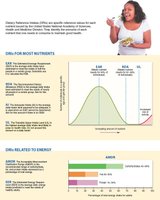
DRIs are a set of reference values used to plan and assess nutrient intakes of healthy people. They include:
Estimated Average Requirement (EAR): Average daily intake level to meet the needs of half the healthy people in a group.
Recommended Dietary Allowance (RDA): Average daily intake level to meet the needs of 97–98% of healthy people.
Adequate Intake (AI): Recommended average daily intake based on observed or experimentally determined estimates.
Tolerable Upper Intake Level (UL): Highest daily intake unlikely to cause adverse health effects.
Estimated Energy Requirement (EER): Average dietary energy intake to maintain energy balance.
Acceptable Macronutrient Distribution Range (AMDR): Range of intake for energy-yielding nutrients associated with reduced risk of chronic disease.
Nutrition Science and Research
The Scientific Method in Nutrition
Nutrition research uses the scientific method, which involves observation, hypothesis formation, experimentation, data analysis, and theory development. This process ensures that nutrition recommendations are evidence-based.

Types of Research Studies
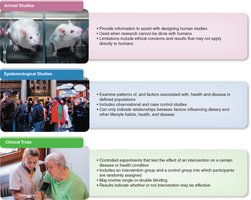
Animal Studies: Provide preliminary information but may not always apply to humans.
Epidemiological Studies: Observe patterns and associations in populations.
Clinical Trials: Test the effects of interventions in controlled settings, often using randomization and blinding to reduce bias.
Evaluating Nutrition-Related Claims
To assess the validity of nutrition information, consider the source, credentials, research quality, sample size, use of control/placebo groups, and whether the claims seem too good to be true. Reliable sources include government agencies, registered dietitians, and professional organizations.
New Frontiers in Nutrition: Nutrigenomics and Epigenetics
Nutrigenomics
Nutrigenomics studies the interactions among genes, the environment, and nutrition. It explores how foods and environmental factors can activate or silence genes, potentially reducing disease risk and enabling personalized nutrition.
The Human Genome and Microbiome
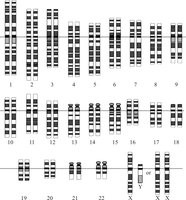
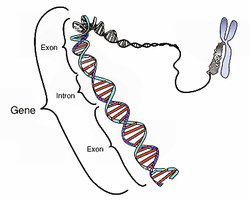
The human genome is the complete set of DNA in a cell, while the human microbiome consists of the genes of microorganisms living in the body. The interaction between these genetic elements and nutrition affects health, digestion, and disease risk.


The Epigenome
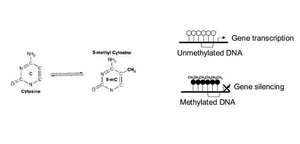
The epigenome consists of chemical modifications to DNA and histone proteins that regulate gene expression without altering the DNA sequence. Epigenetic mechanisms, such as DNA methylation, can turn genes on or off and are influenced by environmental factors, including nutrition.
Insights from Identical Twins
Studies of identical twins, who share the same genome, reveal that environmental factors and lifestyle choices can lead to differences in gene expression through epigenetic changes. This helps explain why identical twins can develop different health outcomes.


Epigenetic Influences and Disease
Epigenetic changes are essential for normal development but can also contribute to diseases such as cancer, chromosomal instability syndromes, and mental retardation if disrupted.
Fragile X Syndrome: A Genome/Epigenome Case Study
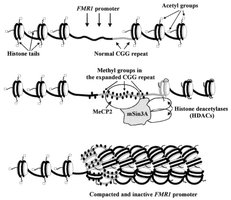
Fragile X syndrome is a leading cause of inherited mental disability, caused by an abnormal expansion of CGG repeats in the FMR1 gene. This leads to methylation of the gene's promoter region, silencing the gene and preventing production of the fragile X mental retardation protein. The absence of this protein results in the symptoms of Fragile X syndrome.
Normal FMR1 gene: 6–50 CGG repeats, unmethylated promoter, gene is active.
Fragile X syndrome: >200 CGG repeats, methylated promoter, gene is silenced.

Additional info: Understanding the relationship between nutrition, genetics, and epigenetics is a rapidly evolving field. Personalized nutrition based on genetic and epigenetic information may become a cornerstone of future health care and disease prevention strategies.
