 Back
BackProteins and Amino Acids: Structure, Function, and Dietary Importance
Study Guide - Smart Notes
 Tailored notes based on your materials, expanded with key definitions, examples, and context.
Proteins and Amino Acids
Introduction to Proteins
Proteins are essential macromolecules composed of amino acids, containing carbon, hydrogen, oxygen, and nitrogen. They play critical roles in the structure and function of all living cells and are required for growth, repair, and maintenance of body tissues.
Sources of Protein
Dietary proteins are derived from both animal and plant sources, each with distinct nutritional profiles.
Animal products: Includes meats (beef, poultry, pork, fish), eggs, and dairy. These are rich in B vitamins, iron, zinc, and calcium, but may be low in fiber and high in fat.
Plant products: Includes grains, nuts, and legumes. These are typically lower in iron, zinc, calcium, and B vitamins (in less absorbable forms), but high in fiber, phytochemicals, and unsaturated fats.
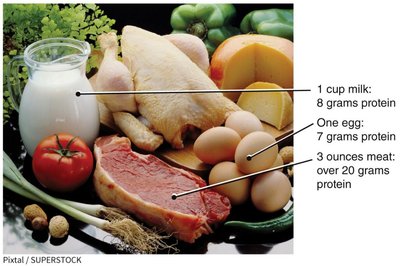
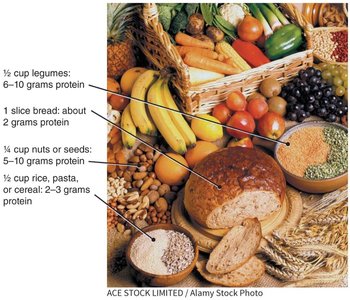
Protein Consumption Patterns
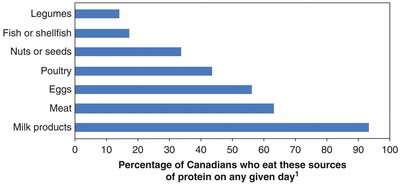
The percentage of Canadians consuming various protein sources varies, with milk products being the most commonly consumed, followed by meat, eggs, and poultry.
Amino Acids: Structure and Classification
Basic Structure of Amino Acids
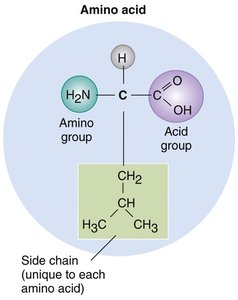
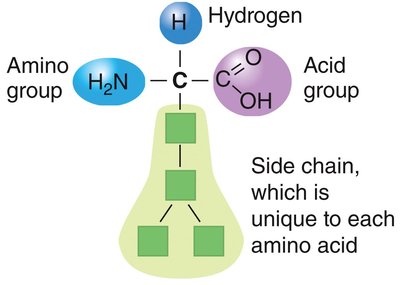
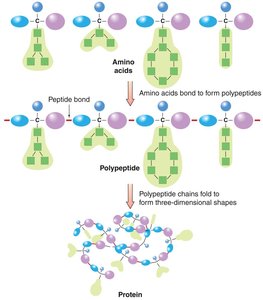
All amino acids share a common structure: a central carbon atom bonded to a hydrogen atom, an amino group (NH2), an acid group (COOH), and a unique side chain (R group) that determines the amino acid's properties.
Types of Amino Acids
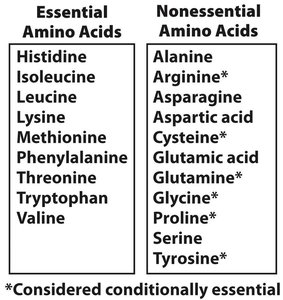
Essential amino acids: Nine amino acids that must be obtained from the diet because the body cannot synthesize them.
Nonessential amino acids: Eleven amino acids that the body can synthesize.
Conditionally essential amino acids: Nonessential amino acids that become essential under certain conditions, such as illness or genetic disorders (e.g., tyrosine in phenylketonuria).
Transamination
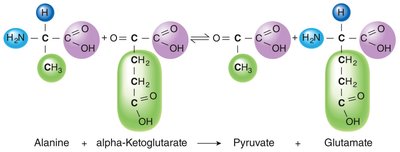
Transamination is the process by which the body synthesizes nonessential amino acids by transferring an amino group from one amino acid to a carbon compound.
Protein Structure and Formation
Peptide Bonds and Protein Chains
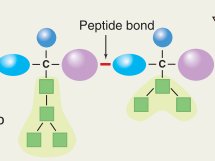
Amino acids are linked by peptide bonds to form dipeptides, tripeptides, and polypeptides. The sequence and number of amino acids determine the protein's structure and function.
Protein Shape and Function
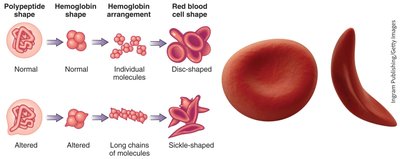
The three-dimensional shape of a protein is crucial for its function. For example, collagen's elongated shape provides strength to connective tissues, while hemoglobin's spherical shape is essential for oxygen transport in red blood cells. Abnormal protein folding can lead to diseases such as sickle cell anemia.
Protein Denaturation
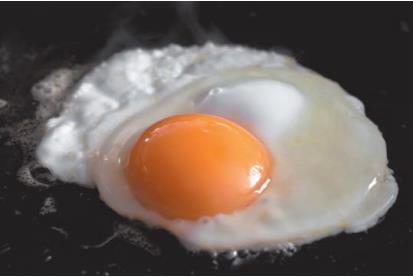
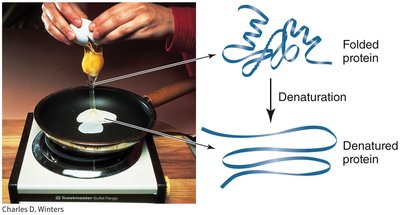
Denaturation is the alteration of a protein's structure due to heat, pH changes, or mechanical forces, resulting in loss of function. This process can be reversible or irreversible, as seen when cooking an egg.
Functions of Proteins in the Body
Structural and Contractile Proteins
Structural proteins: Collagen and keratin provide support to connective tissues, bones, teeth, tendons, ligaments, and arteries.
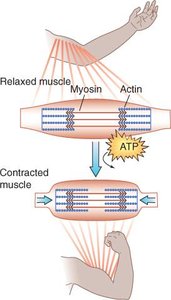
Contractile proteins: Actin and myosin are responsible for muscle contraction and movement.
Regulatory and Protective Functions
Acid-base balance: Proteins act as buffers to maintain pH homeostasis.
Immune function: Proteins form antibodies and are involved in blood clotting and skin protection.
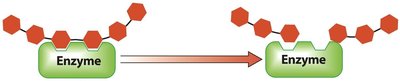
Hormones, enzymes, neurotransmitters: Many hormones and enzymes are proteins that regulate physiological processes.
Transport and Fluid Balance
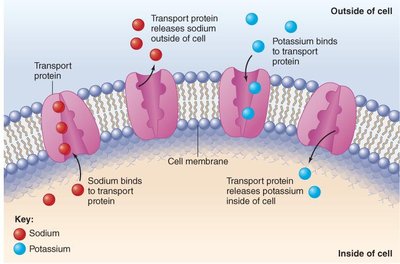
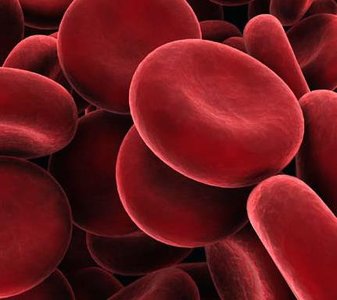
Transport proteins: Facilitate movement of substances across cell membranes and in the blood (e.g., hemoglobin transports oxygen).
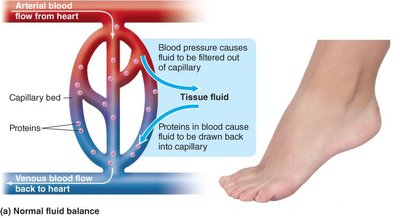
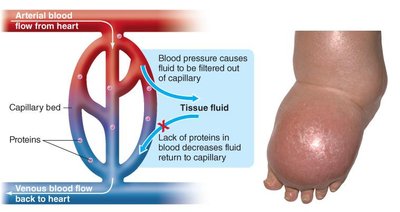
Fluid balance: Proteins help maintain fluid distribution between blood and tissues. Low blood protein can lead to edema (swelling).
Digestion and Absorption of Proteins
Protein Digestion
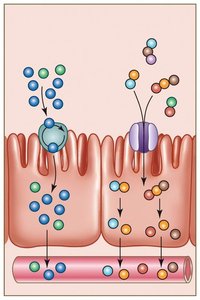
Proteins are broken down into single amino acids, dipeptides, and tripeptides during digestion. These are absorbed into the mucosal cells of the small intestine and transported to the liver.
Protein Synthesis and Turnover
Genetic Regulation of Protein Synthesis
Protein synthesis is regulated by gene expression. The availability of amino acids and the presence of specific signals (e.g., high iron levels) can turn genes on or off, affecting protein production.
Amino Acid Pool and Protein Turnover
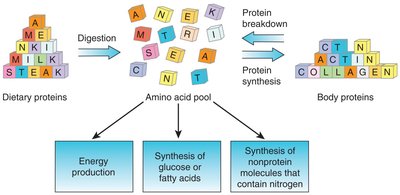
The amino acid pool consists of amino acids from dietary proteins and body protein breakdown. These amino acids are used for new protein synthesis, energy production, or the synthesis of nonprotein molecules containing nitrogen.
Protein and Energy Metabolism
Deamination and Energy Production
Before amino acids can be used for energy, their nitrogen-containing amino group is removed (deamination). The remaining carbon skeleton can be used to produce ATP, glucose, or fatty acids. Urea is the waste product formed from the removed nitrogen.
Protein-Energy Malnutrition (PEM)
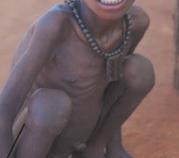
Kwashiorkor: Caused by protein deficiency, leading to edema, fatty liver, and changes in skin color. Fat stores are maintained.
Marasmus: Caused by deficiency of both protein and energy, resulting in severe wasting, loss of fat stores, and increased susceptibility to infection.

Protein Excess and Disorders
Health Risks of Excess Protein
Hydration and kidney function issues
Bone health concerns
Kidney stones
Increased risk of heart disease and cancer
Phenylketonuria (PKU)
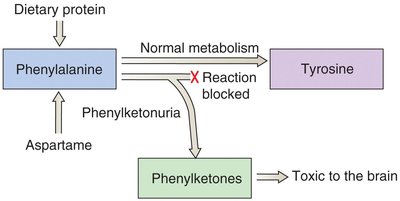
PKU is an inherited disorder where the body cannot metabolize phenylalanine, leading to toxic buildup of phenylketones. Aspartame, an artificial sweetener, contains phenylalanine and must be avoided by individuals with PKU.
Protein Allergies and Intolerances
Food Allergies and Intolerances
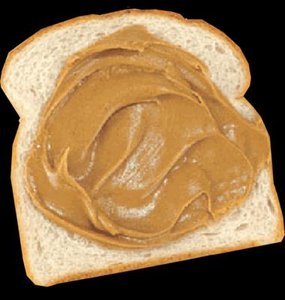
Food allergies: Immune response to specific food proteins, commonly milk, eggs, peanuts, tree nuts, wheat, soy, fish, and shellfish.
Food intolerances: Adverse reactions not involving the immune system.
Celiac disease: Autoimmune reaction to gluten, damaging the intestinal villi.
Food Labelling for Allergens
Allergens must be clearly identified on food labels, either in the ingredient list, in a parenthetical statement, or with the word "contains." Health Canada provides guidance for managing food allergies.
Protein Requirements and Quality
Nitrogen Balance
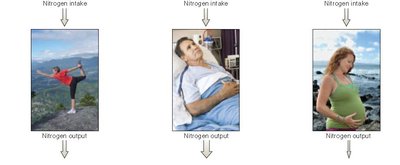
Nitrogen balance studies are used to determine protein needs. Balance is achieved when nitrogen intake equals nitrogen output. Positive balance occurs during growth, pregnancy, or recovery; negative balance occurs during illness or malnutrition.
Recommended Dietary Allowance (RDA) for Protein
Adults: 0.8 g protein per kg body weight per day
Acceptable Macronutrient Distribution Range (AMDR): 10–35% of total energy intake
Higher needs for infants, children, pregnant/lactating women, and during illness or injury
Protein Quality
Complete proteins: Contain all nine essential amino acids in adequate amounts (e.g., animal products, soy, quinoa).
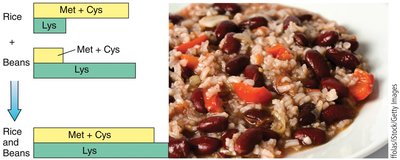
Incomplete proteins: Lack one or more essential amino acids (e.g., grains, beans, lentils, nuts, seeds, vegetables).
Complementary proteins: Combining different plant proteins (e.g., legumes and grains) to provide all essential amino acids.
Vegetarian and Vegan Diets
Meeting Protein Needs with Plant-Based Diets
Vegetarians and vegans can meet protein needs by consuming a variety of plant foods and understanding complementary proteins. Attention should be paid to nutrients at risk, such as vitamin B12, calcium, vitamin D, iron, zinc, and omega-3 fatty acids.
Nutrient at Risk | Sources in Vegan Diets |
|---|---|
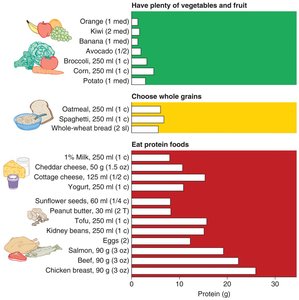
Protein | Soy-based products, legumes, seeds, nuts, grains, vegetables |
Vitamin B12 | Fortified products (soy beverages, cereals), nutritional yeast, supplements |
Calcium | Tofu (calcium-set), broccoli, kale, bok choy, legumes, fortified products |
Vitamin D | Sunshine, fortified products (soy beverages, margarine, orange juice) |
Iron | Legumes, tofu, dark leafy greens, dried fruit, whole grains, fortified cereals (absorption improved by vitamin C) |
Zinc | Whole grains, wheat germ, legumes, nuts, tofu, simulated meat products |
Omega-3 fatty acids | Canola oil, flaxseed, walnuts, sea vegetables, DHA-rich microalgae |
Types of Vegetarian Diets
Vegetarian: Excludes some animal products, usually meats.
Vegan: Excludes all animal products.
Lacto-ovo vegetarian: Includes dairy and eggs.
Pescatarian: Includes fish but excludes other meats.
