 Back
BackStudy Types, Evidence Hierarchy, and Research Interpretation in Nutrition
Study Guide - Smart Notes
 Tailored notes based on your materials, expanded with key definitions, examples, and context.
Q1. What are the main types of nutrition research studies, and how do they differ?
Background
Topic: Types of Nutrition Research Studies
This question is testing your understanding of the different research methods used in nutrition science, including how each type is conducted and what kind of evidence it provides.
Key Terms:
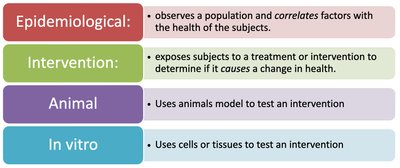
Epidemiological Study: Observes populations to find correlations between diet and health outcomes.
Intervention Study: Researchers assign a treatment to see if it causes a change in health.
Animal Study: Uses animals to test interventions that may not be ethical in humans.
In vitro Study: Uses cells or tissues outside a living organism to test interventions.
Step-by-Step Guidance
Identify the main goal of each study type (e.g., correlation vs. causation).
Consider what is being studied (whole populations, animals, cells, or direct interventions in humans).
Think about the strengths and limitations of each method (e.g., control over variables, relevance to humans, ethical concerns).
Match the study type to the research question being asked (e.g., is it about mechanisms, population trends, or testing a specific treatment?).
Try solving on your own before revealing the answer!
Q2. What is the correct order of the hierarchy of evidence in nutrition research, from lowest to highest?
Background
Topic: Hierarchy of Evidence
This question is testing your ability to recognize which types of studies provide the strongest evidence for making nutrition recommendations.
Key Terms:
In vitro and animal studies: Lowest level, foundational but not directly applicable to humans.
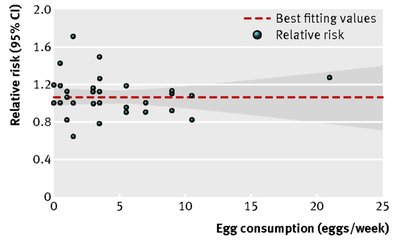
Observational studies: Show associations in populations.
Intervention studies: Test cause and effect in controlled settings.
Meta-analyses and systematic reviews: Combine results from multiple studies for the highest level of evidence.
Step-by-Step Guidance
List the study types from most basic (lab/animal) to most comprehensive (reviews/meta-analyses).
Think about which study types can show causation versus correlation.
Consider why systematic reviews and meta-analyses are at the top (they summarize many studies).
Arrange the types in order, starting with those that provide the least direct evidence for human health decisions.
Try solving on your own before revealing the answer!
Q3. A study published in the Journal of Nutrition analyzed data collected from more than 50,000 people aged 30 years and up. The study found that people who snacked less, avoided eating in the evening, and made breakfast their biggest meal had a lower body mass index than those who snacked more, ate later in the day, and ate big dinners. What type of study is this?
Background
Topic: Identifying Study Types
This question is testing your ability to classify a study based on its design—specifically, whether it is observational, experimental, or another type.
Key Terms:
Observational Study: Researchers observe and collect data without intervening or assigning treatments.
Intervention Study: Researchers assign a treatment or intervention to participants.
Systematic Review: Summarizes results from multiple studies.
Animal/In vitro Study: Uses animals or cells, not human populations.
Step-by-Step Guidance
Look for clues in the question: Are participants assigned a treatment, or is data simply collected?
Determine if the study is on humans, animals, or cells.
Decide if the study is summarizing other studies (review) or collecting new data.
Match the description to the correct study type based on these clues.
Try solving on your own before revealing the answer!
Q4. In the Journal of Nutrition study, what is the relationship between less snacking and lower BMI?
Background
Topic: Correlation vs. Causation
This question is testing your understanding of the difference between correlation (association) and causation (one thing directly causes another).
Key Terms:
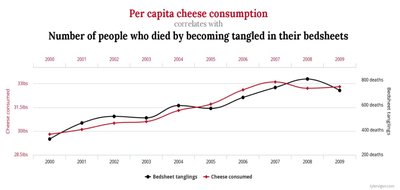
Correlation: Two variables are related, but one does not necessarily cause the other.
Causation: One variable directly causes a change in another.
Step-by-Step Guidance
Consider whether the study design allows for determining cause and effect, or just association.
Recall that observational studies can only show correlation, not causation.
Think about what additional evidence would be needed to show causation.
Try solving on your own before revealing the answer!
Q5. In the Journal of Nutrition study, other factors such as physical activity, sleep, socioeconomic status, or stress might also explain the observed results. What are these factors called?
Background
Topic: Confounding Factors
This question is testing your understanding of variables that can influence the results of a study, making it harder to determine the true relationship between the variables of interest.
Key Terms:
Confounding Factors: Variables that are related to both the exposure and the outcome, potentially distorting the observed relationship.
Step-by-Step Guidance
Identify what other variables could influence both the exposure (snacking) and the outcome (BMI).
Recall the definition of a confounding factor in research.
Consider why controlling for confounders is important in study design.
Try solving on your own before revealing the answer!
Q6. A 2017 study tested sugars found in human breast milk on monkey kidney epithelial cells infected with rotavirus. The sugars reduced the infectivity of rotavirus, leading to speculation that they might be a beneficial addition to infant formula. What type of study is this?
Background
Topic: Identifying Study Types (Lab-based)
This question is testing your ability to recognize when a study is conducted outside a living organism (in vitro), as opposed to in animals or humans.

Key Terms:
In vitro study: Conducted on cells or tissues outside a living organism.
Animal study: Conducted in living animals.
Intervention/Observational study: Conducted in humans.
Step-by-Step Guidance
Identify the subjects of the study (cells, animals, or humans).
Determine if the experiment was done in a living organism or in a controlled lab environment.
Match the description to the correct study type.
Try solving on your own before revealing the answer!
Q7. Based on the results of the breast milk study, should formula companies start adding human milk sugars to infant formula right away?
Background
Topic: Application of Research Findings
This question is testing your understanding of the limitations of in vitro studies and the need for further research before making public health recommendations.
Key Terms:
Translational research: Moving findings from the lab to clinical or public health practice.
Evidence hierarchy: Recognizing that in vitro findings need confirmation in animal and human studies before changing recommendations.
Step-by-Step Guidance
Consider the limitations of in vitro studies (e.g., results may not translate directly to humans).
Think about the steps needed before a finding can be applied to public health (animal studies, human trials, safety testing).
Decide if the evidence is strong enough to warrant immediate changes to infant formula.
Try solving on your own before revealing the answer!
