 Back
BackWeight Management and Energy Balance: Study Notes for Nutrition Students
Study Guide - Smart Notes
 Tailored notes based on your materials, expanded with key definitions, examples, and context.
Weight Management and Energy Balance
What Is a Healthy Weight and Why Is Maintaining It Important?
A healthy weight is defined as a body weight relative to height that does not increase the risk of developing weight-related health problems or diseases. Weight management involves maintaining weight within a healthy range, which is crucial for reducing the risk of chronic diseases and promoting overall well-being.
Overweight: 10 to 15 pounds more than healthy weight; increases risk for hypertension, heart disease, type 2 diabetes, and more.
Obesity: 25 to 40 pounds more than healthy weight; classified as a disease and associated with higher risk of premature death.
Underweight: Weighing too little for height; increases risk for osteoporosis, nutrient deficiencies, and weakened immune function.
Losing 5–10% of body weight can significantly improve health markers such as blood pressure and cholesterol.
How Do You Know If You're at a Healthy Weight?
Several methods are used to assess whether an individual is at a healthy weight, including BMI, body fat percentage, and waist circumference.
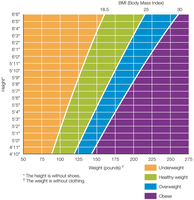
Body Mass Index (BMI): A screening tool that relates weight to height. BMI ≥ 25 is considered overweight, ≥ 30 is obese, and < 18.5 is underweight. Note that BMI does not directly measure body fat percentage.
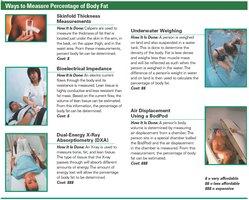
Body Fat Percentage: Healthy adult males (20–49 years): 16–21%; females: 22–26%. Methods to measure include skinfold thickness, bioelectrical impedance, underwater weighing, and DEXA.
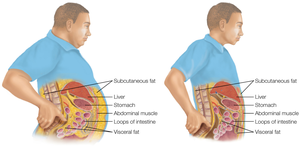
Fat Distribution: Central (visceral) obesity increases risk for heart disease and diabetes more than subcutaneous fat.
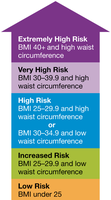
Waist Circumference: High risk if > 35 inches (women) or > 40 inches (men).

Risk Classification: Combined BMI and waist circumference are used to assess health risk.
What Is Energy Balance and What Determines Energy Needs?
Energy balance is the relationship between calories consumed and calories expended. Maintaining energy balance is essential for weight maintenance, while imbalances lead to weight gain or loss.
Positive energy balance: More calories consumed than expended (weight gain).
Negative energy balance: More calories expended than consumed (weight loss).
Energy needs: Determined by basal metabolism, thermic effect of food, and physical activity.

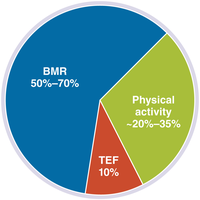
Basal Metabolic Rate (BMR): Minimum energy required for basic physiological functions; accounts for ~60% of total energy needs.
Thermic Effect of Food (TEF): Energy used to digest, absorb, and process food (~10% of calories consumed).
Physical Activity: Varies widely; can be less than half of BMR in sedentary individuals or up to twice BMR in athletes.
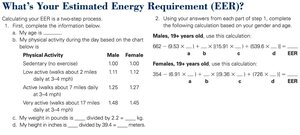
Estimated Energy Requirement (EER): Calculated based on age, gender, height, weight, and activity level.
Energy Imbalances and Their Effects
Long-term energy imbalances lead to changes in body weight and composition.
Weight Loss: Occurs when calorie intake is reduced; body uses glycogen, fat, and eventually protein for energy.
Weight Gain: Excess calories are stored as fat; the body has an unlimited capacity to store fat.
Factors That Affect Body Weight
Body weight is influenced by a combination of physiological, genetic, environmental, and behavioral factors.
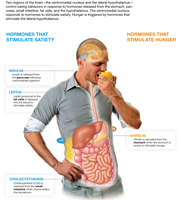
Hunger vs. Appetite: Hunger is a physiological need; appetite is a psychological desire for food. Satiety is the feeling of fullness that determines the interval between meals.
Hormonal Regulation: Ghrelin (increases hunger), leptin (decreases hunger), cholecystokinin, and insulin play roles in hunger and satiety regulation.
Genetics: Family history increases risk; identical twin studies confirm genetic influence. "Set point" theory suggests the body resists changes in weight.
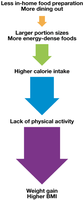
Environment: Readily available, energy-dense foods and sedentary lifestyles contribute to weight gain. Dining out and larger portion sizes are associated with higher BMI.
How Can You Lose Weight Healthfully?
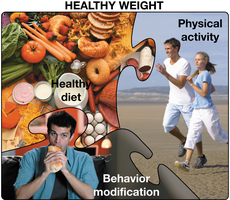
Healthy weight loss involves gradual, sustainable changes in diet, physical activity, and behavior.
Recommended Rate: Aim to lose about 10% of body weight over 6 months (0.5–1 lb/week).
Caloric Deficit: 3,500 calorie deficit needed to lose 1 pound of body fat.
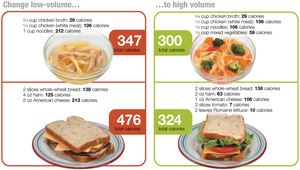
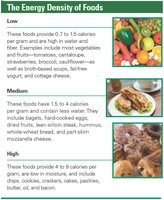
Dietary Strategies: Increase intake of vegetables, fruits, and fiber; include some protein and healthy fats for satiety; choose lean proteins and unsaturated fats.
Physical Activity: At least 45 minutes/day of moderate-intensity activity; aim for 10,000 steps/day.
Behavior Modification: Keep a food log, manage environmental cues, and address emotional eating.
How Can You Maintain Weight Loss?
Maintaining weight loss requires ongoing commitment to healthy habits established during weight loss.
Strategies: Monitor calorie intake, eat breakfast, maintain regular meal patterns, weigh yourself routinely, and stay physically active (e.g., walking 4 miles/day).
Energy Gap: After weight loss, fewer calories are needed to maintain the new weight. Physical activity helps close this gap more easily than further reducing caloric intake.
How Can You Gain Weight Healthfully?
For underweight individuals, healthy weight gain involves increasing calorie intake with nutrient-dense foods and snacks.
Caloric Surplus: Add at least 500 calories/day to gain about 1 pound/week.
Food Choices: Select more energy-dense but nutritious foods (e.g., waffles instead of toast, coleslaw instead of cabbage).
Frequent Meals: Incorporate healthy snacks throughout the day.
Disordered Eating and Eating Disorders
Disordered eating includes abnormal and potentially harmful eating behaviors that do not meet the criteria for specific eating disorders. Eating disorders are psychological illnesses with specific diagnostic criteria.
Anorexia Nervosa: Severe calorie restriction, intense fear of weight gain, distorted body image; risks include electrolyte imbalance, heart issues, osteoporosis.
Bulimia Nervosa: Cycles of binge eating and purging; risks include electrolyte imbalance, dental problems, and gastrointestinal damage.
Binge Eating Disorder: Compulsive overeating without purging; associated with obesity-related health risks.
Other Disorders: ARFID, pica, OSFED, orthorexia, night eating syndrome.
Warning Signs: Hair loss, sudden weight changes, avoidance of social eating, obsessive calorie counting, denial of problem.
Treatment: Multidisciplinary approach involving psychological, medical, and nutritional support. Early intervention is most effective.
Body Image and Positive Strategies
Body image refers to how individuals perceive and believe about their physical appearance. Maintaining a positive body image involves accepting genetic and age-related factors, avoiding unhealthy comparisons, and focusing on overall well-being rather than appearance alone.
