 Back
BackWeight Management, Energy Balance, and Body Composition: Study Notes for Nutrition Students
Study Guide - Smart Notes
 Tailored notes based on your materials, expanded with key definitions, examples, and context.
Weight Management and Energy Balance
Energy Balance Concepts
Energy balance is the relationship between energy intake (from food and beverages) and energy expenditure (from basal metabolism, physical activity, and the thermic effect of food). Maintaining energy balance is crucial for body weight regulation.
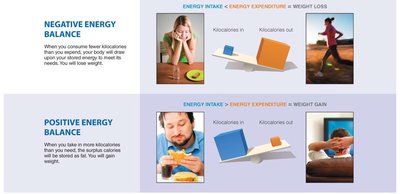
Energy Balance: Occurs when energy intake equals energy expenditure, resulting in stable body weight.
Positive Energy Balance: Energy intake exceeds energy expenditure, leading to weight gain.
Negative Energy Balance: Energy expenditure exceeds energy intake, resulting in weight loss.
Applications: Weight management strategies often focus on achieving a negative energy balance for weight loss or a positive energy balance for weight gain.
Factors Contributing to Total Daily Energy Expenditure (TDEE)
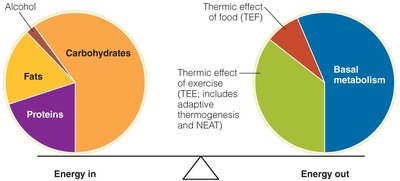
Total daily energy expenditure (TDEE) is the sum of all calories burned by the body in a day. It includes basal metabolic rate, physical activity, and the thermic effect of food.
Basal Metabolic Rate (BMR): The energy required for basic physiological functions at rest (e.g., breathing, circulation).
Resting Metabolic Rate (RMR): Similar to BMR but measured under less strict conditions; often used in practice.
Physical Activity: Includes both exercise (thermic effect of exercise, TEE) and non-exercise activity thermogenesis (NEAT).
Thermic Effect of Food (TEF): The energy used to digest, absorb, and metabolize food nutrients. Protein-rich meals have a higher TEF than carbohydrate- or fat-rich meals.
Estimating Energy Expenditure
Energy expenditure can be measured directly (calorimetry) or estimated using predictive equations based on age, gender, height, weight, and activity level. The Estimated Energy Requirement (EER) is commonly used.
Physical Activity Factors: Used to adjust RMR for different activity levels.
Physical Activity Level | Men | Women |
|---|---|---|
Sedentary | 1.00 | 1.00 |
Low activity | 1.11 | 1.12 |
Active | 1.25 | 1.27 |
Very active | 1.45 | 1.48 |
Body Composition and Assessment
Understanding Body Composition
Body composition refers to the proportion of fat tissue to lean body mass (muscle, bone, organs). It is a key indicator of health risk.
Essential Fat: Necessary for normal body function (3% in men, 12% in women).
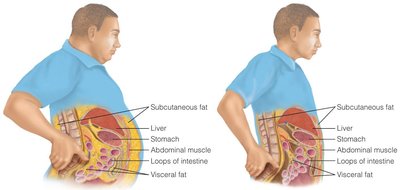
Stored Fat: Includes subcutaneous (under the skin) and visceral (around organs) fat, which provide insulation and protection.
Fat Distribution Patterns
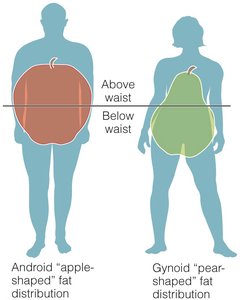
Fat distribution affects health risks. Android (apple-shaped) obesity is associated with higher risk of chronic diseases compared to gynoid (pear-shaped) obesity.
Android Obesity: Excess visceral fat in the abdomen; increases risk for heart disease, diabetes, and hypertension.
Gynoid Obesity: Excess fat around the thighs and buttocks; more common in women.
Body Composition Reference Standards
Men | Women | |
|---|---|---|
Essential fat | 3% | 12% |
Desirable fatness for good health | 10–20% | 16–26% |
Overfat | >25% | >30% |
Methods of Assessing Body Composition
Body composition is assessed indirectly using various methods:
Underwater weighing
Air displacement
DEXA (bone and body scan)
Bioelectrical impedance
Skinfold calipers
Body Mass Index (BMI): Calculated as weight (kg) / height (m)2; does not account for muscle mass.
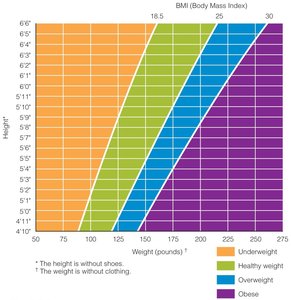
BMI and Waist Circumference for Health Risk
BMI and waist circumference are used together to assess health risks associated with body weight.
BMI Categories: Underweight (<18.5), Normal (18.5–24.9), Overweight (25–29.9), Obesity (30–39.9), Severe Obesity (>40).
Obese individuals have a 50–100% higher risk of premature death compared to those at a healthy weight.
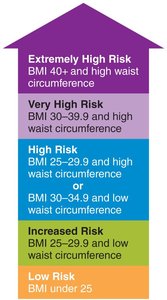
Health Risks Associated with Body Weight and Composition
Risks of Being Underweight
Malnutrition, substance abuse, or disease
Higher risk of anemia, osteoporosis, heart irregularities, and amenorrhea
Risks of Being Overweight or Obese
Increased risk of heart disease, hypertension, stroke, gallstones, sleep apnea, reproductive problems
Higher risk of certain cancers (colon, breast, endometrial, gallbladder)
Disordered Eating and Eating Disorders
Definitions and Types
Disordered eating includes abnormal and potentially harmful eating patterns. Eating disorders are psychological illnesses diagnosed by specific criteria.
Anorexia Nervosa: Self-starvation, excessive weight loss, nutrient deficiencies, organ damage
Bulimia Nervosa: Binge eating followed by purging; can cause digestive system damage, tooth decay, dehydration
Binge Eating Disorder: Recurrent binge eating without purging; associated with increased risk of chronic diseases
Night Eating Syndrome: Consuming most calories after evening meal and during the night
Orthorexia: Obsession with healthy eating, which can become restrictive and lead to other eating disorders
Treatment: Requires a multidisciplinary team (psychological, medical, nutrition professionals).
Weight Management and Its Importance
Prevalence and Costs
67% of Americans are overweight; over 33% of adults and 16% of children are obese.
Obesity-related health care costs exceed $190 billion annually in the U.S.
Benefits of Healthy Weight
Reduces risk for chronic diseases
Improves quality of life and longevity
Obesity as a Disease
Declared a disease by the AMA in 2013
Pros: Raises awareness, improves insurance coverage, increases research funding
Cons: May increase reliance on drugs/procedures over lifestyle changes
Social and Psychological Risks
Discrimination, reduced job/education opportunities, increased risk of depression and substance abuse
Regulation of Food Intake
Appetite, Hunger, and Satiety
Appetite is the desire to eat, while hunger is the physiological need for food. Satiety is the feeling of fullness after eating. The brain and hormones regulate these sensations.
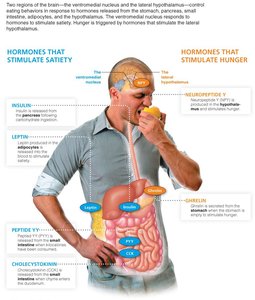
Fat Cell Development and Weight Regulation
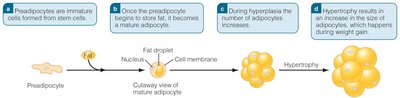
Fat Cell Growth
Fat cells (adipocytes) expand (hypertrophy) and increase in number (hyperplasia) as fat is stored.
Weight loss reduces fat cell size, but not number; cells can refill if excess energy is consumed.
Genetic and Environmental Influences on Obesity
Genetic Factors
Nutrigenomics: Study of how genes and diet interact to affect health and weight.
Epigenetics: Changes in gene expression influenced by environmental factors, including diet.
Environmental Factors
Increased access to high-calorie foods, larger portion sizes, and more meals eaten away from home
Reduced physical activity due to sedentary jobs, increased screen time, and less manual labor
Healthy Weight Loss Strategies
Dietary Approaches
Set realistic goals: Aim to lose 10% of body weight over six months
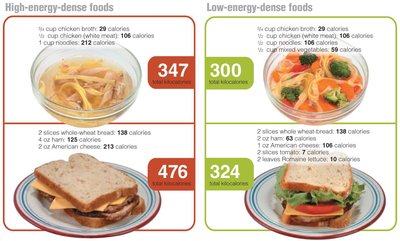
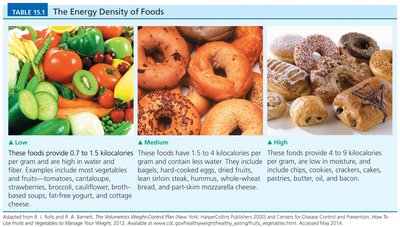
Reduce calorie intake, choose nutrient-dense foods, and control portion sizes
Increase intake of vegetables, fruits, and fiber
Add lean protein and healthy fats to promote satiety
Physical Activity
Engage in 60–90 minutes of moderate-intensity activity daily for weight loss or maintenance
Include both cardiorespiratory and strength-training exercises
Spot-reducing (targeting fat loss in specific areas) is ineffective
Behavior Modification
Keep a food log
Control environmental cues that trigger eating
Manage stress effectively
Using MyPlate for Weight Loss
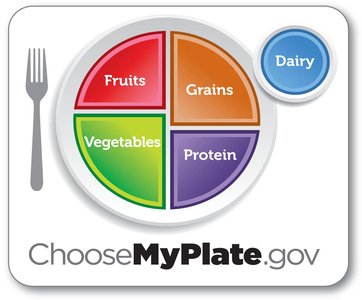
MyPlate is a visual guide for balanced eating, emphasizing fruits, vegetables, grains, protein, and dairy.
Benefits of Physical Fitness
Benefit | Description |
|---|---|
Reduced Risk of Cardiovascular Disease | Moderate activity lowers blood pressure and increases HDL cholesterol. |
Improved Body Composition | Less total and abdominal fat with higher cardiorespiratory fitness. |
Reduced Risk of Type 2 Diabetes | Exercise increases insulin sensitivity and helps control blood glucose. |
Reduced Risk of Some Cancers | Physical activity lowers risk of colon, breast, endometrial, and lung cancers. |
Improved Bone Health | Weight-bearing exercise increases bone density and reduces osteoporosis risk. |
Improved Immune System | Regular exercise enhances immune function. |
Improved Mental Well-Being | Exercise reduces depression, anxiety, and risk of dementia. |
Improved Sleep | Regular activity improves sleep quality, especially in older adults. |

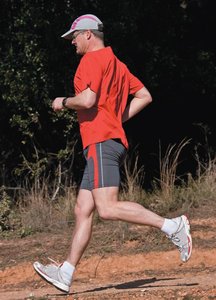

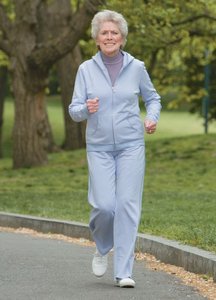



Energy Expenditure in Physical Activities
Activity | Intensity | Kilocalories/hour (154-lb person) |
|---|---|---|
Hiking | Moderate | 370 |
Running/jogging (5 mph) | Vigorous | 590 |
Light gardening/yard work | Moderate | 330 |
Bicycling (>10 mph) | Vigorous | 590 |
Dancing | Moderate | 330 |
Swimming (slow freestyle) | Vigorous | 510 |
Golf (walking, carrying clubs) | Moderate | 330 |
Aerobics | Vigorous | 480 |
Bicycling (<10 mph) | Moderate | 290 |
Walking (4.5 mph) | Vigorous | 460 |
Walking (3.5 mph) | Moderate | 280 |
Heavy yard work (chopping wood) | Vigorous | 440 |
Weightlifting (light) | Moderate | 220 |
Weightlifting (vigorous) | Vigorous | 440 |
Stretching | Moderate | 180 |
Basketball (vigorous) | Vigorous | 440 |
Summary
Effective weight management involves understanding energy balance, body composition, and the roles of diet, physical activity, and behavior modification. Both genetic and environmental factors influence body weight, and maintaining a healthy weight is essential for reducing the risk of chronic diseases and improving overall well-being.
