Back

Drawing Atomic Orbitals definitions

Control buttons has been changed to "navigation" mode.
1/14
  • Atomic Orbital

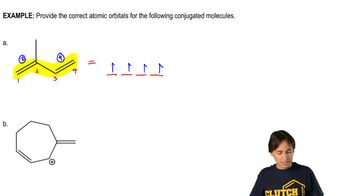
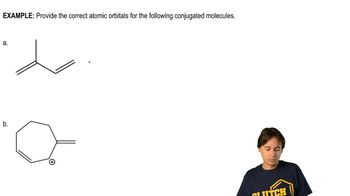
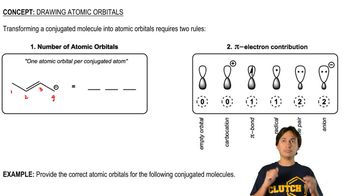
    A region around a nucleus associated with a single conjugated atom, depicted individually when drawing conjugated systems.
  • Conjugated Atom

    An atom within a molecule possessing a nonbonding orbital, qualifying it to contribute to delocalized electron systems.
  • Nonbonding Orbital

    An orbital on an atom not involved in bonding, such as lone pairs or unpaired electrons, crucial for conjugation.
  • Pi Electron

    An electron found in a pi bond, radical, or lone pair, contributing to the delocalized electron count in conjugated systems.
  • Carbocation

    A positively charged carbon center with an empty orbital, contributing zero electrons to the pi system.
  • Anion

    A negatively charged species, typically with a lone pair, contributing two electrons to the pi system.
  • Lone Pair

    A pair of electrons localized on an atom, not shared in bonding, contributing two electrons to conjugation.
  • Radical

    A species with a single unpaired electron in a nonbonding orbital, contributing one electron to the pi system.
  • Pi Bond

    A bond formed by sideways overlap of p orbitals, contributing one electron per atom to the conjugated system.
  • Electron Contribution

    The number of electrons each nonbonding orbital type adds to the pi system, essential for drawing atomic orbitals.
  • Empty Orbital

    A region on an atom lacking electrons, such as in carbocations, contributing zero electrons to conjugation.
  • Conjugated Molecule

    A molecule containing adjacent atoms with nonbonding orbitals, allowing for delocalized electron systems.
  • Negative Charge

    An excess of electrons on an atom, often indicating the presence of a lone pair in conjugated systems.
  • Positive Charge

    A deficiency of electrons on an atom, typically associated with carbocations and empty orbitals.