Back

Body's Defense System quiz #1

Control buttons has been changed to "navigation" mode.
1/10
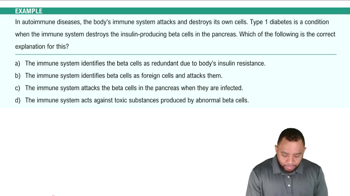
  • What is an autoimmune disease?

    An autoimmune disease is a condition in which the immune system mistakenly attacks the body's own cells, tissues, or organs, treating them as if they were foreign invaders.
  • What is the yellowish fluid that carries disease-fighting cells in the body called?

    The yellowish fluid that carries disease-fighting cells in the body is called lymph.
  • What is the role of interferon in the body's defense against disease?

    Interferon is a substance produced by the immune system that helps defend against disease by interfering with the replication of viruses and activating immune cells to fight infections.
  • How does the adaptive immune system respond to pathogens?

    The adaptive immune system responds to pathogens by using specialized B and T lymphocytes to produce antibodies that target specific antigens, destroy infected cells, and create memory cells for faster future responses.
  • What role do nose hairs play in the body's defense system?

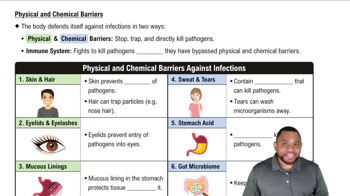
    Nose hairs trap particles and pathogens, preventing them from entering the body through the nasal passages. This helps reduce the risk of infection.
  • How do tears contribute to protecting the eyes from infection?

    Tears contain chemicals that kill pathogens and can physically wash away microorganisms from the surface of the eyes. This helps maintain eye health and prevent infections.
  • What is the function of the gut microbiome in defending against pathogens?

    The gut microbiome consists of helpful bacteria that consume food and release chemicals to kill pathogens. This keeps invaders in check and maintains a balanced internal environment.
  • What is the main difference between the innate and adaptive immune systems?

    The innate immune system provides a nonspecific, immediate response to any foreign invader, while the adaptive immune system develops targeted responses against specific pathogens. The adaptive system also creates memory cells for future immunity.
  • What physical signs may indicate that the immune system is responding to an infection?

    Physical signs include redness, swelling, pain, and heat or fever at the affected area. These symptoms result from increased blood flow and immune activity.
  • How do phagocytes such as neutrophils and macrophages help protect the body?

    Phagocytes engulf pathogens and damaged or dead cells, helping to remove harmful invaders from the body. This process is a key part of the innate immune response.