 Back
BackPhysical Activity, Fitness, and the Built Environment: Foundations for Personal Health
Study Guide - Smart Notes
 Tailored notes based on your materials, expanded with key definitions, examples, and context.
Physical Fitness and Physical Activity
Definitions and Key Concepts
Understanding the distinction between physical activity, exercise, and physical fitness is essential for personal health. These concepts form the foundation for developing and maintaining a healthy lifestyle.
Physical Activity: Any bodily movement produced by skeletal muscles that results in energy expenditure above resting levels. Examples include walking, gardening, and household chores.
Exercise: A subset of physical activity that is planned, structured, and repetitive, with the objective of improving or maintaining physical fitness.
Physical Fitness: The body’s ability to respond or adapt to the demands and stress of physical effort. It encompasses several components that contribute to overall health and performance.
Key Point: All exercise is physical activity, but not all physical activity qualifies as exercise.
Components of Physical Fitness
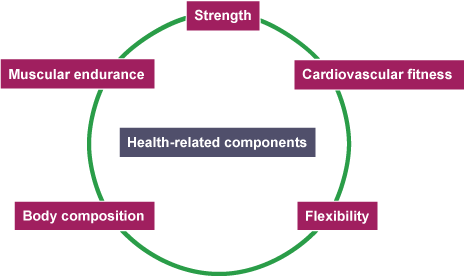
Health-Related Components
Health-related components of fitness are directly associated with overall health and reduced risk of chronic disease. These components are essential for everyone, regardless of athletic ability.
Cardiovascular Fitness: The ability of the heart, lungs, and blood vessels to supply oxygen to working muscles efficiently during sustained physical activity.
Muscular Strength: The maximum amount of force a muscle or muscle group can exert against resistance.
Muscular Endurance: The ability of a muscle or group of muscles to sustain repeated contractions against resistance for an extended period.
Flexibility: The range of motion available at a joint.
Body Composition: The relative amounts of muscle, fat, bone, and other vital parts of the body.
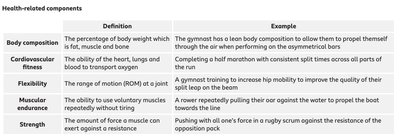
Component | Definition | Example |
|---|---|---|
Body composition | The percentage of body weight which is fat, muscle, and bone | The gymnast has a lean body composition to allow them to propel themself through the air when performing on the asymmetrical bars |
Cardiovascular fitness | The ability of the heart, lungs, and blood to transport oxygen | Completing a half marathon with consistent split times across all parts of the run |
Flexibility | The range of motion (ROM) at a joint | A gymnast training to increase hip mobility to improve the quality of their split leap on the beam |
Muscular endurance | The ability to use voluntary muscles repeatedly without tiring | A rower repeatedly pulling their oar against the water to propel the boat towards the line |
Strength | The amount of force a muscle can exert against a resistance | Pushing with all one’s force in a rugby scrum against the resistance of the opposition pack |
Skill-Related Components
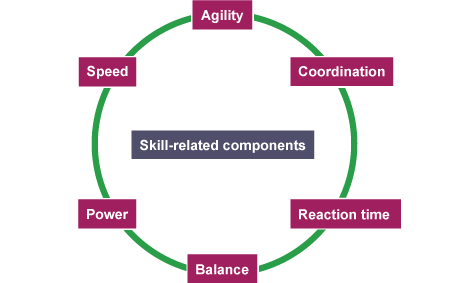
Skill-related components of fitness are more closely associated with athletic performance and include abilities that enhance one's capacity to perform in sports and physical activities.
Agility: The ability to change the position of the body quickly and control movement.
Balance: The ability to maintain the body’s center of mass above the base of support.
Coordination: The ability to use two or more body parts together smoothly and efficiently.
Power: The ability to perform strength performances quickly (a combination of strength and speed).
Reaction Time: The time taken to respond to a stimulus.
Speed: The ability to put body parts into motion quickly.
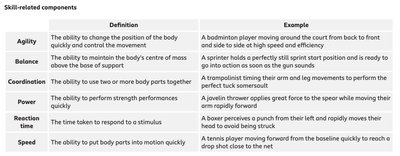
Component | Definition | Example |
|---|---|---|
Agility | The ability to change the position of the body quickly and control movement | A badminton player moving around the court from back to front and side to side at high speed and efficiency |
Balance | The ability to maintain the body’s centre of mass above the base of support | A sprinter holds a perfectly still sprint start position and is ready to go into action as soon as the gun sounds |
Coordination | The ability to use two or more body parts together | A trampolinist timing their arm and leg movements to perform the perfect tuck somersault |
Power | The ability to perform strength performances quickly | A javelin thrower applies great force to the spear while moving their arm rapidly forward |
Reaction time | The time taken to respond to a stimulus | A boxer perceives a punch from their left and rapidly moves their head to avoid being struck |
Speed | The ability to put body parts into motion quickly | A tennis player moving forward from the baseline quickly to reach a drop shot close to the net |
Body Composition: Models and Measurement
Understanding Body Composition
Body composition refers to the proportion of fat and non-fat mass in the body. It is a more accurate indicator of health than body weight alone, as it distinguishes between fat mass and lean mass (muscle, bone, organs, etc.).
Fat Mass: Stored fat (adipose tissue) used for energy, insulation, and organ protection.
Non-Fat Mass: Includes essential fat (in organs and tissues), muscle, bone, and other tissues.
Common methods for measuring body composition include skinfold calipers, underwater weighing, air displacement plethysmography, DEXA scans, and bioelectrical impedance analysis.
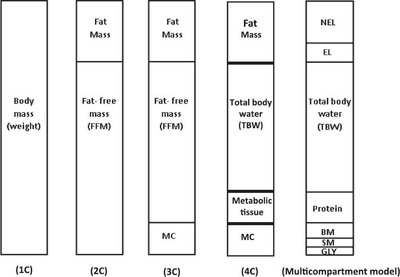
Example: The four-compartment model divides the body into fat mass, total body water, protein, and mineral content for a more precise assessment.
Benefits of Physical Activity and Exercise
Wellness Benefits
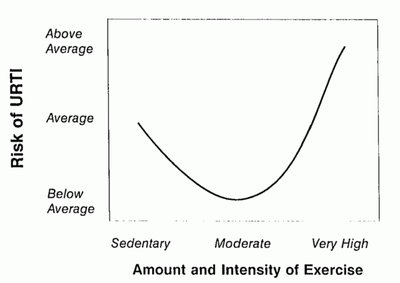
Regular physical activity and exercise provide numerous benefits for physical, psychological, and social health. These benefits increase with the frequency and intensity of activity, but excessive exercise can suppress immune function.
Improved cardiorespiratory functioning
Better body composition
Disease prevention and management (e.g., cardiovascular disease, diabetes)
Enhanced psychological and emotional wellness
Improved immune function
Prevention of injuries and low back pain
Example: Moderate exercise is associated with a lower risk of upper respiratory tract infections (URTI), while very high levels of exercise may increase risk.
Guidelines for Physical Activity
Canadian 24-Hour Movement Guidelines
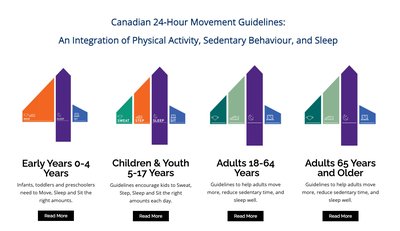
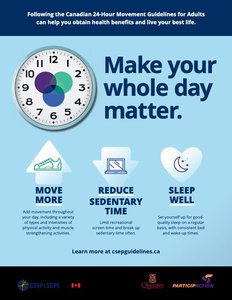
The Canadian 24-Hour Movement Guidelines integrate recommendations for physical activity, sedentary behavior, and sleep for different age groups. These guidelines emphasize the importance of moving more, reducing sedentary time, and sleeping well for optimal health.
Children and youth (5-17 years): At least 60 minutes of moderate-to-vigorous physical activity daily.
Adults (18-64 years): At least 150 minutes of moderate-to-vigorous aerobic activity per week, in bouts of 10 minutes or more.
Older adults (65+ years): Same as adults, with added focus on balance and strength activities.
Classifying Levels of Activity
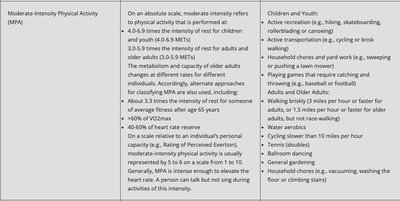
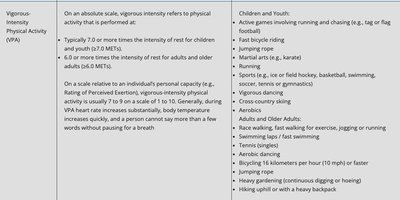
Physical activity can be classified by intensity:
Light Activity: Minimal effort, such as slow walking or light household chores.
Moderate Activity: Noticeable increase in heart rate and breathing (e.g., brisk walking, cycling).
Vigorous Activity: Substantial increase in heart rate and breathing (e.g., running, fast cycling).
Intensity | Definition | Examples |
|---|---|---|
Moderate | 3.0-5.9 times the intensity of rest for adults; 40-60% of maximal effort | Brisk walking, cycling, household chores, recreational swimming |
Vigorous | 6.0 or more times the intensity of rest for adults; 70-89% of maximal effort | Running, fast cycling, competitive sports, vigorous dancing |
Principles of Physical Training
Key Principles
Effective physical training programs are based on several foundational principles:
Progressive Overload: Gradually increasing the demands on the body to stimulate adaptation and improvement.
Reversibility: Fitness gains are lost when physical activity is reduced or stopped.
Rest/Recuperation: Adequate recovery time is necessary to allow the body to heal and adapt, preventing overtraining.
Specificity: Training should be tailored to the desired outcome (e.g., cardiovascular endurance, muscular strength).
Example: To improve cardiovascular fitness, one should engage in aerobic activities such as running or swimming, rather than focusing solely on weightlifting.
Planning for Personal Fitness
Setting Goals and Overcoming Barriers
Developing a personal fitness plan involves identifying individual goals, incorporating both physical activity and exercise, and applying behavior change strategies.
Set S.M.A.R.T. goals: Specific, Measurable, Achievable, Realistic, and Time-based.
Start slowly and progress gradually.
Plan ahead to overcome obstacles and maintain motivation.
Apply theories of health behavior change to support long-term adherence.
Physical Activity and the Built Environment
Influence of the Built Environment
The built environment encompasses the physical surroundings in which people live, work, and play. It significantly influences opportunities for physical activity through factors such as density, diversity, and design.
Density: Walkable neighborhoods with close proximity to destinations encourage walking and transit use.
Diversity: Mixed land use (homes, schools, shops, services) supports active transportation and higher physical activity levels.
Design: Interconnected street networks, safe sidewalks, and accessible community spaces promote walking and reduce reliance on automobiles.
Automobile-oriented environments can marginalize vulnerable populations and exacerbate health disparities. Universal access to parks, recreational facilities, and public transportation is essential for promoting physical activity for all.
Summary Table: Health-Related vs. Skill-Related Fitness Components
Health-Related Components | Skill-Related Components |
|---|---|
Cardiovascular fitness Muscular strength Muscular endurance Flexibility Body composition | Agility Balance Coordination Power Reaction time Speed |
Additional info: These notes integrate foundational concepts from exercise science and public health, providing a comprehensive overview suitable for personal-health college students preparing for exams or practical application.
