 Back
BackLimits and Differentiation: Foundations of Calculus for Physics with Algebra
Study Guide - Smart Notes
 Tailored notes based on your materials, expanded with key definitions, examples, and context.
Limits and Differentiation
Introduction to Limits and Differentiation
Limits and differentiation are foundational concepts in calculus, essential for understanding how functions behave and change. Limits describe the value a function approaches as the input nears a specific point, while differentiation measures the rate at which a function's value changes with respect to its input. These concepts are crucial for analyzing motion, rates of change, and the behavior of physical systems in Physics with Algebra.
Limits of a Function
Definition and Notation
Limit: The value a function f(x) approaches as x approaches a particular value c. Notation: .
One-Sided Limits: Limits can be approached from the left () or the right ().
Continuity: A function is continuous at x = c if .
Graphical and Numerical Approach to Limits
Limits can be explored graphically by observing the behavior of a function near a point, or numerically by evaluating the function at values increasingly close to the target point.
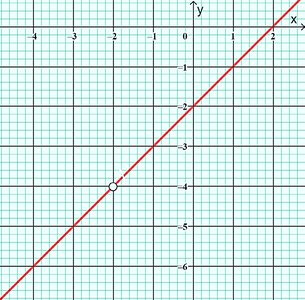
Example: For at , direct substitution is undefined, but evaluating values near shows the function approaches -4.
Limits and Approximations
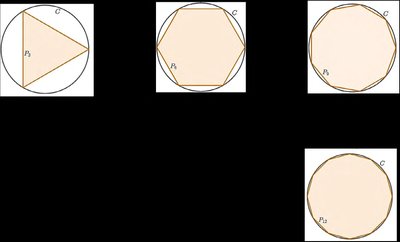
Limits are used to approximate values that are difficult or impossible to compute directly, such as the area of a circle using inscribed polygons. As the number of sides increases, the polygon's area approaches the circle's area.
Left-Hand and Right-Hand Limits
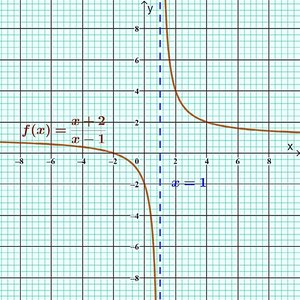
Left-hand and right-hand limits describe the behavior of a function as the input approaches a point from the left or right, respectively. If these two limits are not equal, the overall limit does not exist at that point.
Example: For as , the left-hand limit is and the right-hand limit is .
Existence of a Limit
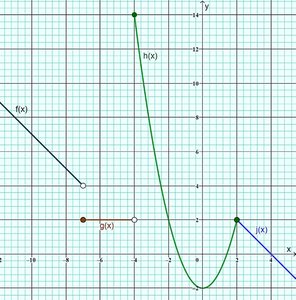
A limit exists at if and only if the left-hand and right-hand limits are equal.
If they differ, the limit does not exist at that point.
Properties of Limits
Sum:
Difference:
Product:
Quotient: (if denominator ≠ 0)
Limits at Infinity and Asymptotic Behavior
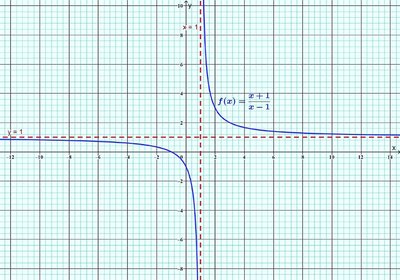
Limits as approaches infinity help describe the end behavior of functions and the existence of horizontal asymptotes.
Example: For , as , (horizontal asymptote at ).
Indeterminate and Determinate Forms
Indeterminate Forms: Expressions like , , , , , are called indeterminate forms and require algebraic manipulation or limits to resolve.
Determinate Forms: Expressions that evaluate to a specific number or infinity.
Differentiation
Definition and Physical Meaning
Differentiation: The process of finding the derivative of a function, which measures the instantaneous rate of change of the function with respect to its variable.
Derivative as a Limit:
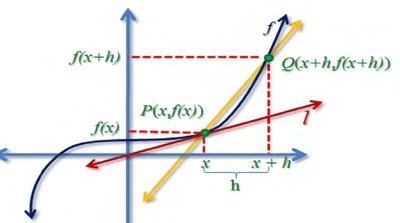
Geometric Interpretation: Tangent and Secant Lines
The derivative at a point gives the slope of the tangent line to the curve at that point. The secant line between two points approximates the tangent as the points get closer.
Differentiation from First Principles
Apply the definition of the derivative using limits to find the derivative of basic functions.
Example: For ,
Power Rule and Shortcuts
Power Rule: For ,
Apply the rule to each term in a polynomial.
Applications of Differentiation
Gradient of Curves: The derivative gives the slope at any point on a curve.
Equation of Tangents: Use the derivative to find the equation of the tangent line at a given point.
Equation of Normals: The normal line is perpendicular to the tangent; its slope is the negative reciprocal of the tangent's slope.
Rate of Change
Average Rate of Change:
Instantaneous Rate of Change: The value of the derivative at a specific point.
Behavior of Functions: Increasing, Decreasing, and Turning Points
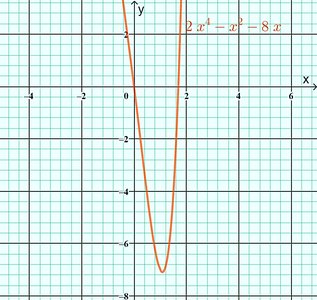
If , the function is increasing.
If , the function is decreasing.
If , the function is momentarily at rest (possible turning point).
Continuity and Differentiability
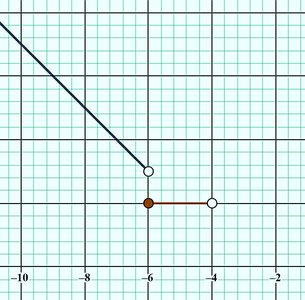
A function is continuous at if .
A function is differentiable at if it is continuous there and the derivative exists at that point.
Glossary of Key Terms
Limit: The value a function approaches as the input nears a point.
Differentiation: The process of finding the derivative, or rate of change, of a function.
Tangent: A line that touches a curve at a point and has the same slope as the curve at that point.
Normal: A line perpendicular to the tangent at a given point on a curve.
Secant: A line that intersects a curve at two or more points.
