 Back
BackAcceleration and Newton’s Second Law: Motion, Vectors, and Forces
Study Guide - Smart Notes
 Tailored notes based on your materials, expanded with key definitions, examples, and context.
Acceleration and Newton’s Second Law
Introduction to Newton’s Second Law of Motion
Newton’s Second Law of Motion describes how the net force acting on an object relates to its mass and the resulting acceleration. This chapter builds on the concept of equilibrium (net force zero) and introduces the effects of nonzero net forces, requiring a solid understanding of vectors such as position, displacement, velocity, and acceleration.
Vector Quantities in Kinematics
Position
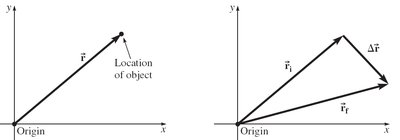
The position of an object is a vector quantity that specifies its location relative to an origin. It is defined by both a distance and a direction from the origin.
Symbol:
Example: An object located 5 m east and 3 m north of the origin has a position vector with components (5, 3) m.
Displacement
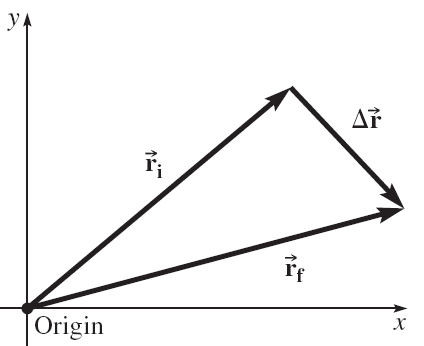
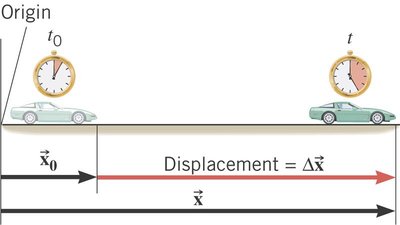
Displacement is the change in position of an object, defined as the difference between the final and initial position vectors. Displacement is also a vector quantity.
Formula:
Key Point: Displacement depends only on the initial and final positions, not the path taken.
Example: If a car moves from m to m, then m.
Vector Addition in Displacement Problems
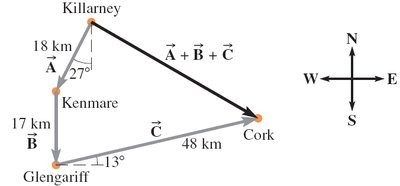
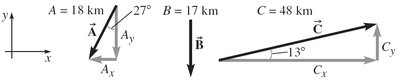
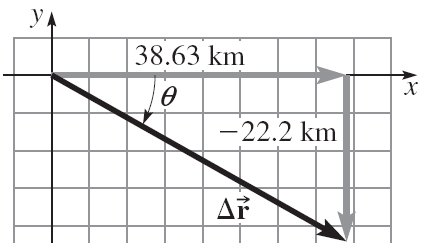
When an object moves along multiple segments, the total displacement is the vector sum of the individual displacements. Components are often used to simplify calculations.
Component Method: Break each vector into x and y components, sum the components, then recombine for the resultant vector.
Magnitude:
Direction:



Speed and Velocity
Average Speed
Average speed is a scalar quantity defined as the total distance traveled divided by the elapsed time.
Formula:
SI Unit: meters per second (m/s)
Average Velocity
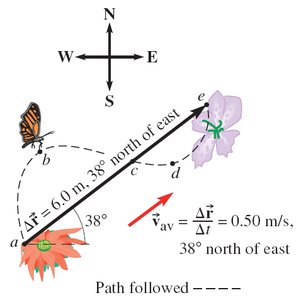
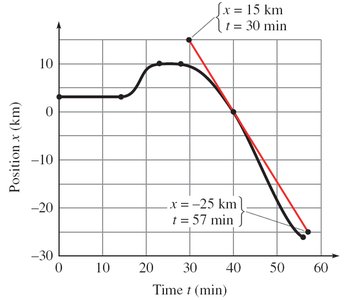
Average velocity is a vector quantity defined as the displacement divided by the elapsed time.
Formula:
Direction: Same as the displacement vector.

Instantaneous Velocity
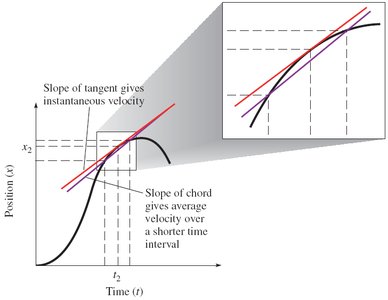
The instantaneous velocity is the velocity of an object at a specific instant, given by the derivative of position with respect to time.
Formula:
Graphical Relationships
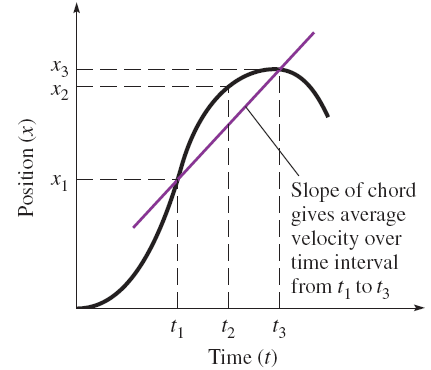
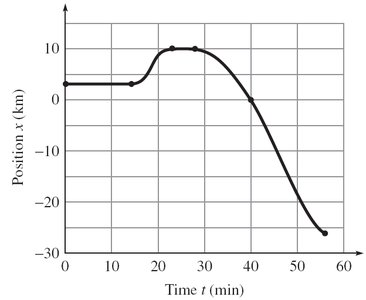
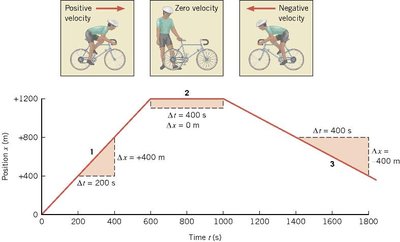
The slope of a position vs. time graph gives the velocity. The slope of the tangent at a point gives the instantaneous velocity, while the slope of a chord gives the average velocity over an interval.
Acceleration
Definition of Acceleration
Acceleration is the rate at which velocity changes with time. It is a vector quantity.
Average acceleration:
Instantaneous acceleration:
Acceleration and Velocity Direction
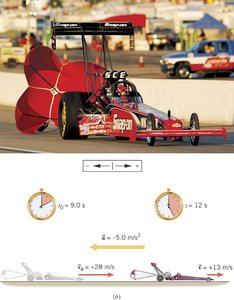
If acceleration and velocity vectors point in the same direction, the object speeds up. If they point in opposite directions, the object slows down (decelerates).
Graphical Analysis of Velocity and Acceleration
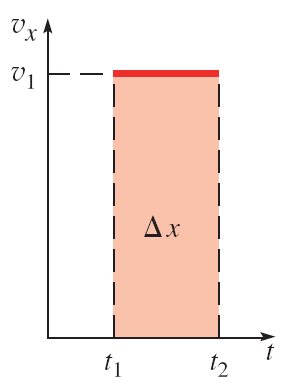
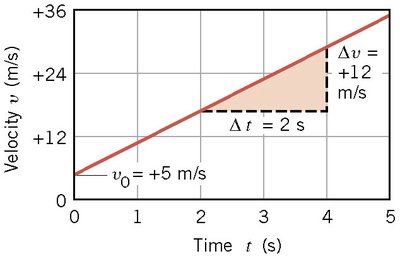
The slope of a velocity vs. time graph gives the acceleration. The area under an acceleration vs. time graph gives the change in velocity.
Newton’s Second Law of Motion
Statement of the Law
Newton’s Second Law relates the net force acting on an object to its mass and acceleration:
Formula:
SI Unit of Force: newton (N), where
Mass and Inertia
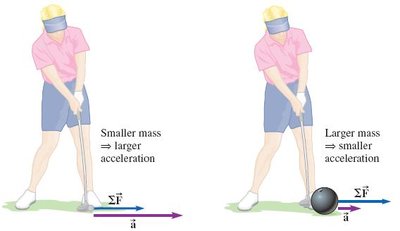
Mass is a measure of an object’s inertia, or resistance to changes in velocity. For a given net force, a larger mass results in a smaller acceleration.
Problem-Solving Strategy for Newton’s Laws
Identify the object(s) to analyze.
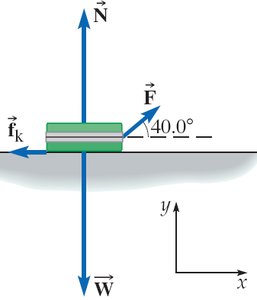
Draw a free-body diagram (FBD) showing all external forces.
Choose a coordinate system aligned with the net force or acceleration.
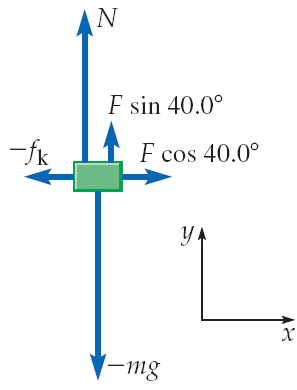
Resolve forces into components and sum them as vectors.
Apply Newton’s Second Law to relate net force and acceleration.
Relate acceleration to changes in velocity over the time interval of interest.
Applications of Newton’s Second Law
Forces on an Inclined Plane
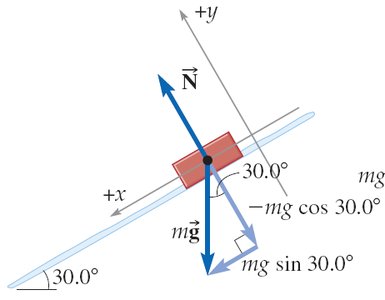
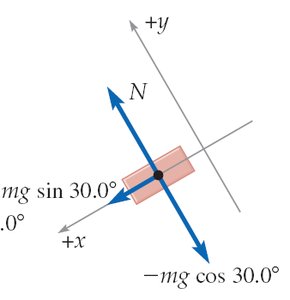
When analyzing objects on an incline, resolve the gravitational force into components parallel and perpendicular to the surface. The normal force and friction (if present) act perpendicular and parallel to the surface, respectively.
Connected Objects and Tension
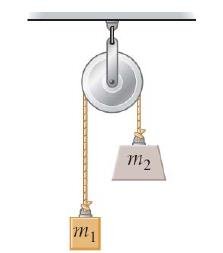
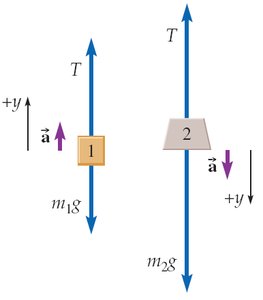
When objects are connected (e.g., by a rope or cord), they share the same acceleration. The tension in the connecting cord transmits force between the objects.
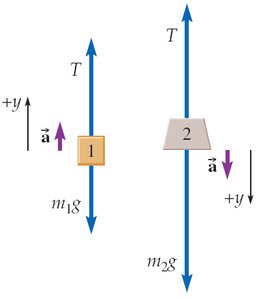
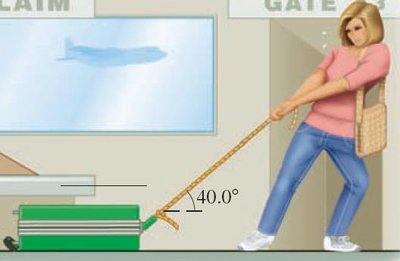
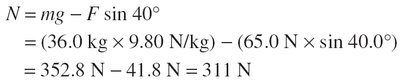
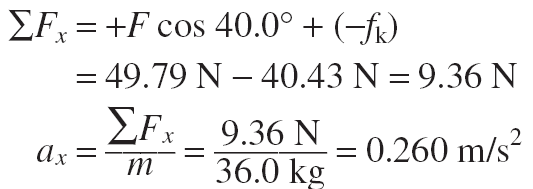
Example: Dragging a Suitcase
When a force is applied at an angle, resolve it into horizontal and vertical components. The normal force, friction, and applied force determine the acceleration.
Summary Table: Key Kinematic Quantities
Quantity | Symbol | Definition | SI Unit |
|---|---|---|---|
Position | or | Location relative to origin | m |
Displacement | Change in position | m | |
Velocity | Rate of change of position | m/s | |
Acceleration | Rate of change of velocity | m/s2 | |
Force | Push or pull causing acceleration | N | |
Mass | Measure of inertia | kg |
Key Equations
Displacement:
Average velocity:
Instantaneous velocity:
Average acceleration:
Newton’s Second Law:
