 Back
BackApplications of Newton’s Laws: Friction, Tension, Drag, and Circular Motion
Study Guide - Smart Notes
 Tailored notes based on your materials, expanded with key definitions, examples, and context.
Applications of Newton’s Laws of Motion
Friction Revisited
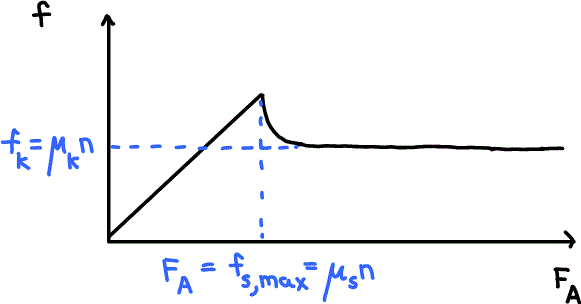
Friction is a force that opposes the relative motion of two surfaces in contact. It is classified as either static friction (when the object is not moving) or kinetic friction (when the object is sliding). The maximum static friction is proportional to the normal force and is given by:
Maximum Static Friction:
Kinetic Friction:
Coefficients: and are dimensionless constants determined by the surfaces.
Normal Force: The force perpendicular to the contact surface, often equal to for horizontal surfaces.
As the applied force increases, static friction matches it until the maximum is reached, after which kinetic friction takes over and remains constant.
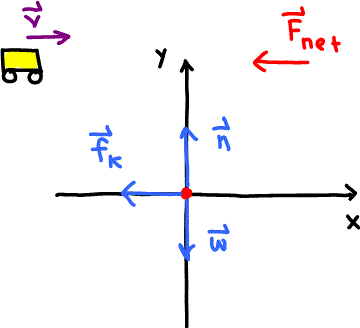
Example: Calculating the stopping time for a sliding car using kinetic friction:
Draw a free body diagram.
Apply Newton's Second Law (NSL) in component form:
Acceleration:
Use kinematics:
Time to stop:
Inclined Plane with Friction
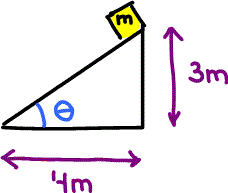
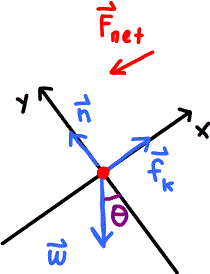
When a block slides down a rough incline, friction and gravity both influence its motion. The normal force and friction are calculated using the angle of the incline.
Use a tilted coordinate system for the free body diagram.
Component equations:
Acceleration:
Coefficient:
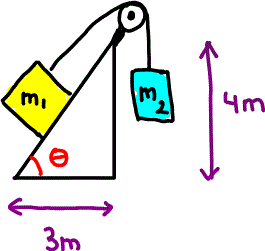
Incline/Pulley System with Friction
In systems with pulleys and friction, the acceleration is determined by analyzing forces on each mass and using Newton's Second Law.
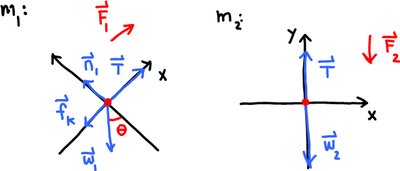
Draw FBDs for each mass.
Component equations for forces and tension.
Set equations for tension equal and solve for acceleration:
Tension in Massless and Massive Ropes
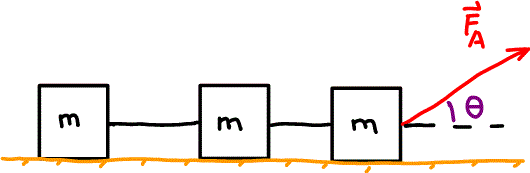
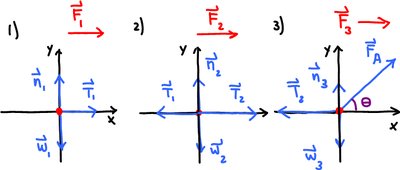
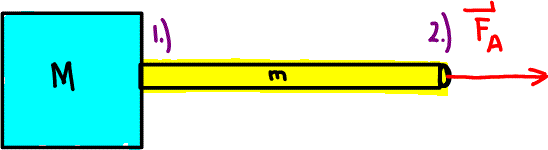
Tension is the force transmitted through a rope, string, or cable. For massless ropes, tension is constant throughout. For massive ropes, tension differs at each end.
For massless ropes:
For massive ropes: ,
Applied force is distributed based on mass.
Drag Force and Terminal Velocity
Drag is the resistive force exerted by a fluid (like air) on a moving object. It increases with speed and is proportional to the square of velocity, area, air density, and a drag coefficient.
Drag formula:
Terminal velocity occurs when drag equals weight:
Terminal speed:
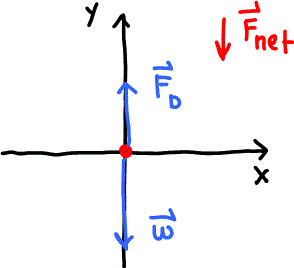
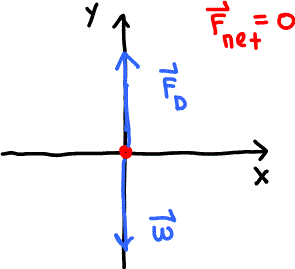
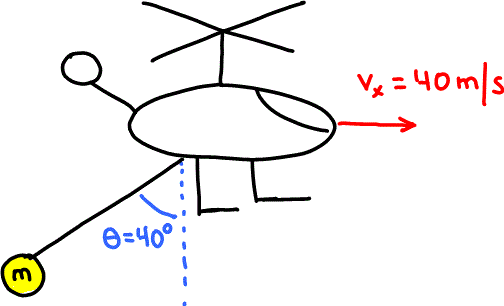
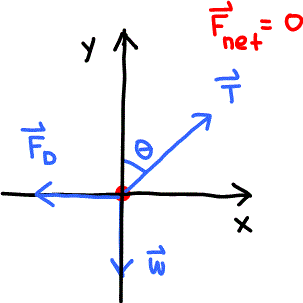
Example: Helicopter towing a mass with drag:
Use force analysis in x and y directions.
Find drag coefficient:
Circular Motion and Forces
Centripetal Acceleration and Force
Circular motion requires a centripetal (center-seeking) acceleration, given by:
Force causing this acceleration must be real (e.g., tension, friction, normal force).
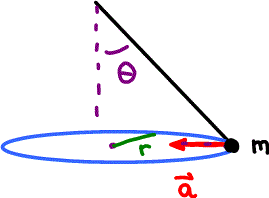
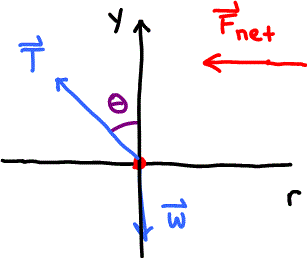
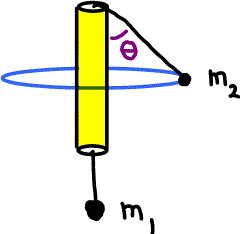
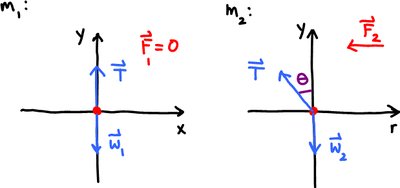
Example: Spinning masses with a string:
Angular speed:
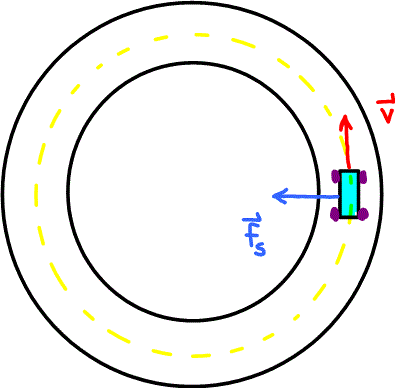
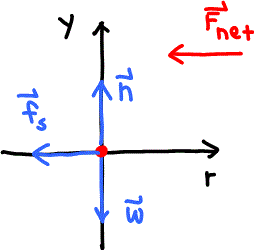
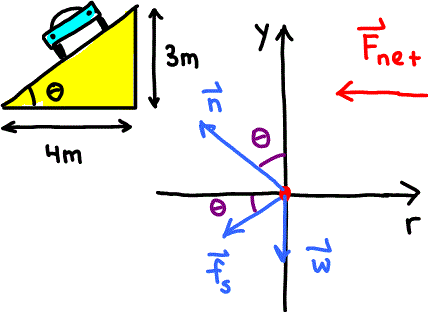
Rounding a Curve: Static Friction as Centripetal Force
When a car rounds a flat curve, static friction provides the centripetal force. The maximum speed before sliding is determined by the maximum static friction.
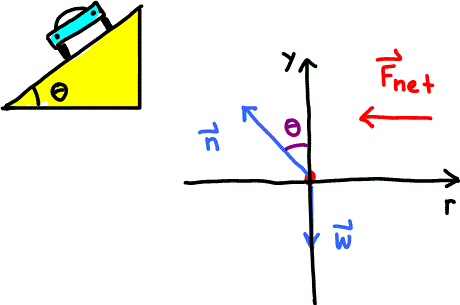
Banked Curve: Normal Force as Centripetal Force
On a frictionless banked curve, the normal force provides the centripetal acceleration. The required speed to avoid slipping is:
Banked Curve with Friction
On a rough banked curve, both normal force and static friction contribute to centripetal acceleration. The maximum speed is:
Vertical Circular Motion: Water Bucket and Rollercoaster
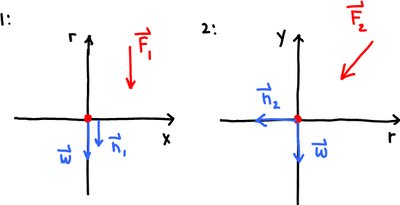
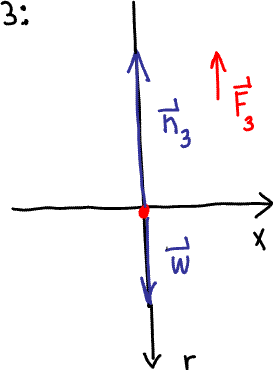
In vertical circles, the normal force and weight provide centripetal acceleration. The minimum speed to keep water in a bucket at the top is:
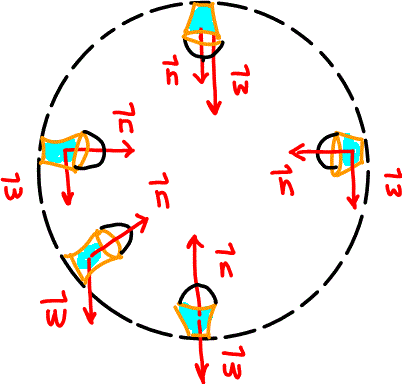
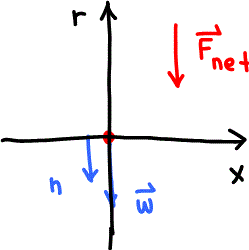
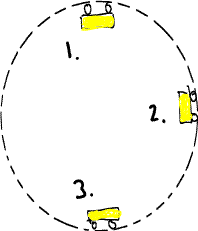
For a rollercoaster, normal force varies at different points:
Top:
Side:
Bottom:
Non-Uniform Circular Motion
When angular speed changes, there is angular acceleration . The kinematic equations for angular motion are:
Radial acceleration:
Tangential acceleration:
Example: Calculating rotations and tangential acceleration for a slowing wheel:
Number of rotations:
Tangential acceleration:
