 Back
BackApplied Physics Laboratory Foundations: Measurement, Uncertainty, Graphical Analysis, Newton’s Laws, Energy, and Thermal Physics
Study Guide - Smart Notes
 Tailored notes based on your materials, expanded with key definitions, examples, and context.
Introduction to Experimental Physics
The Role of the Physics Laboratory
Physics laboratories are essential for verifying scientific concepts through experimentation. The process involves careful observation, measurement, data recording, error analysis, and drawing conclusions. These skills are foundational for scientific and technological work.
Experimental Method: Involves changing variables, recording data, analyzing errors, and interpreting results.
Lab Reports: Communicate findings in a structured, concise format, including objectives, apparatus, theory, procedure, data, analysis, uncertainties, discussion, and conclusions.
Safety: Always prioritize safety when working with equipment, electricity, and chemicals.
Measurement, Uncertainty, and Error Analysis
Key Concepts in Metrology
Metrology is the science of measurement. Understanding the limitations and sources of error in measurements is crucial for accurate experimental results.
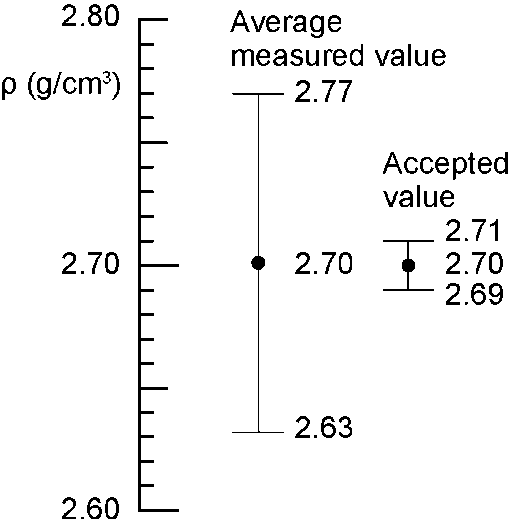
Accuracy: Closeness of a measurement to the true value.
Precision: Degree of repeatability or consistency in measurements.
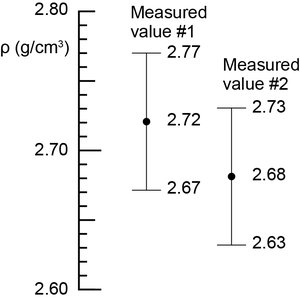
Uncertainty: The range within which the true value is expected to lie, often due to instrument limitations or operational factors.
Sources of Error: Can be random (vary unpredictably), systematic (bias in one direction), or operational (user-related).
Tolerance: Allowable deviation from a specified value.
Discrepancy: Difference between measured and accepted values.
Error: Absolute difference between measured and true values.
Reporting Measurements and Uncertainties
Every measurement should include a value, uncertainty, and unit. Uncertainties can be absolute, relative, or percentage-based.
Absolute Uncertainty: (e.g., m)
Relative Uncertainty:
Percentage Uncertainty:
When combining uncertainties in calculations:
Addition/Subtraction: Add absolute uncertainties in quadrature:
Multiplication/Division: Add relative uncertainties in quadrature:
Significant Figures and Scientific Notation
Significant figures reflect the precision of a measurement. Only one doubtful digit should be retained. Scientific notation is used to clearly indicate significant digits and handle large or small numbers.
Example: cm should be reported as cm (four significant figures).
Scientific Notation: (4 significant figures)
Graphical Analysis and Data Fitting
Constructing and Interpreting Graphs
Graphs visually represent experimental data, reveal relationships, and help identify trends or anomalies.
Axes: Independent variable (x-axis), dependent variable (y-axis).
Best-Fit Line: Drawn to represent the trend of the data, not necessarily passing through all points.
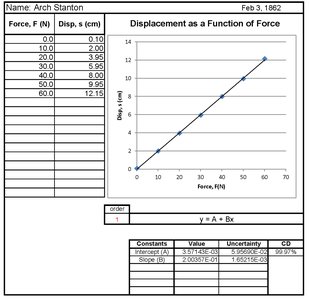
Slope and Intercept: For a linear relationship , slope , intercept .
Data Fitting and Model Selection
Choosing the correct mathematical model is essential for accurate data analysis. Common models include polynomials, power laws, and exponentials.
Linear Model:
Power Law:
Exponential:
The Exponential Function in Physics
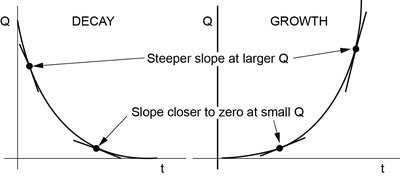
Exponential growth and decay describe many physical processes, such as radioactive decay, charging of capacitors, and population growth.
General Form:
Time Constant (): Characterizes the rate of growth or decay.
Measurement of Physical Quantities: Density and Uncertainty
Measuring Density of a Rectangular Block
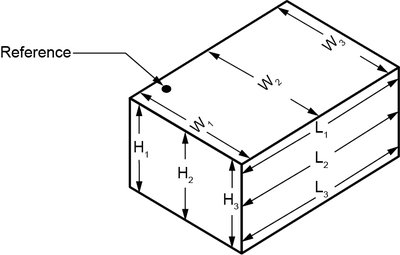
The density () of a solid is its mass () divided by its volume (). For a rectangular block:
Volume:
Density:

Uncertainty in Density Measurement
Each measured quantity (mass, length, width, height) has an associated uncertainty. The percentage uncertainty in density is calculated by adding the percentage uncertainties of each variable in quadrature:
Absolute uncertainty:
Graphical Analysis: Example Applications
Spring Force and Displacement
Hooke's Law relates the force applied to a spring to its displacement: . A plot of versus yields a straight line, with the slope representing the spring constant .
Uniformly Accelerated Motion
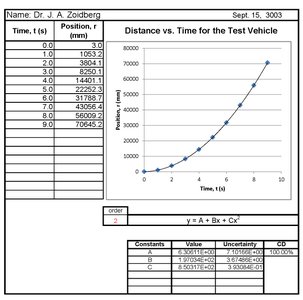
The position of an object under constant acceleration is given by . Fitting experimental data to this model allows determination of initial position, velocity, and acceleration.
Newton’s Second Law of Motion
Statement and Experimental Verification
Newton’s second law states that the net force on an object equals the rate of change of its momentum. For constant mass:
Acceleration is proportional to net force and inversely proportional to mass.
Dynamics Track System
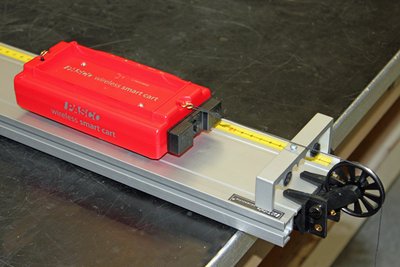
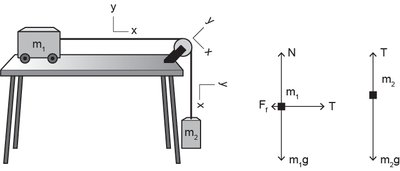
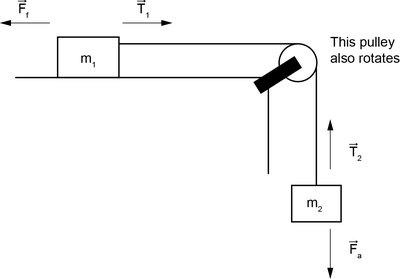
In a system with a cart and a hanging mass connected by a string over a pulley, the acceleration is given by:
Friction and rotational inertia of the pulley must be considered for accurate results.
Conservation of Energy and Simple Machines
Inclined Plane and Mechanical Advantage
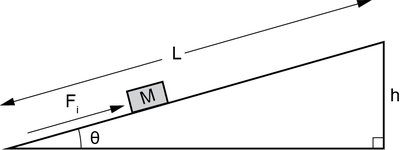
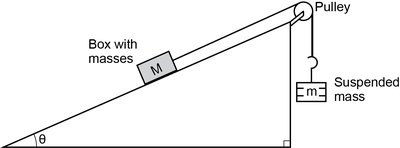
An inclined plane is a simple machine that allows a load to be raised with less force than lifting vertically. The conservation of energy principle states that energy input equals energy output plus losses (e.g., friction).
Mechanical Advantage (AMA):
Ideal Mechanical Advantage (IMA):
Efficiency:

Thermal Physics: Calorimetry and Latent Heat
Sensible and Latent Heating
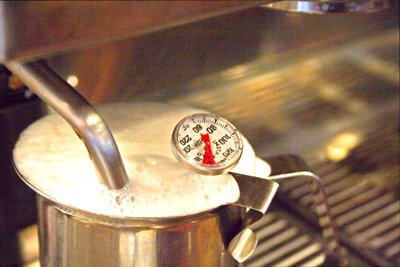
Sensible heating changes temperature, while latent heating changes phase without temperature change. The heat required for a temperature change is , and for a phase change is .
Calorimetry
Calorimetry measures heat transfer in a closed system. The sum of heat gains and losses is zero at equilibrium. Both sensible and latent heats must be considered when phase changes occur.
Linear Expansion of Metals
Thermal Expansion
Most materials expand when heated. The coefficient of linear expansion () quantifies the fractional change in length per degree of temperature change:
Thermal stress occurs if expansion is constrained:
Thermal Conductivity of Poor Conductors
Heat Flow and Measurement
Thermal conductivity () measures a material's ability to conduct heat. The rate of heat flow through a slab is:
Thermocouples are used to measure temperature differences via voltage. The time decay of temperature difference follows an exponential law, allowing determination of from the decay constant.
DC Circuits: Instruments and Analysis
Ohm’s Law and Circuit Measurement
Ohm’s law relates voltage, current, and resistance: . Instruments include ohmmeters (measure resistance), voltmeters (measure potential difference, connected in parallel), and ammeters (measure current, connected in series).
Series and Parallel Circuits
Series: Same current through all components, total resistance is sum of individual resistances.
Parallel: Same voltage across all branches, total resistance is reciprocal of the sum of reciprocals.
Kirchhoff’s Laws
Current Law (KCL): Total current entering a junction equals total current leaving.
Voltage Law (KVL): Sum of potential differences around any closed loop is zero.
Appendices and Supplementary Information
Useful Tables and Constants
Greek alphabet, physical constants, metric prefixes, and unit conversions are essential references for laboratory work.
Summary Table: Common Uncertainty Formulas
Operation | Formula | Uncertainty Formula |
|---|---|---|
Multiplication by constant | ||
Addition/Subtraction | ||
Multiplication/Division | ||
Power |
Additional info: This guide covers foundational laboratory skills and core physics concepts relevant to introductory college-level physics, including measurement, uncertainty, data analysis, Newtonian mechanics, energy, thermal physics, and basic circuit analysis. For each experiment, students are expected to apply these principles, analyze data, and communicate results in a structured report format.
