 Back
BackApplying Newton’s Laws: Forces and Free Body Diagrams
Study Guide - Smart Notes
 Tailored notes based on your materials, expanded with key definitions, examples, and context.
Applying Newton’s Laws
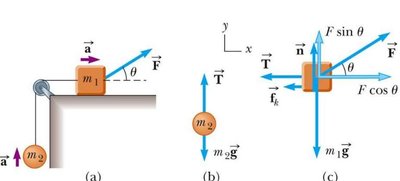
Diagramming Forces and Free Body Diagrams
Understanding how to represent forces acting on an object is fundamental to applying Newton's Laws in physics. Free body diagrams (FBDs) are essential tools for visualizing and analyzing the forces involved in a system.
Coordinate System: Choose an appropriate coordinate system, usually the standard x-y axes, to simplify calculations.
Object Representation: Model the object as a point, square, or circle for clarity.
Force Arrows: Draw arrows originating from the object to indicate the direction and relative magnitude of each force.
Purpose: FBDs help identify all forces acting on an object and are crucial for setting up equations of motion.
Example: A block on a table with forces such as gravity, normal force, and friction.
Types of Forces
Normal Force
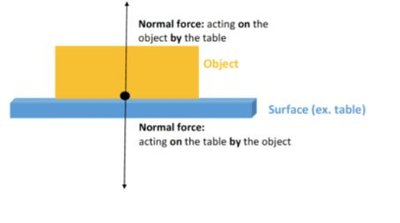
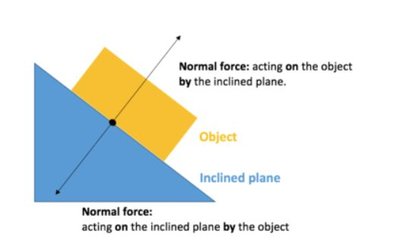
The normal force is the support force exerted by a surface perpendicular to the object in contact. It is essential for understanding equilibrium and interactions between objects and surfaces.
Direction: Always acts perpendicular to the surface.
Calculation: Determined by the object's weight and the state of equilibrium.
Examples: Normal force on a flat surface and on an inclined plane.
Weight (Force Due to Gravity)
The weight of an object is the force due to gravity acting on its mass. It is a fundamental force in physics and is always directed toward the center of the Earth.
Formula:
Acceleration due to gravity: on Earth.
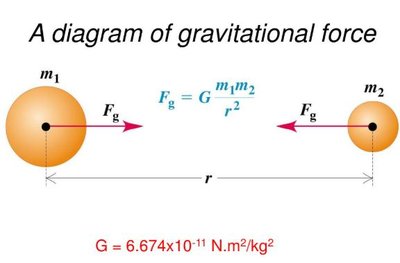
Gravitational Force: The force between two masses is given by Newton's Law of Universal Gravitation:
G: Universal gravitational constant,
Spring Force (Hooke’s Law)
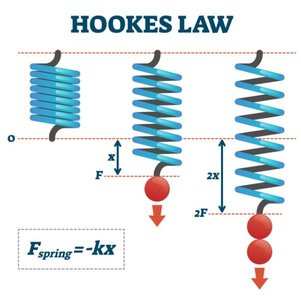
The spring force is described by Hooke’s Law, which states that the force exerted by a spring is proportional to its displacement from equilibrium.
Formula:
k: Spring constant (N/m)
x: Displacement from equilibrium (m)
Direction: The restoring force always opposes the displacement.
Example: Stretching or compressing a spring.
Tension Force
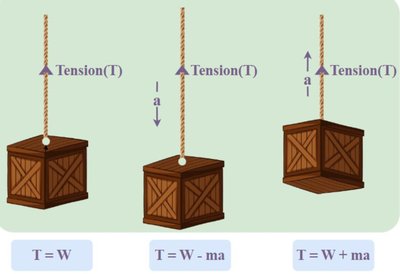
Tension is the force transmitted through a string, rope, or wire when it is pulled tight by forces acting from opposite ends. It is always directed along the length of the rope and away from the object.
Calculation: Depends on the forces and acceleration in the system.
Ideal Rope: In a massless, inextensible rope, tension is constant throughout.
Examples: Hanging objects, pulleys.
Friction Force
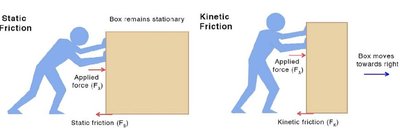
Friction is the force that opposes the relative motion or tendency of such motion of two surfaces in contact. It is classified into static and kinetic friction.
Static Friction: Prevents motion from starting; acts when the object is stationary.
Kinetic Friction: Acts between moving surfaces; opposes sliding motion.
Direction: Always opposite to the direction of motion or intended motion.
Example: Pushing a box across a floor.
Summary Table: Types of Forces
The following table summarizes the main types of forces discussed:
Force Type | Direction | Formula | Example |
|---|---|---|---|
Normal Force | Perpendicular to surface | Depends on equilibrium | Block on table |
Weight | Toward center of Earth | Object falling | |
Spring Force | Opposes displacement | Stretched spring | |
Tension | Along rope, away from object | Depends on system | Hanging mass |
Friction | Opposes motion | Depends on surfaces | Sliding box |
Additional info: Academic context was added to clarify the application and calculation of each force, as well as to provide examples and formulas for exam preparation.
