 Back
BackCapacitance and Dielectrics: Structured Study Notes
Study Guide - Smart Notes
 Tailored notes based on your materials, expanded with key definitions, examples, and context.
Capacitance and Dielectrics
Capacitors and Capacitance
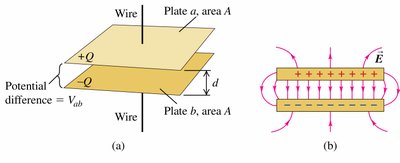
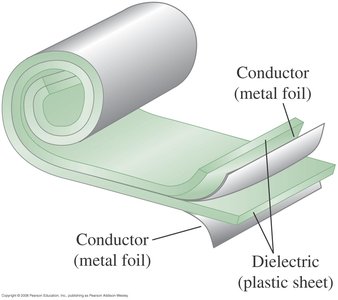
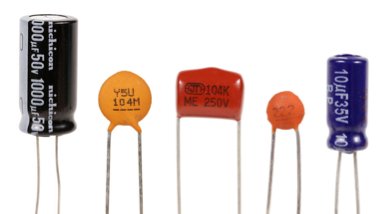
Capacitors are fundamental electrical devices used to store energy in the electric field between two closely spaced conductors, known as plates. When a voltage is applied, equal and opposite charges accumulate on each plate, creating a potential difference.
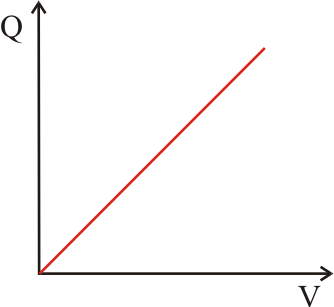
Capacitance (C): Defined as the ratio of the charge (Q) stored to the voltage (V) across the plates. The unit is the farad (F).
Formula:
Parallel Plate Capacitor: For plates of area A separated by distance d in vacuum, , where is the permittivity of free space.
Energy Storage: Capacitors store energy in the electric field between their plates.
Example: A parallel plate capacitor with area A and separation d stores charge Q when a voltage V is applied.
Equivalent Capacitance
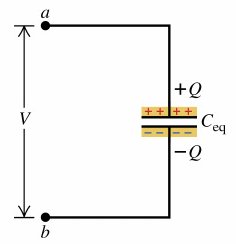
When multiple capacitors are present in a circuit, they can be replaced by a single equivalent capacitor. Capacitors can be connected in series or parallel, each affecting the total capacitance differently.
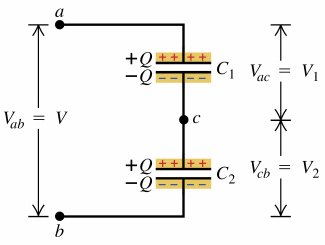
Series Connection: The charge on all capacitors is the same, but the voltage divides among them.
Parallel Connection: The voltage across all capacitors is the same, but the charge divides among them.
Capacitors in Series
Capacitors in series share the same charge, but the total voltage is the sum of individual voltages. The equivalent capacitance is less than any individual capacitance.
Formula:
Charge Conservation: is constant across all capacitors.
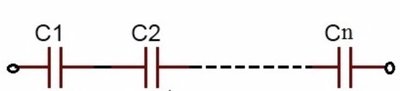
Capacitors in Parallel
Capacitors in parallel share the same voltage, but the total charge is the sum of individual charges. The equivalent capacitance is the sum of all capacitances.
Formula:
Voltage Conservation: is constant across all capacitors.
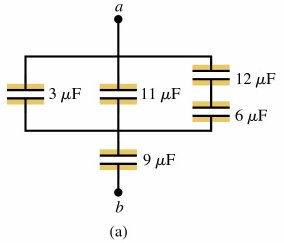
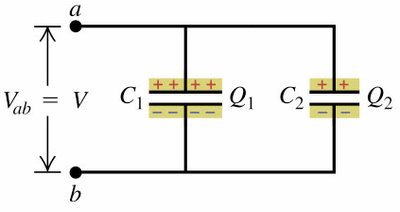
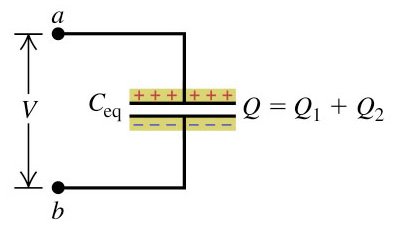
Example Problems: Series and Parallel Networks
Capacitor networks can be analyzed to find unknown charges, voltages, and equivalent capacitance. For example, given a network with known capacitances and charges, one can use the formulas above to solve for unknowns.
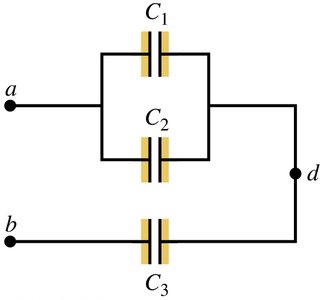
Energy Storage in Capacitors
Capacitors store potential energy in their electric field. The energy depends on the charge and voltage.
Energy Formula:
Graphical Representation: The area under the Q vs. V graph represents the energy stored.
Capacitor Charging and Discharging
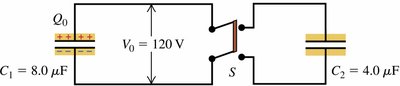
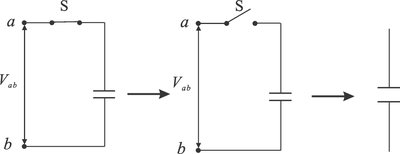
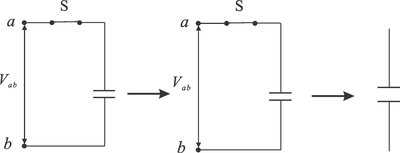
Capacitors can be charged by connecting to a voltage source and discharged by connecting to another capacitor or circuit. The energy and charge distribution depend on whether charge or voltage is kept constant.
Constant Charge: Capacitance changes affect voltage.
Constant Voltage: Capacitance changes affect charge.
Improving Capacitance
Capacitance can be increased by maximizing plate area, minimizing plate separation, or inserting a dielectric material between the plates.
Dielectric: A non-conducting material that increases capacitance by reducing the electric field.
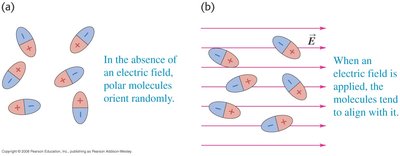
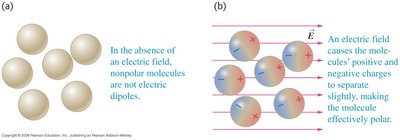
Polarization: Redistribution of charge within the dielectric material.
Dielectrics and Polarization
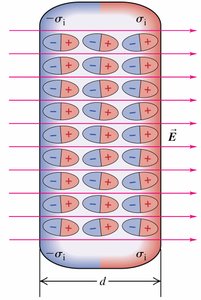
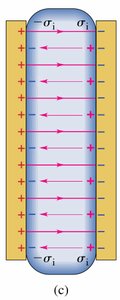
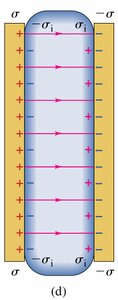
Dielectrics are materials that do not conduct electricity but can be polarized in an electric field. Polarization occurs when positive and negative charges within the material redistribute, affecting the electric field and capacitance.
Dielectric Constant (K): A measure of a material's ability to increase capacitance. .
Permittivity: replaces in the capacitance formula.
Capacitance with Dielectric:
Electric Field in Dielectrics
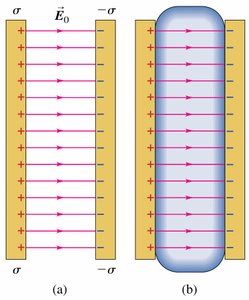
The electric field between parallel plates is reduced when a dielectric is inserted. The permittivity of the dielectric replaces that of free space, and the field is given by .
Without Dielectric:
With Dielectric:
Partially Filled Capacitors
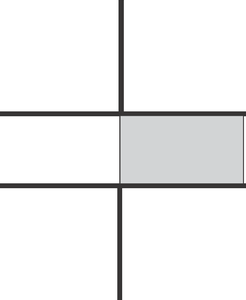
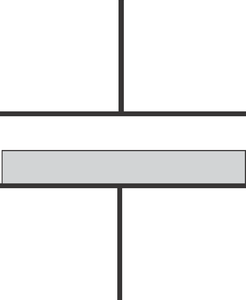
When a capacitor is only partially filled with a dielectric, the capacitance and electric field distribution become more complex. The overall capacitance depends on the arrangement and proportion of dielectric material.
Summary Table: Series vs. Parallel Capacitors
Connection Type | Charge | Voltage | Equivalent Capacitance |
|---|---|---|---|
Series | Same on all capacitors | Adds up | |
Parallel | Adds up | Same across all capacitors |
Key Equations
Capacitance:
Parallel Plate Capacitance:
With Dielectric:
Energy Stored:
Series Combination:
Parallel Combination:
Additional info: Academic context and explanations have been expanded for clarity and completeness. All images included are directly relevant to the adjacent paragraphs and reinforce the educational content.
