 Back
BackChapter 1: Representing Motion – Foundations of Measurement and Mathematical Tools in Physics
Study Guide - Smart Notes
 Tailored notes based on your materials, expanded with key definitions, examples, and context.
Chapter 1: Representing Motion
1.1 Motion: A First Look
Physics seeks to describe and predict the motion of objects using mathematical models and experimental evidence. The study of motion, or mechanics, forms the foundation for much of physics.
Physics: The science of matter, energy, and their interactions.
Science: Systematic study of the natural world through observation and experimentation.
Physical theories are developed from experiments and are always subject to revision as new data emerges.
1.2 Models and Modeling
Models are simplified representations of physical systems that help us understand and predict behavior. Theories are tested by comparing predictions to experimental results.
Models use mathematical language to describe systems.
Predictions from models are checked by experiments.
All models are approximations and may be refined over time.
1.3 Systems of Measurement and Units
Physics relies on standardized units to ensure consistency in measurements and communication. The three main systems are SI (International System), cgs (centimeter-gram-second), and US Customary.
SI Units: meter (m), kilogram (kg), second (s), ampere (A), kelvin (K), mole (mol), candela (cd).
cgs Units: centimeter (cm), gram (g), second (s).
US Customary Units: foot (ft), slug (mass), second (s).
Standards of Length, Mass, and Time
Meter (m): Defined as the distance light travels in vacuum in 1/299,792,458 seconds.
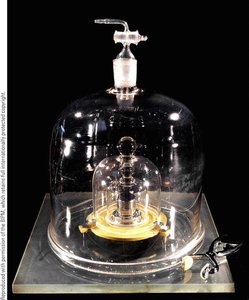
Kilogram (kg): Defined by the mass of a specific platinum-iridium alloy cylinder kept at the International Bureau of Weights and Measures.
Second (s): Defined as 9,192,631,770 periods of radiation from the cesium-133 atom.

1.4 Position and Time: Putting Numbers on Nature
To describe motion, we need to specify the position of objects in space and time. This is done using coordinate systems.
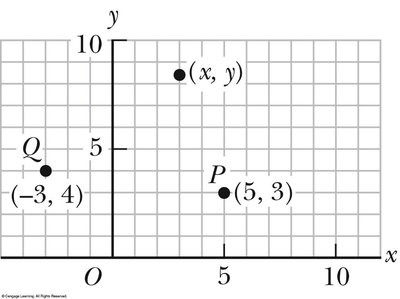
Coordinate System: Consists of an origin, axes, and a method for labeling points.
Common systems: Cartesian (rectangular) and plane polar coordinates.
Cartesian Coordinate System
Uses x and y axes; points are labeled (x, y).
Positive x is to the right, positive y is upward from the origin.
Plane Polar Coordinate System
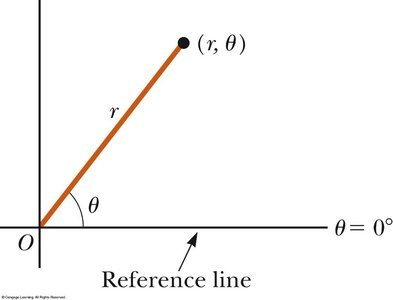
Points are labeled (r, θ), where r is the distance from the origin and θ is the angle from a reference line.
Positive angles are measured counterclockwise from the reference line (usually the positive x-axis).
1.5 A Sense of Scale: Significant Figures, Scientific Notation, and Units
Physics often deals with very large or very small numbers, requiring clear notation and careful attention to measurement precision.
Scientific Notation: Expresses numbers as a product of a coefficient and a power of ten (e.g., ).
Significant Figures: Digits in a measurement that are known reliably, plus one estimated digit.
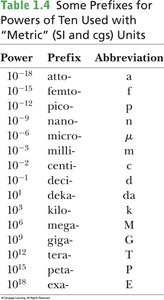
Prefixes: Used to denote powers of ten in metric units (e.g., kilo-, milli-, micro-).
Unit Conversions and Dimensional Analysis
Units can be converted using conversion factors (e.g., 1 km = 1,000 m).
Dimensional analysis checks the consistency of equations by comparing the dimensions on both sides.
Operations with Significant Figures
Multiplication/Division: Result has as many significant figures as the least precise factor.
Addition/Subtraction: Result is rounded to the smallest number of decimal places among the terms.
Uncertainty and Order-of-Magnitude Calculations
All measurements have uncertainty, which propagates through calculations.
Order-of-magnitude estimates use powers of ten to approximate values when precision is not required.
1.6 Vectors and Motion: A First Look
Vectors are quantities with both magnitude and direction, essential for describing motion in physics.
Vector: Has both magnitude and direction (e.g., displacement, velocity).
Scalar: Has only magnitude (e.g., mass, temperature).
Vectors can be represented graphically and mathematically.
Trigonometry in Physics
Trigonometric functions relate the angles and sides of right triangles, useful for resolving vectors.
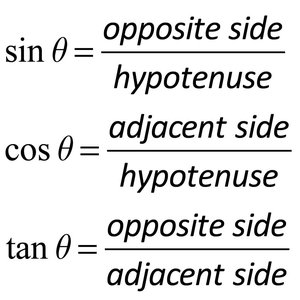
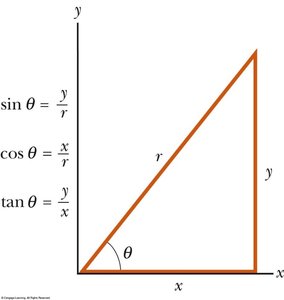
Rectangular and Polar Coordinates
Conversion between systems:
From rectangular to polar: ,
From polar to rectangular: ,
1.7 Example Problem: Measuring the Height of a Building
Example: A person stands 46.0 m from a building and shines a flashlight at a 39.0° angle to the top. The flashlight is held 2.00 m above the ground. Find the building's height and the length of the light beam.
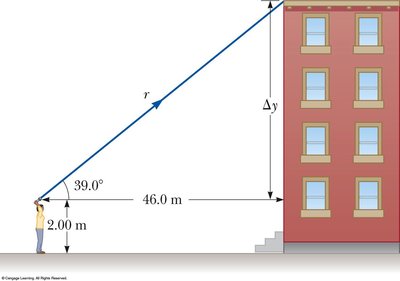
Height calculation: Add the height of the flashlight:
Length of the light beam: Use the Pythagorean theorem: Or, using cosine:
Summary Table: SI Prefixes
Power | Prefix | Abbreviation |
|---|---|---|
10-18 | atto- | a |
10-15 | femto- | f |
10-12 | pico- | p |
10-9 | nano- | n |
10-6 | micro- | μ |
10-3 | milli- | m |
10-2 | centi- | c |
10-1 | deci- | d |
101 | deka- | da |
103 | kilo- | k |
106 | mega- | M |
109 | giga- | G |
1012 | tera- | T |
1015 | peta- | P |
1018 | exa- | E |
