 Back
BackChapter 11: The Atomic Nature of Matter – Study Notes
Study Guide - Smart Notes
 Tailored notes based on your materials, expanded with key definitions, examples, and context.
The Atomic Nature of Matter
The Atomic Hypothesis
The atomic hypothesis is the foundational concept that all matter is composed of tiny, indivisible particles called atoms. This idea evolved from ancient philosophical speculation to scientific theory through centuries of observation and experimentation.
Historical Development: Early philosophers like Aristotle believed matter was made of four elements (earth, air, fire, water). Greek philosophers in the fifth century BC proposed the existence of atoms. John Dalton, in the early 1800s, revived the atomic theory based on experimental evidence.
Brownian Motion: In 1827, Robert Brown observed the random motion of particles suspended in water, later explained by Albert Einstein in 1905 as evidence for the existence of atoms.
Key Quote: Richard Feynman summarized the atomic hypothesis: "All things are made of atoms—little particles that move around in perpetual motion, attracting each other when they are a little distance apart, but repelling upon being squeezed into one another."
Characteristics of Atoms
Atoms are the basic building blocks of matter, possessing unique properties that define their behavior and interactions.
Size: Atoms are incredibly tiny, typically on the order of 0.1 nanometers in diameter.
Number: Atoms are vastly numerous; even a small amount of material contains billions of atoms.
Motion: Atoms are perpetually in motion, whether vibrating in solids, moving freely in gases, or diffusing in liquids.
Agelessness: Atoms are ancient and persist through time, often recycled in nature.
Atomic Imagery
Atoms are too small to be seen with visible light, but modern technology allows us to visualize them indirectly.
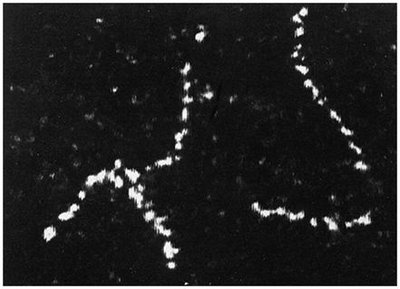
Electron Micrographs: Chains of individual atoms, such as thorium, have been imaged using electron microscopes.
Scanning Tunneling Microscopy: Reveals atomic-scale features as ripples and rings.
Classical Model: Atoms are depicted as a nucleus surrounded by orbiting electrons.

Atomic Structure
Each atom consists of a central nucleus and a surrounding cloud of electrons. The nucleus contains protons and neutrons, which are themselves composed of quarks.
Nucleus: Contains nucleons (protons and neutrons). Protons are positively charged, neutrons are neutral. Nucleons are held together by the strong nuclear force.
Electrons: Negatively charged particles bound to the nucleus by electrical forces. The number of electrons equals the number of protons in a neutral atom.
The Elements
An element is a substance composed of only one kind of atom. The periodic table organizes all known elements by their atomic number.
Hydrogen: The lightest and most abundant element in the universe.
Number of Elements: 118 known, 90 naturally occurring, others are synthetic and unstable.
Living Things: Primarily composed of oxygen, carbon, hydrogen, nitrogen, and calcium.
The Periodic Table of Elements
The periodic table is a chart that arranges elements by increasing atomic number and groups them by similar chemical properties.
Atomic Number: Number of protons in the nucleus.
Arrangement: Elements are organized left to right, top to bottom. Each successive element has one more proton and electron.
Noble Gases: Elements in the rightmost column have filled outer electron shells.

Relative Sizes of Atoms
The size of an atom is determined by the diameter of its outer electron shell, which depends on the nuclear charge and the arrangement of electrons.
Trend: Atomic diameters decrease from left to right across the periodic table as nuclear charge increases.
Inner Orbits: As electrons are added, inner orbits shrink due to increased attraction to the nucleus.

Ions and Isotopes
Ions and isotopes are variations of atoms that differ in their electrical charge or neutron number, respectively.
Ions: Charged atoms. Positive ions have fewer electrons than protons; negative ions have more electrons than protons.
Isotopes: Atoms of the same element with different numbers of neutrons. Isotopes are identified by their mass number (protons + neutrons).
Example: Iron-56 has 26 protons and 30 neutrons.
Compounds and Mixtures
Atoms can combine to form compounds or mix without bonding to form mixtures.
Compounds: Substances formed by chemical bonding of atoms from different elements. Properties differ from constituent elements. Example: Sodium chloride (NaCl).
Mixtures: Substances mixed together without chemical bonding. Example: Air (mostly nitrogen and oxygen).
Molecules
A molecule is a group of two or more atoms bonded together. Chemical reactions rearrange atoms to form new molecules.
Example: Ammonia (NH3) consists of one nitrogen atom and three hydrogen atoms.
Chemical Reactions: Atoms rearrange to form different molecules, often requiring or releasing energy.
Photosynthesis: Sunlight breaks bonds in molecules to produce oxygen and carbon.
Rust Formation: Oxygen atoms combine with iron atoms to form rust.

Antimatter
Antimatter consists of particles with properties opposite to those of ordinary matter. When matter and antimatter meet, they annihilate each other.
Antiparticles: Each particle (electron, proton, etc.) has a corresponding antiparticle with opposite charge.
Antimatter Atoms: Have negatively charged nuclei surrounded by positrons (anti-electrons).
Positrons: Same mass as electrons, but positively charged.
Antiprotons: Same mass as protons, but negatively charged.
Dark Matter and Dark Energy
Dark matter and dark energy are mysterious components of the universe, detected through their gravitational effects and influence on cosmic expansion.
Dark Matter: Interacts only gravitationally with ordinary matter; comprises about 23% of the universe's mass.
Dark Energy: An antigravity energy making up about 73% of the universe's energy, responsible for accelerating cosmic expansion.
Scientific Quest: Understanding the nature of dark matter and dark energy is a major focus in modern physics.
