 Back
BackChapter 13: Fluids – Properties, Pressure, and Dynamics
Study Guide - Smart Notes
 Tailored notes based on your materials, expanded with key definitions, examples, and context.
Fluids and Density
States of Matter and Their Properties
Understanding the behavior of fluids begins with the classification of matter into solids, liquids, gases, and plasma. Each state has distinct molecular arrangements and properties:
Solids: Definite volume and shape; molecules vibrate about fixed positions due to strong intermolecular forces.
Liquids: Definite volume but no definite shape; molecules move more freely than in solids.
Gases: No definite volume or shape; molecules are far apart and move randomly.
Plasma: Ionized gas with free electrons; found in stars.
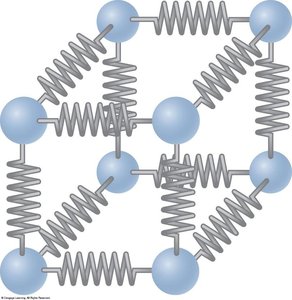
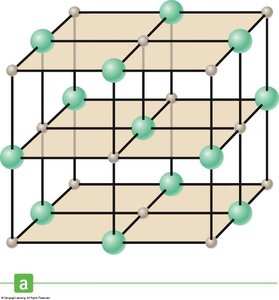
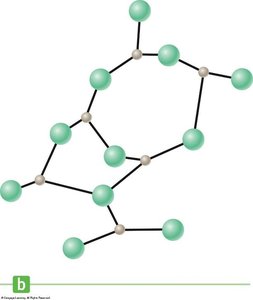
Crystalline and Amorphous Solids
Crystalline solids: Atoms are arranged in an ordered structure (e.g., NaCl).
Amorphous solids: Atoms are arranged almost randomly (e.g., glass).
Density
Density () is defined as mass per unit volume:
SI unit: kg/m3
1 g/cm3 = 1000 kg/m3
Density of solids and liquids changes slightly with temperature and pressure; gases vary greatly.
Specific Gravity
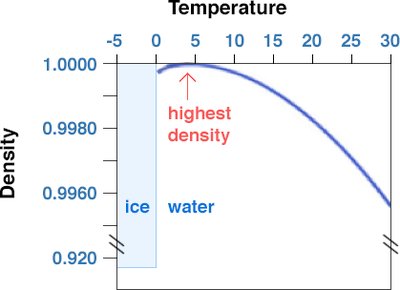
Specific gravity (SG) is the ratio of the density of a substance to the density of water at 4°C. It is dimensionless:
Density of water at 4°C: 1.000 g/cm3
Example: Mercury's SG is 13.6.
Pressure in Fluids
Definition of Pressure
Pressure (P) is the force (F) applied perpendicular to a surface divided by the area (A):
SI unit: Pascal (Pa), where 1 Pa = 1 N/m2
Other units: atm, bar, mmHg, psi
1 atm = Pa = 760 mmHg = 14.70 psi
Pressure Variation with Depth
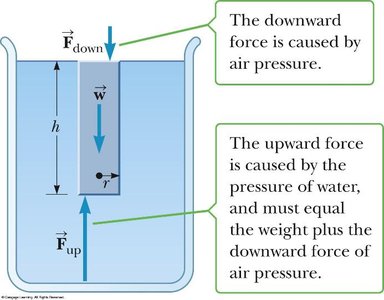
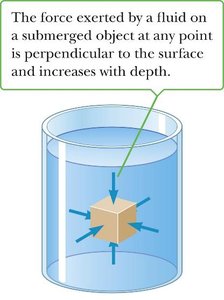
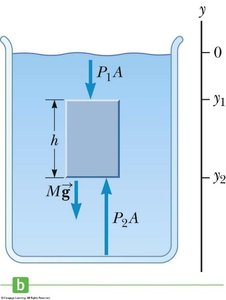
In a fluid at rest, pressure increases with depth due to the weight of the fluid above:
is atmospheric pressure at the surface.
is fluid density, is acceleration due to gravity, is depth.
Hydrostatic Equilibrium
All points at the same depth in a static fluid have the same pressure. If not, fluid would flow from high to low pressure until equilibrium is reached.
Pascal’s Principle
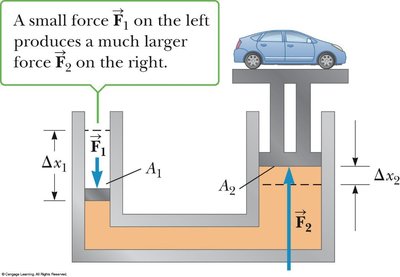
A change in pressure applied to an enclosed fluid is transmitted undiminished throughout the fluid and to the walls of the container. This principle is the basis for hydraulic systems:
A small force applied to a small area can produce a large force on a larger area.
Pressure Measurement Devices
Manometer: Measures pressure relative to atmospheric pressure using a U-shaped tube.
Barometer: Measures atmospheric pressure using a column of mercury.
Sphygmomanometer: Measures blood pressure in mmHg.
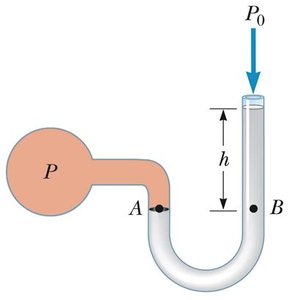
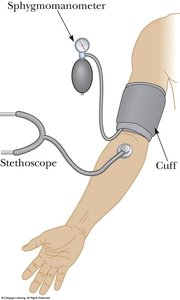
Absolute vs. Gauge Pressure
Absolute pressure: Measured relative to a vacuum.
Gauge pressure: Measured relative to atmospheric pressure.
Relationship:
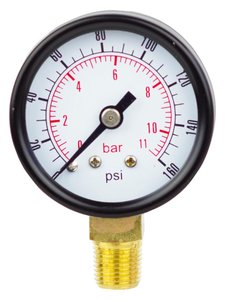
Buoyancy and Archimedes’ Principle
Archimedes’ Principle
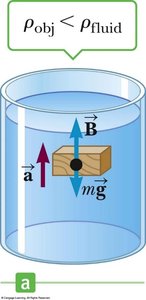
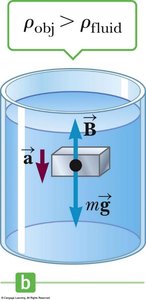
Any object completely or partially submerged in a fluid experiences an upward buoyant force equal to the weight of the fluid displaced by the object:
The buoyant force is due to the pressure difference between the top and bottom of the object.
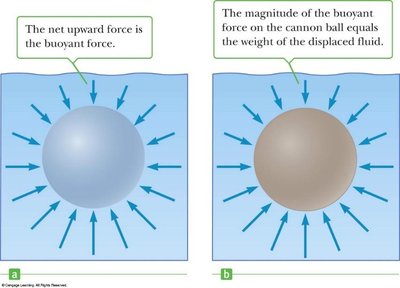
Floating and Sinking
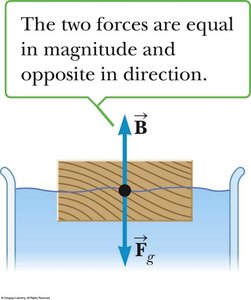
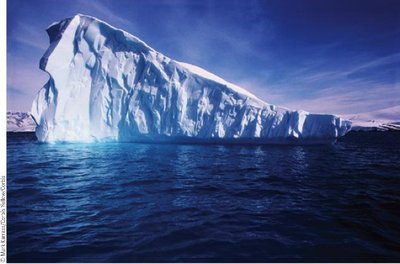
If the object's density is less than the fluid's, it floats; if greater, it sinks.
For floating objects, the weight of the displaced fluid equals the object's weight.
Fluids in Motion
Streamline (Laminar) and Turbulent Flow
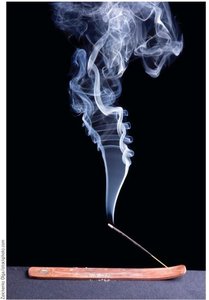
Streamline (Laminar) flow: Fluid particles follow smooth paths; velocity at any point is constant over time.
Turbulent flow: Irregular, with mixing and eddy currents; occurs at high velocities or with abrupt changes in flow.
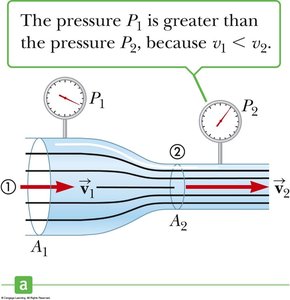
Equation of Continuity
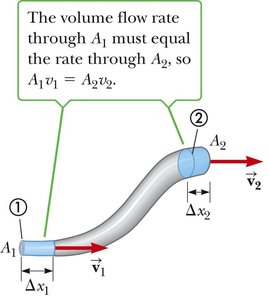
For an incompressible fluid, the mass flow rate is constant throughout a pipe:
Where is cross-sectional area and is fluid speed.
Speed increases in narrower sections of pipe.
Bernoulli’s Principle and Equation
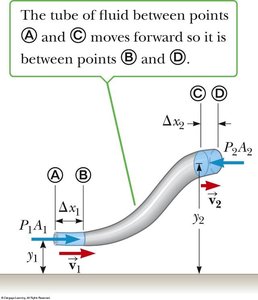
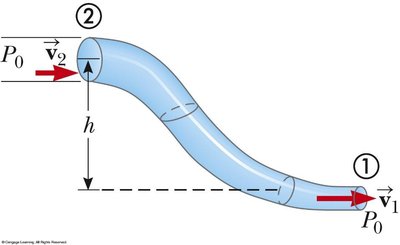
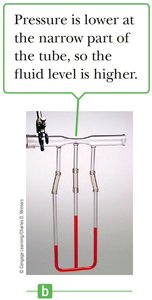
Bernoulli’s equation relates pressure, kinetic energy per unit volume, and potential energy per unit volume along a streamline:
As fluid speed increases, pressure decreases (and vice versa).
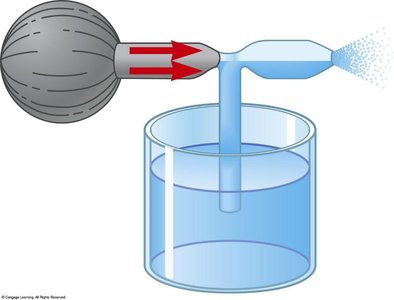
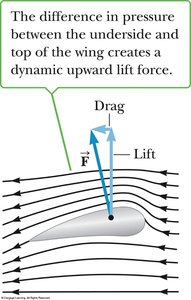
Explains lift on airplane wings, atomizers, and other phenomena.
Applications of Bernoulli’s Principle
Atomizer: Fast-moving air reduces pressure, drawing liquid up and dispersing it as a spray.
Airplane wing: Faster airflow above the wing creates lower pressure, resulting in lift.
Viscosity and Poiseuille’s Equation
Viscosity
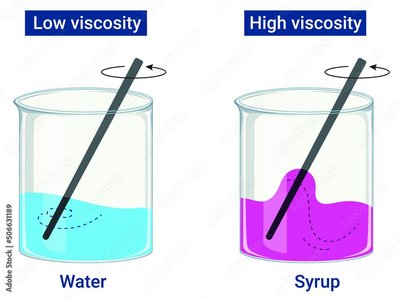
Viscosity is a measure of a fluid's resistance to flow, caused by internal friction between layers moving at different velocities. High viscosity fluids (like syrup) flow more slowly than low viscosity fluids (like water).
Summary Table: Key Fluid Properties and Principles
Concept | Definition/Formula | SI Unit |
|---|---|---|
Density () | kg/m3 | |
Specific Gravity (SG) | Dimensionless | |
Pressure (P) | Pa (N/m2) | |
Hydrostatic Pressure | Pa | |
Buoyant Force (B) | N | |
Continuity Equation | m3/s | |
Bernoulli’s Equation | Pa |
