 Back
BackChapter 14: Gases – Properties, Laws, and Applications
Study Guide - Smart Notes
 Tailored notes based on your materials, expanded with key definitions, examples, and context.
Gases
The Atmosphere
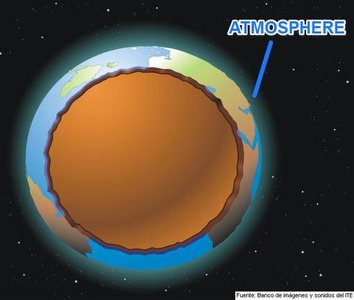
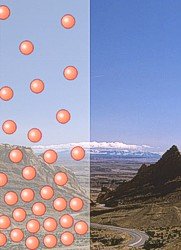
The Earth's atmosphere is a mixture of gases that envelops the planet, held in place by gravitational attraction. The energy of air molecules primarily comes from the Sun, which heats the atmosphere and drives weather and climate. Air is denser at sea level and becomes less dense with increasing altitude, creating a pressure gradient.
Atmospheric Composition: Mainly nitrogen (N2), oxygen (O2), with traces of argon, carbon dioxide, and other gases.
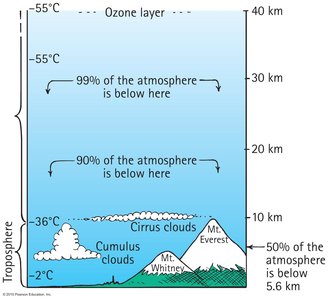
Atmospheric Density: Highest at sea level, decreases with altitude.
Energy Source: Solar radiation energizes air molecules.
Atmospheric Pressure
Atmospheric pressure is the force exerted by the weight of air above a given point. At sea level, the average atmospheric pressure is 1 atm (101.3 kPa or 14.7 psi). This pressure is not felt because the pressure inside our bodies balances the external pressure, resulting in a net force of zero.
Pressure Variation: Atmospheric pressure decreases with altitude and varies with weather and locality.
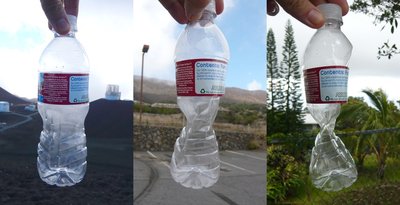
Everyday Effects: Ears pop during airplane descent due to pressure imbalance; plastic bottles crush when descending from high altitudes due to higher external pressure.
Vacuum Cleaners: Do not "suck" but create a pressure difference, causing air to push particles into the vacuum.
Drinking with a Straw: Lowering air pressure in the mouth allows atmospheric pressure to push liquid up the straw.




Barometer
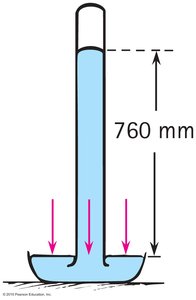
A barometer is a device used to measure atmospheric pressure. The classic mercury barometer consists of a column of mercury in a glass tube; the height of the mercury column indicates the atmospheric pressure. At sea level, the column stands at 760 mm (1 atm).
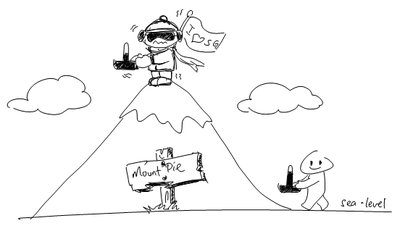
Altitude Effect: The height of the mercury column decreases with altitude due to lower atmospheric pressure.
Tube Area: The height of the mercury column is independent of the tube's cross-sectional area.
Mercury vs. Water: Mercury is used because it is much denser than water; a water barometer would require a much taller column (about 10.3 m).
Straws in Space: Straws do not work in space due to the absence of atmospheric pressure.

Boyle's Law
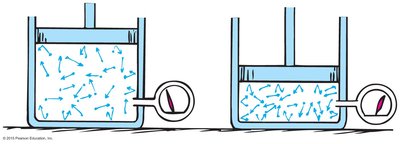
Boyle's Law states that for a fixed amount of gas at constant temperature, the pressure and volume are inversely proportional. This means that if the volume increases, the pressure decreases, and vice versa, as long as the temperature remains constant.
Mathematical Expression:
Example: If the volume of a gas is tripled, the pressure becomes one-third of its original value.
Buoyancy of Air
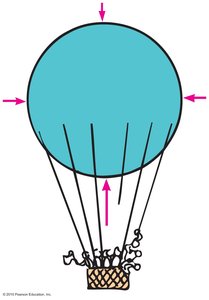
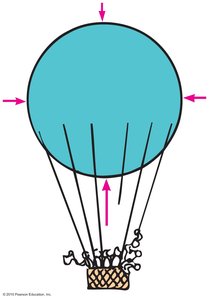
Archimedes' principle applies to gases as well as liquids: an object immersed in a fluid experiences an upward buoyant force equal to the weight of the fluid displaced. This explains why helium and hot air balloons rise in the atmosphere.
Buoyant Force Formula:
Balloon Equilibrium: A balloon rises until the weight of the displaced air equals the weight of the balloon ().

Bernoulli's Principle
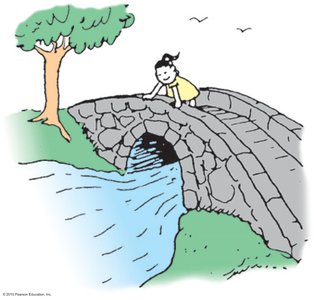
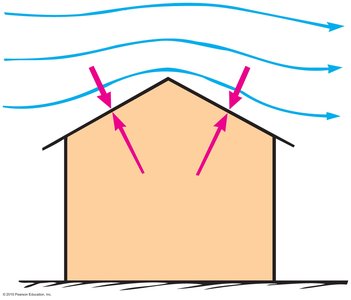
Bernoulli's Principle states that in a steady flow of a fluid, where the speed of the fluid increases, the internal pressure decreases. This principle explains many phenomena, such as why airplanes fly and why roofs can be lifted off houses during storms.
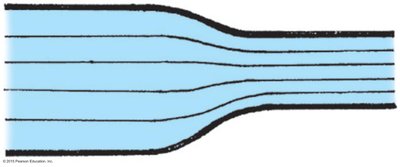
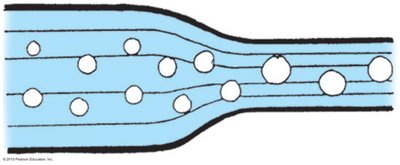
Principle of Continuity: Fluid speeds up in narrower regions and slows in wider regions.
Streamlines: Closer streamlines indicate higher fluid speed.
Bernoulli's Equation:
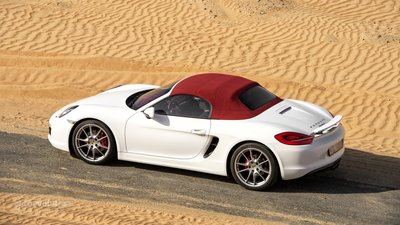
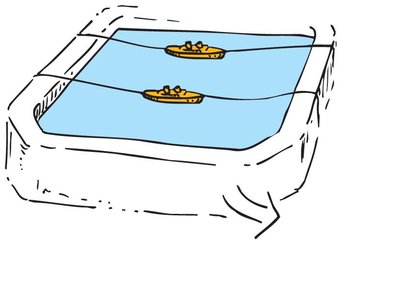
Applications: Airplane lift, garden hose narrowing, convertible car tops puffing up, umbrella inversion, and ship collisions due to pressure differences.


Plasma
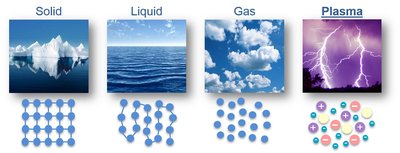
Plasma is the fourth state of matter, consisting of an electrified gas with ions and free electrons. It is created by adding enough energy to a gas or by bombarding atoms with high-energy particles. Plasma is conductive and makes up most of the visible matter in the universe, including stars and auroras.
Creation: High temperatures or energetic collisions strip electrons from atoms.
Properties: Conducts electricity, unlike most gases which are insulators.
Examples: The Sun, lightning, auroras, and plasma globes.
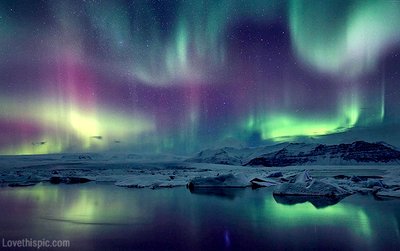
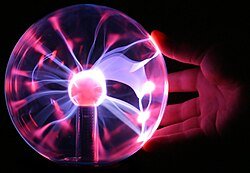
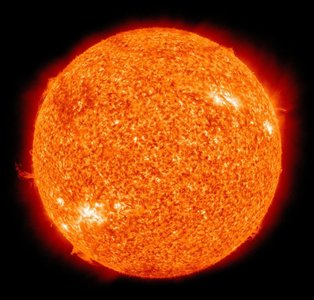
Additional info: The notes above expand on the lecture outline by providing definitions, formulas, and real-world examples for each concept. The images included are directly relevant to the explanations and reinforce the academic content.
