 Back
BackChapter 15: Fluids – Structured Study Notes
Study Guide - Smart Notes
 Tailored notes based on your materials, expanded with key definitions, examples, and context.
Fluids
15-1 Density
Density is a fundamental property of fluids, describing how much mass is contained in a given volume. It is crucial for understanding fluid behavior and interactions.
Definition: Density (\( \rho \)) is defined as mass (M) per unit volume (V):
High density means more mass in a given volume.
Examples: Gold (19,300 kg/m3), Mercury (13,600 kg/m3), Water (1,000 kg/m3), Air (1.29 kg/m3).
15-2 Pressure
Pressure is the force applied perpendicular to the surface of an object per unit area. It is a key concept in fluid mechanics, affecting how fluids interact with surfaces and each other.
Definition: Pressure (P) is given by:
SI unit: Pascal (Pa), where 1 Pa = 1 N/m2.
Atmospheric pressure: N/m2 (Pa).
Pressure acts equally in all directions and at right angles to any surface.
Gauge pressure: The pressure measured relative to atmospheric pressure. Actual pressure is:




15-3 Static Equilibrium in Fluids: Pressure and Depth
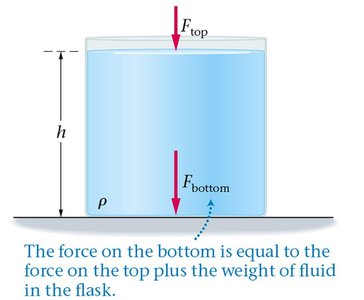
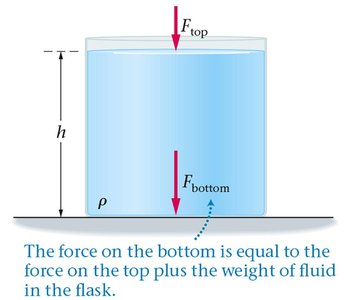
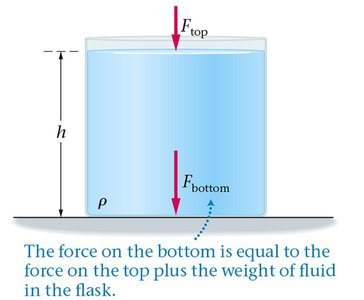
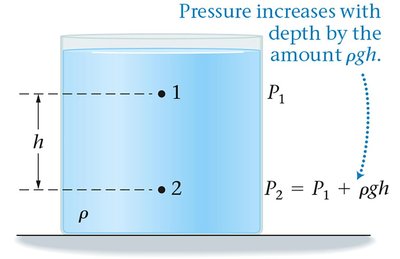
Pressure in a fluid increases with depth due to the weight of the fluid above. This relationship is essential for understanding phenomena such as buoyancy and barometric measurements.
Pressure at depth:
Pressure difference: At two points separated by depth h:
Pressure depends only on depth, not the shape of the container.




Barometer and Atmospheric Pressure
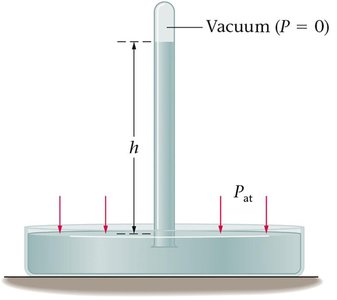
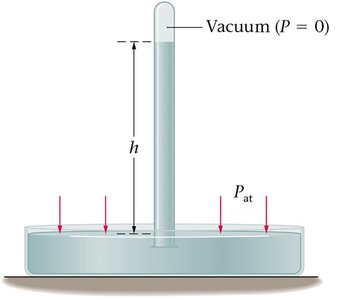
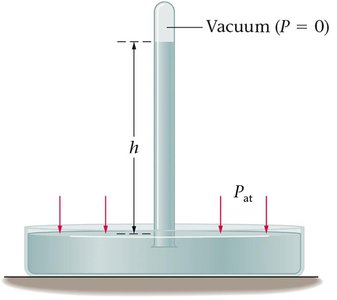
Barometer: Measures atmospheric pressure using a column of fluid (often mercury).
Height of fluid column:

Pascal’s Principle and Hydraulic Lift
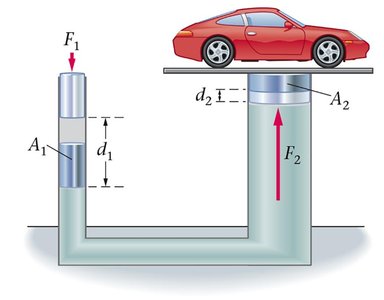
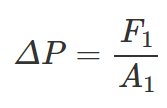
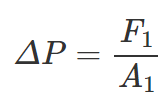
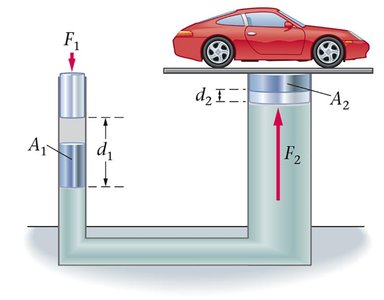
Pascal’s Principle: An external pressure applied to an enclosed fluid is transmitted unchanged throughout the fluid.
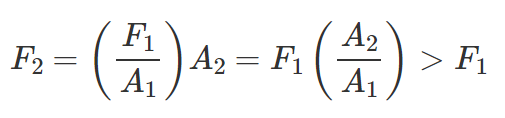
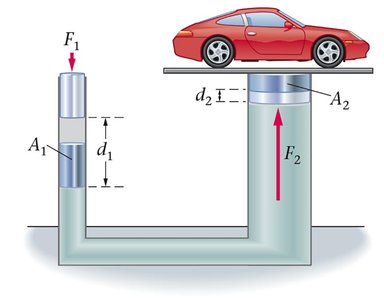
Hydraulic lift: Used to amplify force using different cross-sectional areas.
Force amplification:
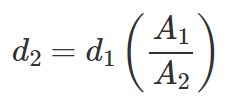
Distance relationship:

15-4 Archimedes’ Principle and Buoyancy
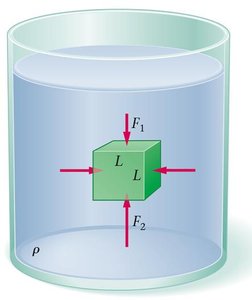
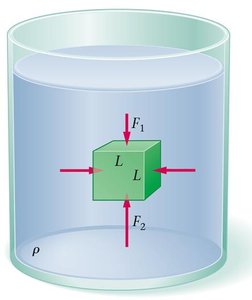
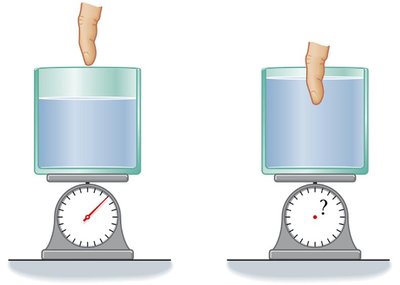
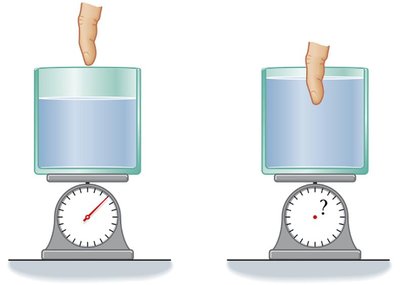
Archimedes’ Principle states that a body submerged in a fluid experiences an upward buoyant force equal to the weight of the fluid it displaces. This principle explains why objects float or sink.
Buoyant force:
Net force: The net force on a submerged object is the difference between the buoyant force and the weight of the object.
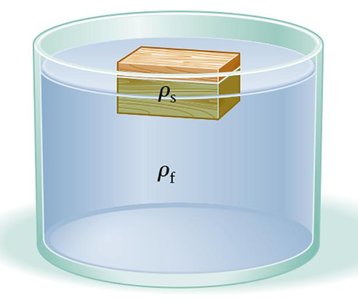
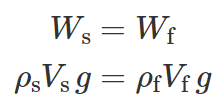
Floating: An object floats if the buoyant force equals its weight.

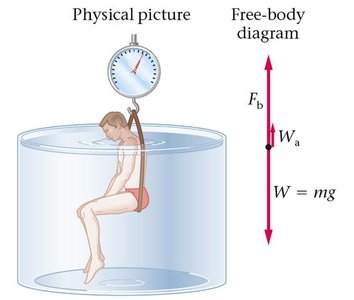

15-5 Applications of Archimedes’ Principle
Archimedes’ Principle is applied in various scenarios, including floating objects, hot air balloons, and ships. The shape and density of objects determine their ability to float.
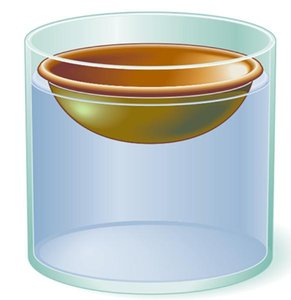
Floating clay bowl: Shape allows displacement of enough water to equal its weight.
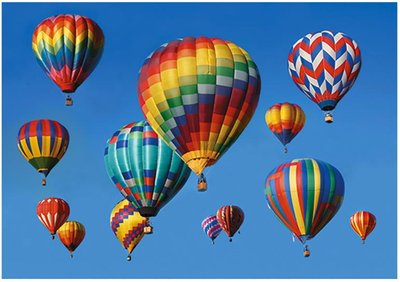
Hot air balloons: Lower density of hot air inside the balloon allows it to rise.
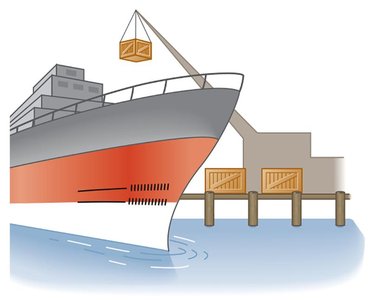
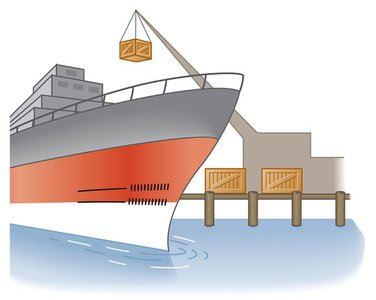
Ships: Maximum load lines indicate safe loading based on water density.

Fraction Submerged and Icebergs
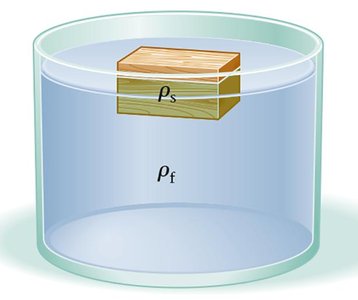
Fraction submerged:
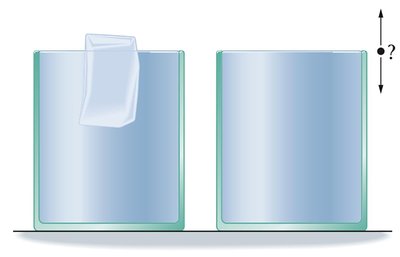
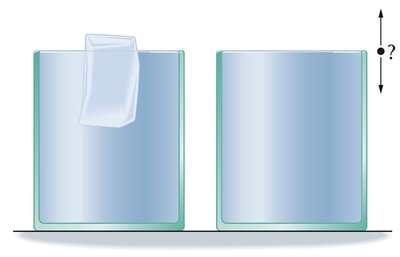
Icebergs: Most of the volume is submerged due to lower density of ice compared to water.

15-6 Fluid Flow and Continuity
Fluid flow in pipes is governed by the principle of continuity, which states that the mass flow rate must be constant throughout the pipe. This leads to changes in speed and area as the pipe narrows or widens.
Equation of continuity:
For incompressible fluids:
Application: Water speeds up as it exits a narrower nozzle.
15-7 Bernoulli’s Equation
Bernoulli’s Equation relates the pressure, velocity, and height in a moving fluid. It is a statement of energy conservation for fluids and explains phenomena such as lift and pressure changes in pipes.
General form:
Tradeoff: As fluid speed increases, pressure decreases.
Applications: Used to analyze flow in pipes, pressure differences, and lift in airplane wings.
15-8 Applications of Bernoulli’s Equation
Bernoulli’s Equation is used to explain lift in airplane wings, pressure differences in storms, and the operation of atomizers and fountains.
Airplane wing: Faster air above wing creates lower pressure, resulting in lift.
Hurricanes: Fast winds create pressure differences that can lift roofs.
Atomizer: Pressure difference draws liquid into air stream.
Torricelli’s Law: Speed of water exiting a hole:
15-9 Viscosity and Surface Tension
Real fluids exhibit viscosity, a resistance to flow, and surface tension, which allows small objects to float on liquid surfaces. These properties are important in biological and industrial applications.
Viscosity: Resistance to flow, measured by coefficient \( \eta \).
Poiseuille’s equation:
Surface tension: Force per unit length or energy per unit area, causes liquid surfaces to behave like elastic membranes.
Droplets: Surface tension minimizes surface area, resulting in spherical droplets.
Additional info: These notes expand on brief points with academic context, definitions, and relevant formulas. Images included are directly relevant to the explanations and reinforce key concepts.
