Back
BackChapter 2: Motion Along a Straight Line – Study Notes
Study Guide - Smart Notes
 Tailored notes based on your materials, expanded with key definitions, examples, and context.
Motion Along a Straight Line
Introduction to One-Dimensional Kinematics
Kinematics is the branch of physics that describes the motion of objects without considering the causes of motion. In this chapter, we focus on motion along a straight line (one-dimensional motion), which is the simplest form of motion and forms the foundation for understanding more complex movements.
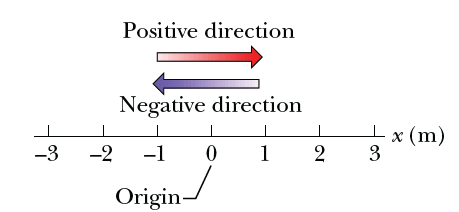
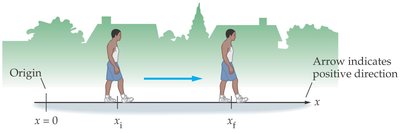
Coordinate System: To describe motion, a coordinate system is established with an origin and a positive direction. The position of an object is measured relative to this origin.
Position (x): A vector quantity that can be positive, negative, or zero depending on its location relative to the origin.

2.1 Position, Displacement, and Average Velocity
Understanding how an object's position changes over time is fundamental to kinematics.
Distance (d): The total length of the path traveled, always a positive scalar.
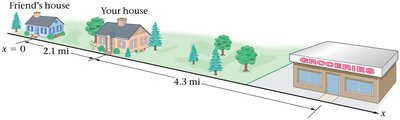
Displacement (Δx): The change in position, defined as final position minus initial position. Displacement is a vector and can be positive, negative, or zero.
Formula:
Example: If a particle moves from to , (positive direction). If it returns to $x = 5\ \mathrm{m}$, but the distance traveled is the sum of all segments.
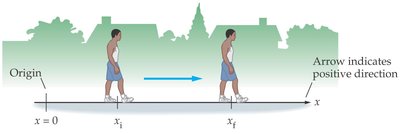
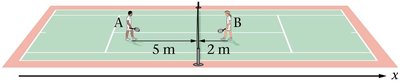
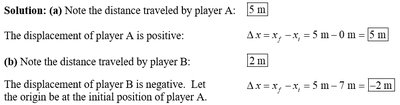
Key Point: Displacement is not the same as distance. For example, throwing a ball straight up and catching it at the same point results in zero displacement but a nonzero distance.
Average Velocity and Average Speed
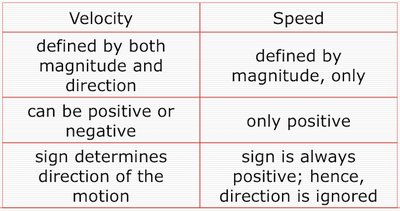
Average Velocity (): Displacement divided by elapsed time. It is a vector and can be positive or negative.
Formula:
Average Speed: Total distance divided by total time. It is a scalar and always positive.
Example: An athlete sprints 50.0 m in 8.00 s, then walks back in 40.0 s. The average velocity for the round trip is zero, but the average speed is nonzero.
2.2 Instantaneous Velocity and Speed
Instantaneous velocity is the velocity of an object at a specific instant or point along its path. It is the limit of the average velocity as the time interval approaches zero.
Formula:

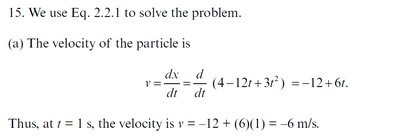
Example: If , then . At s, m/s.
2.3 Acceleration
Acceleration is the rate of change of velocity with respect to time. It is a vector quantity and can be positive or negative depending on the direction of velocity change.
Average Acceleration ():
Instantaneous Acceleration:
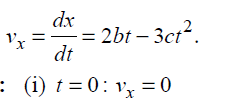
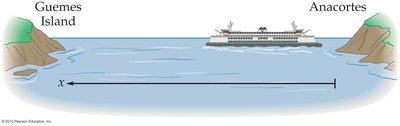
Example: If , then
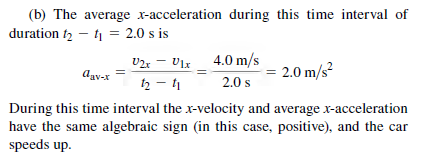
Key Point: When velocity and acceleration have the same sign, speed increases. When they have opposite signs, speed decreases (deceleration).
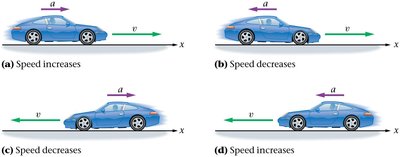
2.4 Constant Acceleration
When acceleration is constant, the equations of motion simplify and can be used to solve a wide range of problems.
Equations of Motion for Constant Acceleration:
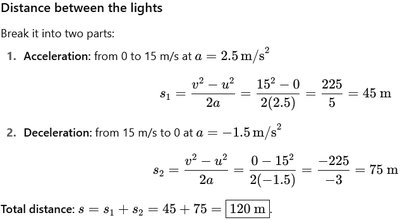
Example: A car accelerates from rest to 15 m/s at , then decelerates to rest at . Total distance traveled is 120 m.

2.5 Free-Fall Acceleration
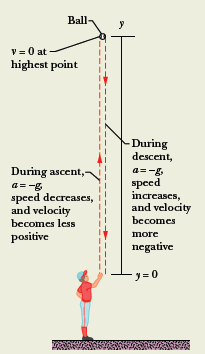
Free fall describes the motion of objects under the influence of gravity alone. The acceleration due to gravity () is approximately downward near Earth's surface.
Key Points:
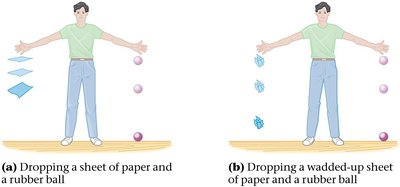
All objects in free fall accelerate at the same rate, regardless of mass.
Air resistance is neglected in ideal free fall.
Equations of motion for constant acceleration apply, with if upward is positive.

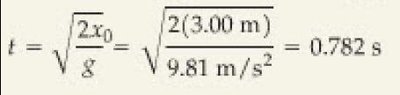
Example: A person steps off a 3-m-high diving board. Time to reach water: s. Speed on entering water: m/s.

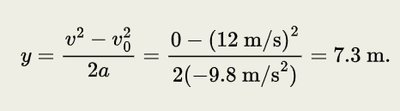
Example: A ball is thrown upward with m/s. Maximum height: m.
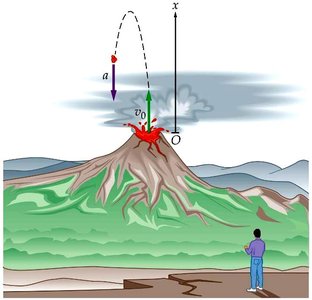
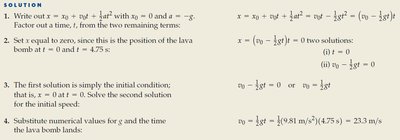
Example: A volcano ejects a lava bomb. If the total flight time is 4.75 s, initial speed is m/s.
Summary of Key Concepts
Distance: Total path length traveled (scalar).
Displacement: Change in position (vector).
Average Speed: Total distance divided by time (scalar).
Average Velocity: Displacement divided by time (vector).
Acceleration: Rate of change of velocity (vector).
Free Fall: Motion under gravity alone, .
Additional Info
Values of vary slightly with latitude and altitude (see table for different locations on Earth).