 Back
BackChapter 23: Electric Potential – Structured Study Notes
Study Guide - Smart Notes
 Tailored notes based on your materials, expanded with key definitions, examples, and context.
Electric Potential Energy
Work Done by a Force and Potential Energy
The concept of work done by a force is fundamental in physics, especially when dealing with conservative forces such as gravity and the electric field. For conservative forces, the work done can be expressed in terms of a change in potential energy (U).
Work done by a force:
Relationship to potential energy:
Conservative force: The work done depends only on the initial and final positions, not the path taken.
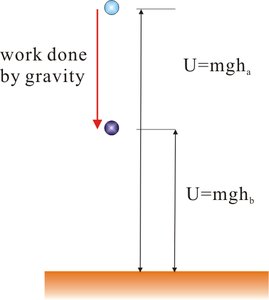
Example: In gravitational systems, potential energy is given by . The work done by gravity as an object moves from height to is .
Electric Potential Energy of Point Charges
For two point charges, the electric potential energy arises from the electric force between them. The potential energy can be calculated as:
For point charges:
The work done by the electric field is path-independent (conservative).
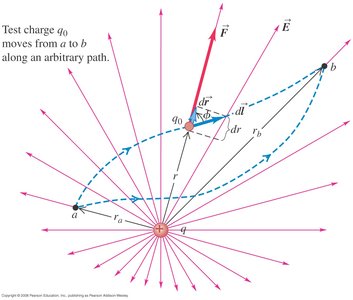
Example: A test charge moves from point to in the field of charge . The work done depends only on the radial distance.
Potential Energy of Multiple Charges
The potential energy of a system of charges is the sum of the potential energies due to each pair of charges. For a collection of charges and a test charge :
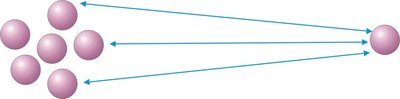
Example: The arrows represent the interactions between a single charge and a group of other charges.
Conservation of Energy
In systems involving electric potential energy, the total energy (kinetic + potential) remains constant:
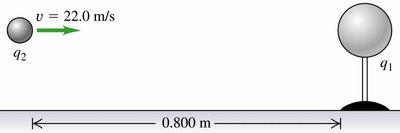
Example: If moves toward , its speed changes as potential energy converts to kinetic energy.
Electric Potential
Definition and Calculation
Electric potential (V) is defined as the potential energy per unit charge. It is a scalar quantity and is measured in volts (V), where .
Potential can be attractive or repulsive depending on the sign of the charges.
Particles tend to move from higher potential to lower potential.
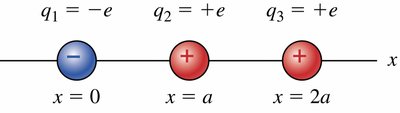
Example: The electric potential at a point due to multiple charges is the sum of the potentials from each charge.
Electric Potential Due to Point Charges
The electric potential at a distance from a point charge is:
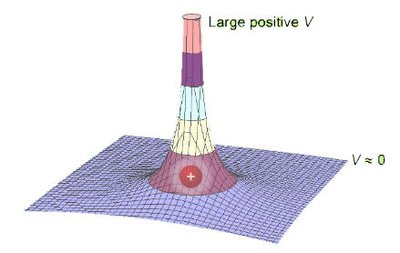
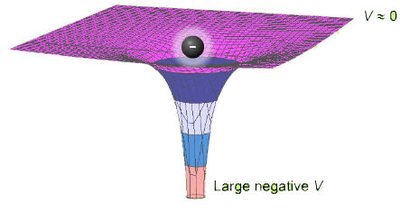
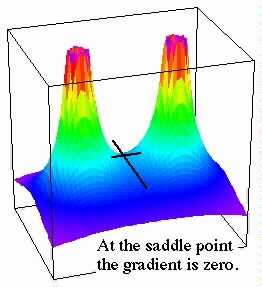
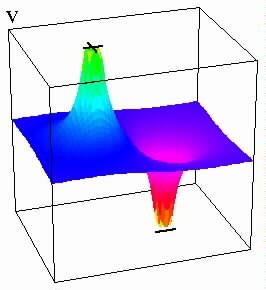
Example: The potential is large and positive near a positive charge, large and negative near a negative charge, and forms a saddle point between two opposite charges.
Potential Energy Difference and Potential Difference
The difference in potential energy and electric potential between two points is related to the work done by the electric field:
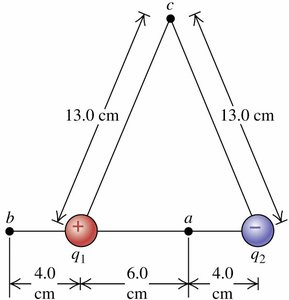
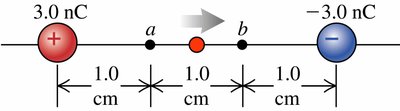
Example: Calculating the potential at points a, b, and c, and the potential energy of a charge due to two other charges.
Potential Due to Line and Sphere Charges
The potential due to a line charge or a conducting sphere can be calculated using integration and boundary conditions.
For a line charge:
For a sphere: The potential inside and outside depends on the radius and total charge.
Equipotential Surfaces
Definition and Properties
An equipotential surface is a surface where the electric potential is constant everywhere. No work is required to move a charge along an equipotential surface, as the potential energy does not change.
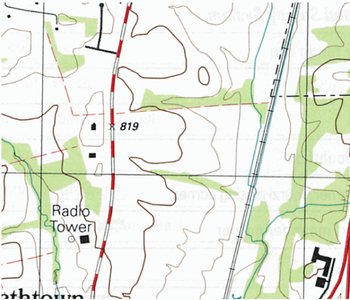
Equipotential lines are analogous to contour lines on a map.
Moving along an equipotential surface does not change the potential energy.
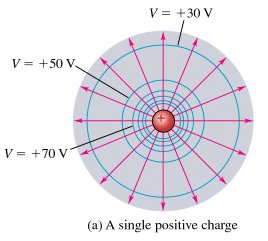
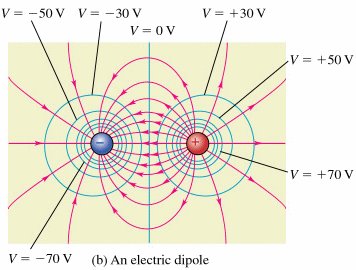
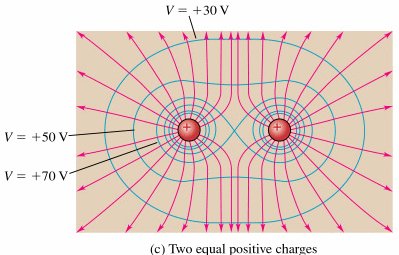
Example: The electric field lines are always perpendicular to equipotential surfaces.
Equipotential Surfaces and Conductors
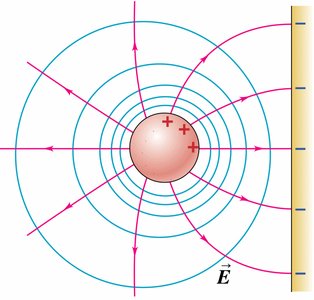
The surface of a conductor is always an equipotential. The potential inside a conductor is constant and equal to the surface potential.
Potential Gradient and Electric Field
Gradient and Coordinate Systems
The electric field is related to the spatial rate of change (gradient) of the electric potential. The gradient operator differs depending on the coordinate system.
In Cartesian coordinates:
In cylindrical coordinates:
In spherical coordinates:
Example: The gradient is zero at a saddle point, indicating no net electric field.
Electric Field and Potential Relationship
Radial Electric Fields and Parallel Plates
For radial electric fields, the potential difference is given by:
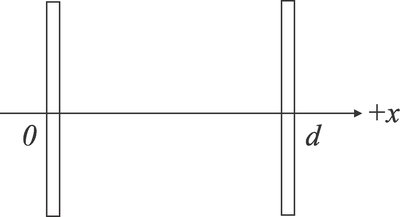
Example: The potential difference between two parallel plates can be calculated, and the equipotential surfaces are parallel to the plates.
Electric Field and Conductors – Faraday Cage
A Faraday cage is a conducting enclosure that shields its interior from external electric fields. The electric field inside a conductor is zero, and the potential is constant throughout.
Coordinate System | Gradient Expression |
|---|---|
Cartesian | |
Cylindrical | |
Spherical |
Additional info: The notes include examples and diagrams for calculating potential and energy in various configurations, including point charges, line charges, spheres, and parallel plates. The relationship between electric field and potential is emphasized, along with the concept of equipotential surfaces and their properties in conductors.
