 Back
BackChapter 27: Current and Resistance – Structured Study Notes
Study Guide - Smart Notes
 Tailored notes based on your materials, expanded with key definitions, examples, and context.
Electric Current
Definition and Properties
Electric current is the flow of electric charge through a conductor, typically a wire. It is a fundamental concept in physics and is essential for understanding electrical circuits and devices.
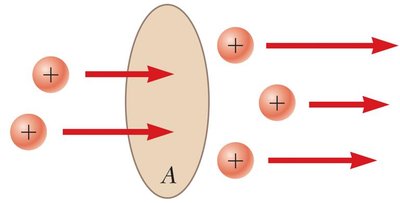
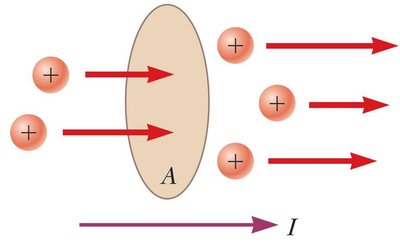
Definition: The average current is the amount of charge ΔQ passing through a cross-sectional area during time Δt.
SI Unit: The ampere (A), where 1 A = 1 C/s.
Instantaneous Current: The current at a specific moment is given by .
Current is a Scalar: Although it has a sign, current does not have direction like a vector.
Conventional Current Direction: Defined as the flow of positive charge, from the positive terminal to the negative terminal.
Electron Flow: In most conductors, electrons (negative charge carriers) move from the negative terminal to the positive terminal, opposite to the conventional current direction.
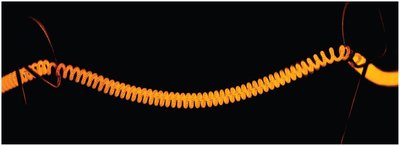

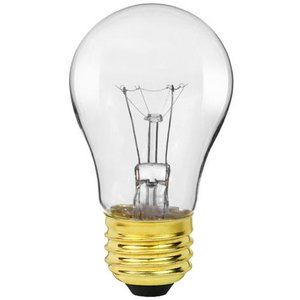
Example: A typical incandescent light bulb draws about 1 A, while a car starter motor draws about 200 A. Electronic devices like TVs, computers, and phones draw much smaller currents, often in the milliampere (mA) or nanoampere (nA) range.
Direction of Current
The direction of current is defined by the movement of positive charges. If your calculation yields a negative value, the current flows opposite to your assumed direction.
Conventional Current: Flows from + to -.
Electron Flow: Flows from - to +.
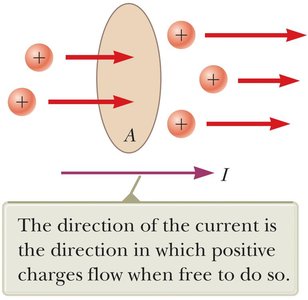
Example Calculation: If electrons pass through a wire in 4 minutes, the average current is:
Current Density
Definition and Calculation
Current density is the amount of current per unit area, and it is a vector quantity. It describes how current is distributed across a conductor's cross-section.
Formula:
SI Unit: A/m2
Direction: The direction of current density is the same as the velocity of positive charge carriers.

Microscopic View: In metals, free electrons move randomly until an electric field is applied, causing a net drift velocity .
Current:
Current Density:
For electrons: (negative sign indicates direction opposite to conventional current)
Currents in Materials
Charge Carriers and Drift Velocity
Different materials have different types and densities of charge carriers. In metals, electrons are the primary carriers, while in solutions, ions can carry charge.
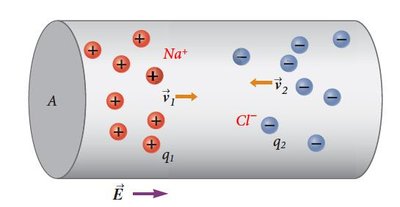
Volume Charge Density: is the number of charge carriers per unit volume.
Current in Solutions:
Current Density:
Adding Currents and Current Density
Branching and Conservation
When a wire splits, the total current is conserved. Current density changes with cross-sectional area.
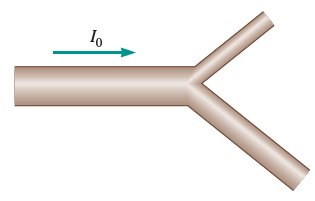
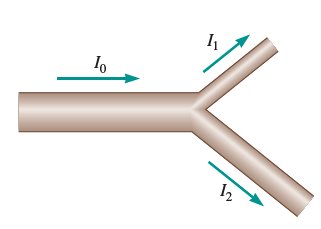
Current Conservation:
Current Density:
Resistivity and Ohm's Law
Definition and Material Properties
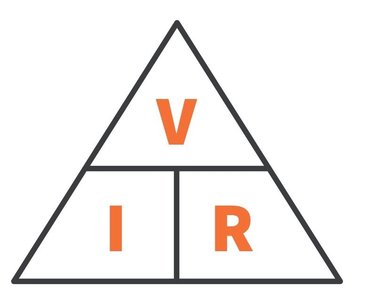
Resistivity is a material property that quantifies how strongly a material opposes the flow of electric current. Ohm's Law relates current, voltage, and resistance.
Ohm's Law:
Current Density:
Resistivity:
Conductivity:
Unit of Resistivity:
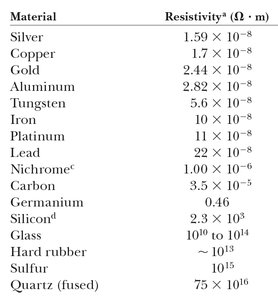
Example: For a copper wire with cross-sectional area m2 and current 10 A:
Resistance and Resistivity
Relationship and Circuit Applications
Resistance is a property of a device or material, while resistivity is a property of the material itself. Resistance depends on resistivity, length, and cross-sectional area.
Formula:
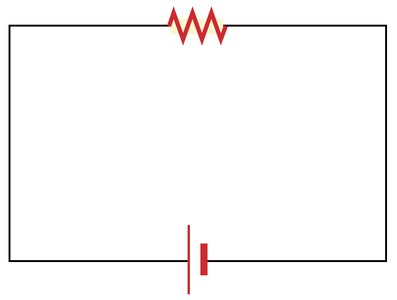
Ohm's Law (circuit level):
Resistor Symbol: Zig-zag line in circuit diagrams.

Ohmic and Non-Ohmic Materials
Behavior and Graphs
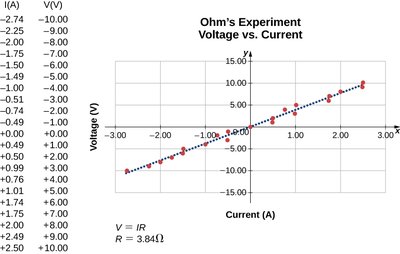
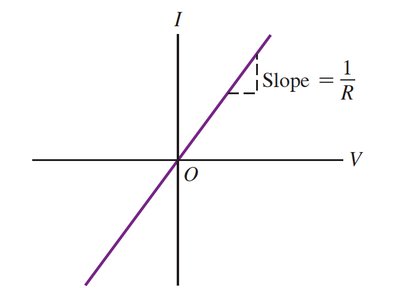
Materials that obey Ohm's Law are called ohmic; their resistivity is constant and the current-voltage relationship is linear. Non-ohmic materials have nonlinear relationships.
Ohmic: Linear vs. graph, slope
Non-Ohmic: Nonlinear vs. graph
Calculating Resistance of a Wire
Uniform and Variable Cross-Section
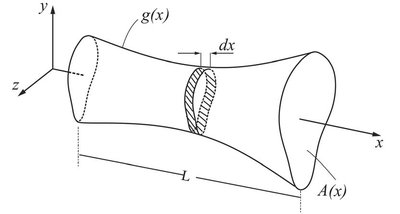
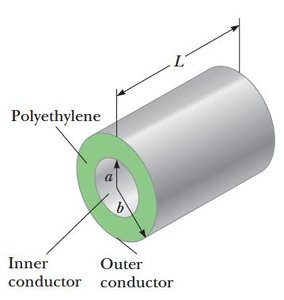
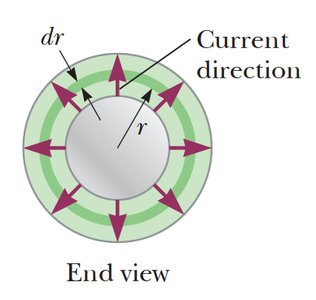
The resistance of a wire depends on its length, cross-sectional area, and resistivity. For wires with variable cross-section, integration is required.
Uniform Cross-Section:
Variable Cross-Section:
Integration:
Temperature Dependence of Resistivity
Effect of Temperature
Resistivity of most materials changes with temperature. For metals, resistivity increases with temperature.
Formula:
Reference Temperature: , usually 20°C
Temperature Coefficient:

Resistance Thermometers
Resistance thermometers, made of materials like carbon and platinum, are used to measure temperature by monitoring resistance changes.
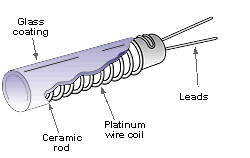
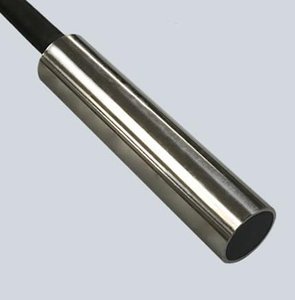
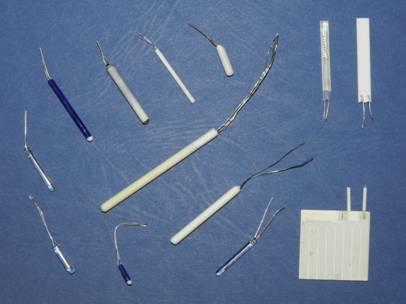
Calculation Example: For a carbon resistance thermometer, use the formula to determine temperature from measured resistance.
Additional info: The notes cover all major aspects of electric current, current density, resistivity, resistance, Ohm's Law, and temperature dependence, with relevant examples and equations for college-level physics.
