 Back
BackChapter 3: Vectors and Motion in Two Dimensions – Study Notes
Study Guide - Smart Notes
 Tailored notes based on your materials, expanded with key definitions, examples, and context.
Vectors and Motion in Two Dimensions
Introduction
This chapter explores the fundamental concepts of vectors and their application to motion in two dimensions. Understanding vectors is essential for analyzing physical phenomena such as projectile motion, circular motion, and motion on inclined planes.
Vectors: Definitions and Properties
What is a Vector?
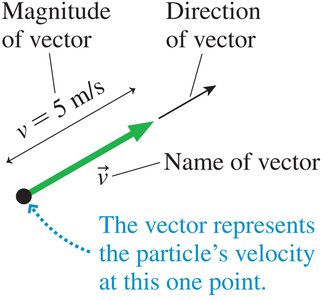
A vector is a quantity that has both magnitude (size) and direction. Examples include displacement, velocity, and acceleration. Vectors are represented graphically by arrows, where the length indicates magnitude and the arrow points in the direction.
Magnitude is always a positive quantity.
Direction specifies the orientation of the vector in space.
Two vectors are equal if they have the same magnitude and direction, regardless of their initial points.
Vector Addition and Subtraction
Vectors can be added or subtracted using graphical methods:
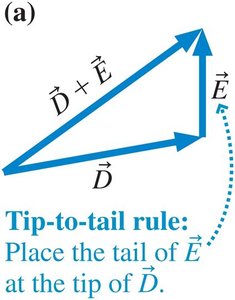
Tip-to-tail rule: Place the tail of the second vector at the tip of the first vector.
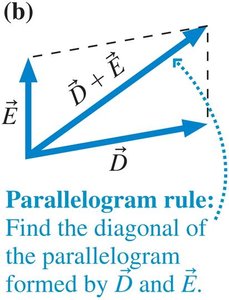
Parallelogram rule: Draw both vectors from a common origin and complete the parallelogram; the diagonal represents the resultant.
Vector addition is commutative:
Multiplication by a Scalar
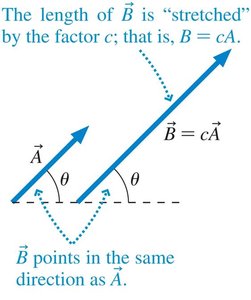
Multiplying a vector by a scalar changes its magnitude but not its direction (unless the scalar is negative, which reverses the direction):
For a positive scalar , points in the same direction as .
For a negative scalar, the direction is reversed.
Multiplying by zero yields the zero vector.
Vector Components and Coordinate Systems
Cartesian Coordinate System
A coordinate system is used to describe the position and direction of vectors. The most common is the Cartesian (xy) system, with perpendicular axes.
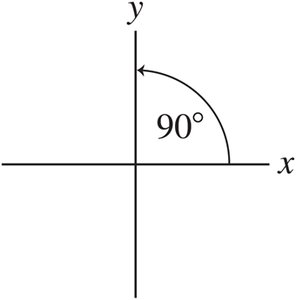
Component Vectors
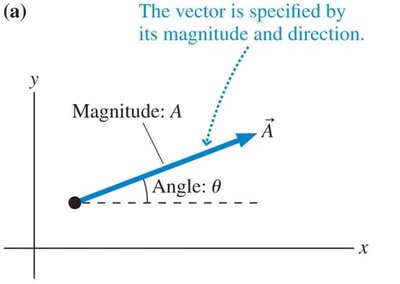
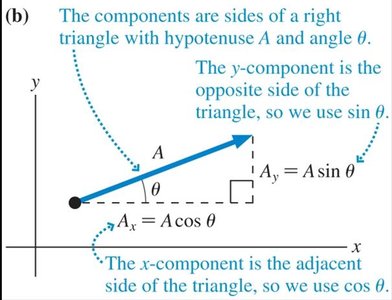
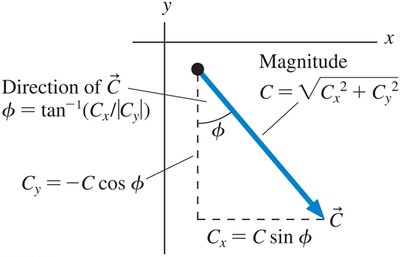
Any vector can be decomposed into components parallel to the axes:
The x-component and y-component are found using trigonometry:
For a vector making an angle with the x-axis:
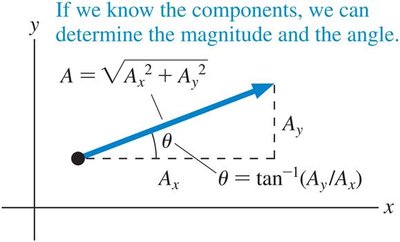
Magnitude and Direction from Components
The magnitude of a vector from its components:
The direction (angle ):
Motion in Two Dimensions
Projectile Motion
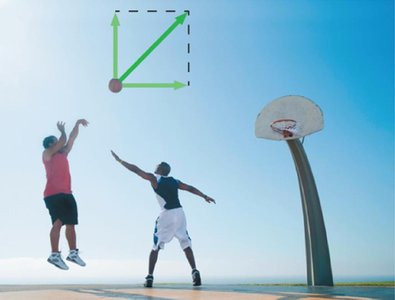
Projectile motion describes the path of an object moving under the influence of gravity alone. The path is a parabola, and the horizontal and vertical motions are independent.
Horizontal motion: constant velocity ()
Vertical motion: constant acceleration ()
Kinematic equations:

Motion on a Ramp
When analyzing motion on an inclined plane, it is often useful to align the coordinate axes with the ramp. The acceleration parallel to the ramp is:
Circular Motion
In uniform circular motion, an object moves at constant speed along a circular path. The velocity vector is tangent to the circle, while the acceleration vector points toward the center (centripetal acceleration):

Relative Motion
Relative Velocity
The velocity of an object can be different depending on the observer's frame of reference. Relative velocities are added vectorially:
Example: The velocity of a runner relative to the ground is the sum of the runner's velocity relative to a moving observer and the observer's velocity relative to the ground.
Summary Table: Key Equations and Concepts
Concept | Equation | Description |
|---|---|---|
Vector Addition | Resultant vector from two vectors | |
Vector Components | , | Decomposition of vector |
Magnitude from Components | Length of vector | |
Direction from Components | Angle of vector | |
Projectile Motion |
| Horizontal and vertical positions |
Circular Motion | Centripetal acceleration | |
Ramp Acceleration | Acceleration along ramp | |
Relative Velocity | Velocity in different frames |
Applications and Examples
Projectile motion: Used to analyze sports, animal jumps, and falling objects.
Circular motion: Relevant in amusement rides, planetary orbits, and vehicle turns.
Motion on a ramp: Important for understanding inclined planes and slopes.
Relative motion: Essential for navigation, aviation, and moving platforms.
Additional info: These notes expand on brief points from the original slides, providing full academic context, definitions, and examples for self-contained study.
