 Back
Chapter 4: Forces and Newton’s Laws of Motion – Structured Study Notes
Study Guide - Smart Notes
 Tailored notes based on your materials, expanded with key definitions, examples, and context.
Forces and Newton’s Laws of Motion
What Is a Force?
A force is a push or a pull that can cause an object to accelerate, change direction, or alter its state of motion. Forces are classified as either contact forces (requiring physical interaction) or long-range forces (acting at a distance).
Contact Forces: Forces that arise from physical contact, such as pushing a chair or kicking a ball.
Long-Range Forces: Forces that act without direct contact, including gravitational, electric, and magnetic forces.
Vector Nature: A force is a vector, meaning it has both magnitude and direction, denoted as .
Unit: The SI unit of force is the newton (N), where .
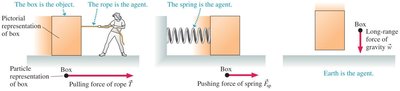
Drawing Force Vectors
Force vectors are drawn as arrows originating from the object (represented as a particle), with the arrow’s direction indicating the force’s direction and its length proportional to the force’s magnitude.
Place the tail of the force vector on the particle.
Draw the arrow in the direction of the force.
Label each vector appropriately.
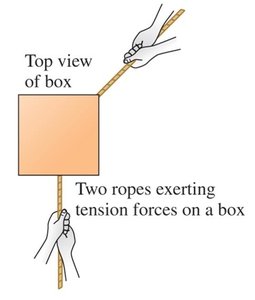
Combining Forces: Net Force
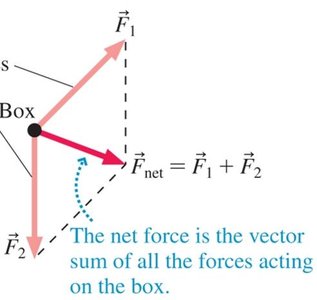
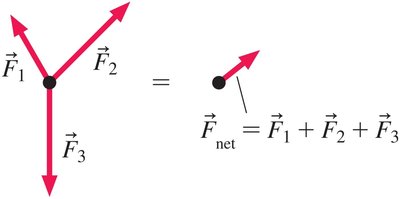
When multiple forces act on an object, the net force () is the vector sum of all individual forces. The net force determines the object's acceleration according to Newton's Second Law.
The net force is a single equivalent force representing all forces acting on the object.
Newton’s First Law (Law of Inertia)
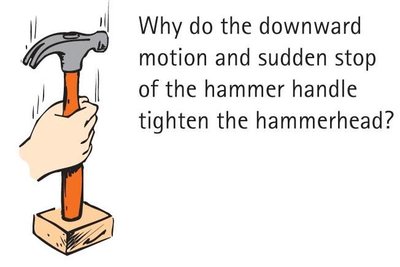
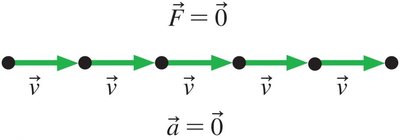
Newton’s First Law states that an object remains at rest or in uniform motion unless acted upon by a net external force. This principle is known as inertia.
If , then and the object’s velocity remains constant.
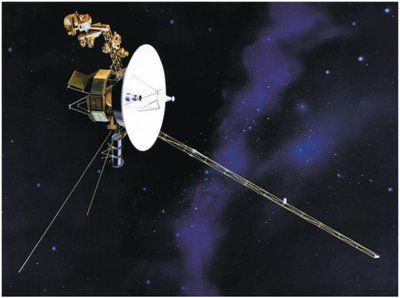
Objects in space, such as the Voyager probe, continue moving indefinitely unless influenced by a force.
Types of Forces
Several common forces are encountered in physics problems:
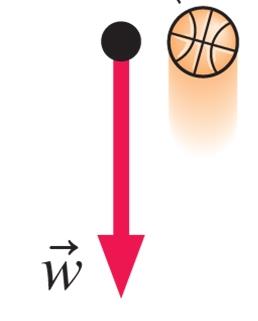
Weight (): The gravitational force exerted by Earth, always directed downward.
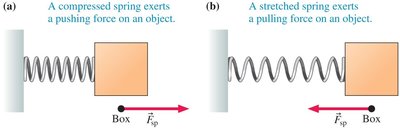
Spring Force (): The force exerted by a spring, which can be either pushing or pulling depending on compression or extension.
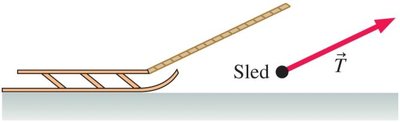
Tension (): The pulling force exerted by a rope or cable.
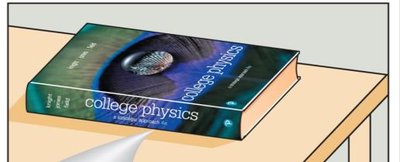
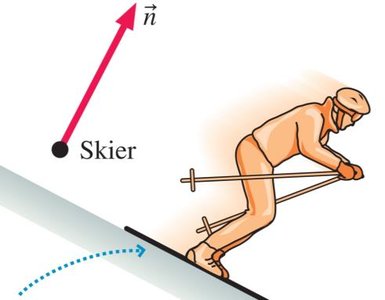
Normal Force (): The perpendicular force exerted by a surface on an object.
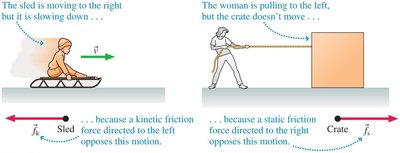
Friction: Includes kinetic friction (), which opposes motion, and static friction (), which prevents motion.
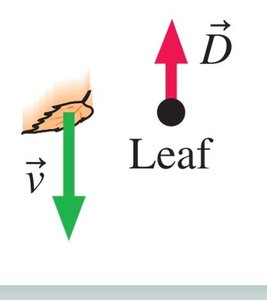
Drag (): The resistive force of a fluid (air or water) on a moving object.
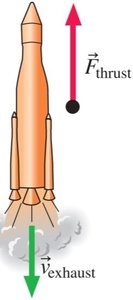
Thrust (): The force produced by expelling gas at high speed, as in rockets.
Electric and Magnetic Forces: Long-range forces acting on charged or magnetized particles.
Identifying Forces
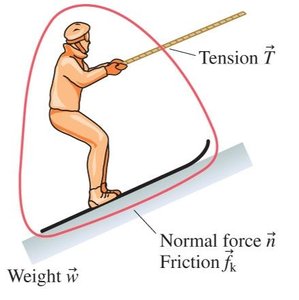
To analyze a physical situation, follow these steps:
Draw a picture of the situation.
Draw a closed curve around the object of interest.
Locate points of contact and label each contact force.
Label long-range forces.
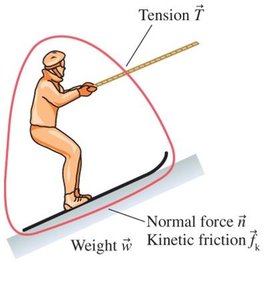
Table: Common Forces and Their Notation
Force | Notation |
|---|---|
General force | |
Weight | |
Spring force | |
Tension | |
Normal force | |
Static friction | |
Kinetic friction | |
Drag | |
Thrust |
Inversely Proportional Relationships
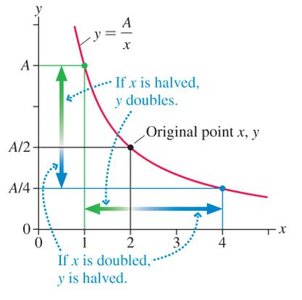
When two variables are inversely proportional, as one increases, the other decreases. For example, .
If doubles, halves.
If halves, doubles.
Newton’s Second Law (Law of Acceleration)
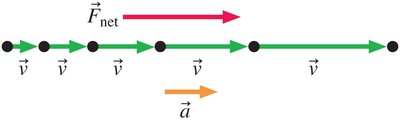
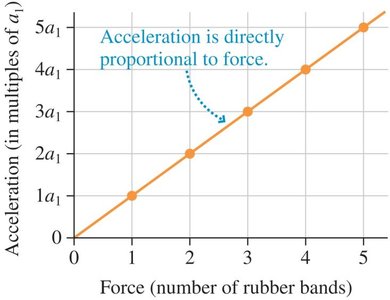
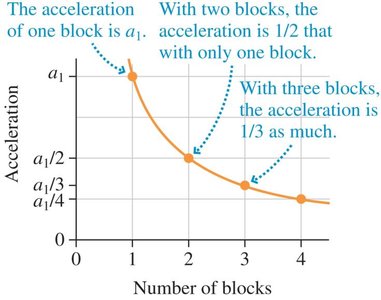
Newton’s Second Law states that the net force on an object causes it to accelerate in the direction of the net force. The relationship is given by:
Acceleration is directly proportional to force () and inversely proportional to mass ().
Free-Body Diagrams
Free-body diagrams are essential for solving dynamics problems. They visually represent all forces acting on an object, helping to identify the net force and direction of acceleration.
Draw the object and a coordinate system.
Represent each force as a vector.
Sum the vectors to find the net force.
Newton’s Third Law (Action and Reaction)
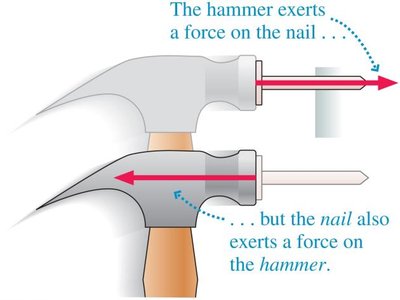
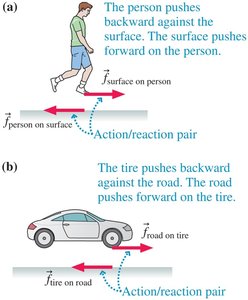
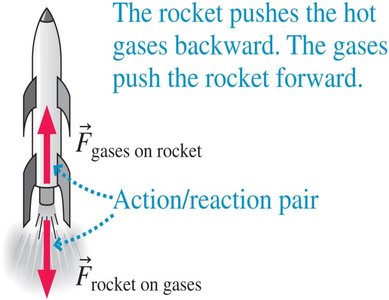
Newton’s Third Law states that for every action, there is an equal and opposite reaction. When two objects interact, each exerts a force on the other of equal magnitude and opposite direction.
Examples include a hammer hitting a nail, a rocket expelling gases, and a person walking.
Applications and Problem Solving
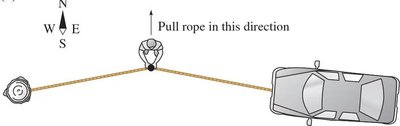
Understanding forces and Newton’s laws is crucial for solving real-world problems, such as pulling a car out of mud using a rope and a tree. The direction of tension and other forces can be analyzed using free-body diagrams and vector addition.
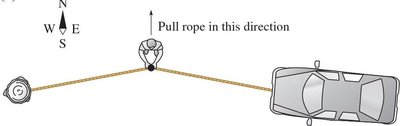
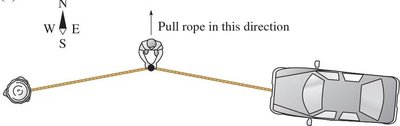
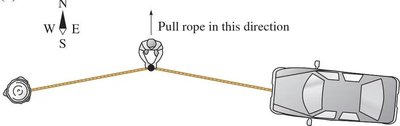
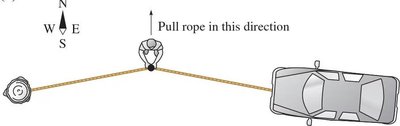
Additional info: These notes expand on brief points from the original slides, providing definitions, examples, and equations for clarity and completeness. All images included are directly relevant to the adjacent explanations, reinforcing key concepts in force analysis and Newton’s laws.
