 Back
BackCircular Motion and Gravitation: Study Notes
Study Guide - Smart Notes
 Tailored notes based on your materials, expanded with key definitions, examples, and context.
Circular Motion and Gravitation
Special Quantities in Circular Motion
Circular motion involves several unique quantities that describe the motion of objects along a circular path. Understanding these is essential for analyzing rotational systems.
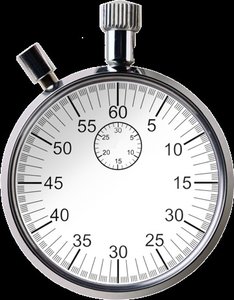
Period (T): The time required to complete one full revolution around the circle, measured in seconds (s).
Frequency (f): The number of complete revolutions per unit time, measured in hertz (Hz), where 1 Hz = 1 s–1.
Angular Frequency (\(\omega\)): The rate at which the angle is swept per unit time, measured in radians per second (rad/s).
Relationship between quantities:
Angles: In circular motion, angles are measured in radians (rad).
Uniform Circular Motion
Uniform circular motion refers to motion around a circle at constant speed. The velocity vector is always tangent to the circle, while the acceleration vector points toward the center (centripetal acceleration).
Tangential Velocity (v): The speed along the edge of the circle.
Centripetal (Radial) Acceleration (a_c): Always directed toward the center of the circle.

Centripetal Force
For an object to move in a circle, a net force directed toward the center (centripetal force) is required. Without this force, the object would move off in a straight line tangent to the circle.
Centripetal Force (F_c):
The tension in a rope, friction, or gravity can provide the centripetal force, depending on the context.

Banked and Unbanked Curves
When a vehicle moves around a curve, a net force toward the center is necessary. On flat (unbanked) roads, this force is provided by static friction. On banked curves, the normal force also contributes.
Unbanked Curve: The maximum speed before slipping is determined by static friction.
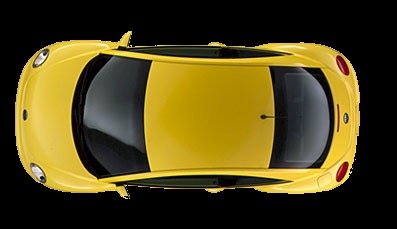
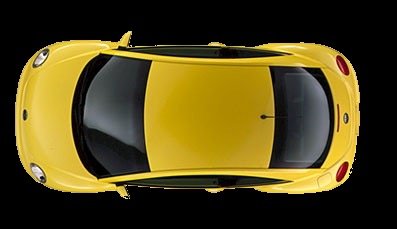
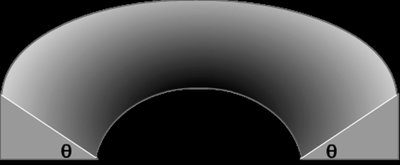
Banked Curve (No Friction): The banking angle allows the normal force to provide the required centripetal force.


Newton’s Law of Universal Gravitation
Newton’s law states that every mass attracts every other mass with a force proportional to the product of their masses and inversely proportional to the square of the distance between them.
G: Universal gravitational constant,
The force acts along the line joining the two masses and is mutual (Newton’s third law).
Gravitational Force and Circular Motion
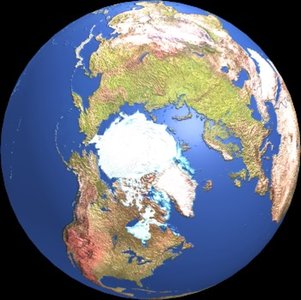
For celestial bodies like the Moon orbiting Earth, gravity provides the necessary centripetal force for circular motion.
Acceleration Due to Gravity
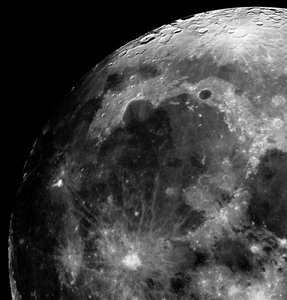
The acceleration due to gravity at the surface of a planet is determined by its mass and radius.
On Earth,
On other planets, varies with and .



Apparent Weight and Weightlessness
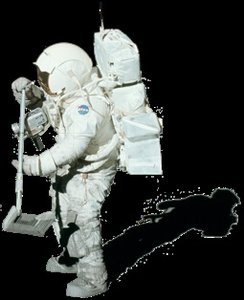
Apparent weight is the normal force exerted on an object, which can differ from the true weight when the object is accelerating. In orbit, objects experience apparent weightlessness because they are in free fall, even though gravity still acts on them.
Apparent Weight (F_N):
In orbit, , so (apparent weightlessness).



Satellites and Orbits
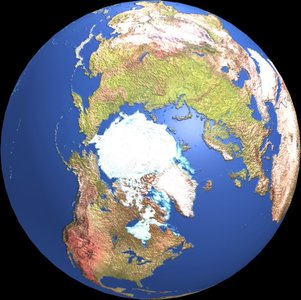
To maintain a stable orbit, a satellite must have a tangential speed that balances gravitational attraction. If the speed is too high, the satellite escapes; if too low, it falls back to Earth.
Escape Velocity:
Orbits can be circular, elliptical, parabolic, or hyperbolic, depending on the satellite's speed.


Kepler’s Laws of Planetary Motion
Kepler’s laws describe the motion of planets around the Sun:
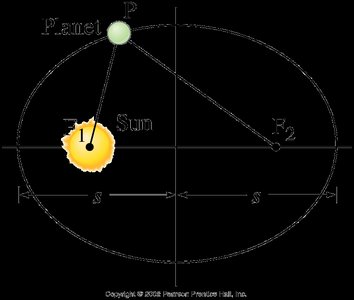
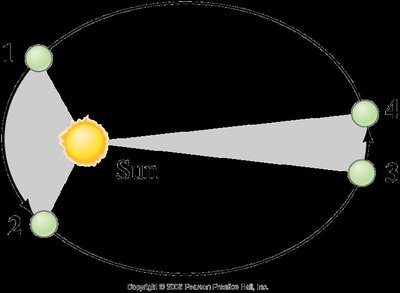
First Law (Law of Orbits): Planets move in elliptical orbits with the Sun at one focus.
Second Law (Law of Areas): A line joining a planet and the Sun sweeps out equal areas during equal intervals of time.
Third Law (Law of Periods): The square of the orbital period is proportional to the cube of the semi-major axis of the orbit.
Additional info: These notes expand on the provided slides by including definitions, formulas, and academic context for each topic, ensuring a comprehensive and self-contained study guide for college-level physics students.
