Back
BackComprehensive Physics Equations and Concepts: Chapters 1–30
Study Guide - Smart Notes
 Tailored notes based on your materials, expanded with key definitions, examples, and context.
Chapter 1: Representing Motion
Displacement, Velocity, and Time
Motion can be described using displacement, velocity, and time. Displacement (Δx) is the change in position, velocity (v) is the rate of change of displacement, and time (t) is the duration of motion.
Displacement:
Average Velocity:
Vectors and Their Representation
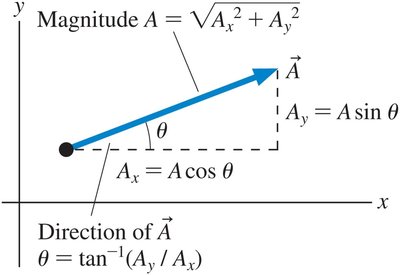
Vectors have both magnitude and direction. The magnitude and direction of a vector \( \vec{A} \) can be found using its components.
Magnitude:
Direction:
Components: ,
Chapter 2: Motion in One Dimension
Kinematic Equations
These equations describe the motion of objects moving in a straight line with constant acceleration.
Chapter 3: Vectors and Motion in Two Dimensions
Projectile Motion
Projectile motion involves two-dimensional motion under constant acceleration due to gravity.
Horizontal motion:
Vertical motion:
Chapter 4: Forces and Newton's Laws of Motion
Newton's Laws
Newton's laws describe the relationship between forces and motion.
First Law (Inertia): An object remains at rest or in uniform motion unless acted upon by a net force.
Second Law:
Third Law: For every action, there is an equal and opposite reaction.
Chapter 5: Applying Newton's Laws
Friction and Tension
Friction opposes motion, and tension is the force transmitted through a string or rope.
Kinetic friction:
Static friction:
Chapter 6: Circular Motion, Orbits, and Gravity
Circular Motion
Objects moving in a circle experience centripetal acceleration directed toward the center.
Centripetal acceleration:
Gravitational force:
Chapter 7: Rotational Motion
Rotational Kinematics and Dynamics
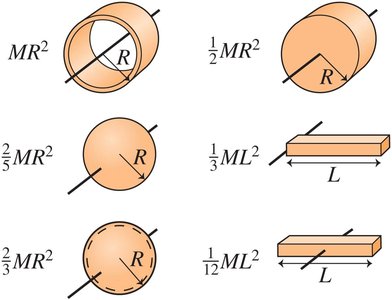
Rotational motion is described by angular displacement, velocity, and acceleration. The moment of inertia quantifies rotational inertia.
Angular displacement:
Moment of inertia (I): Depends on mass distribution.
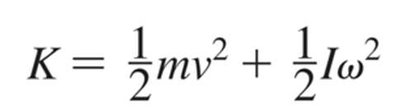
Rotational Kinetic Energy
Chapter 8: Equilibrium and Elasticity
Conditions for Equilibrium
An object is in equilibrium if the net force and net torque on it are zero.
, ,
Elasticity and Hooke's Law
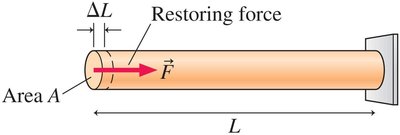
Elasticity describes how materials deform under force. Hooke's Law relates the force to the extension or compression of a spring.
Young's modulus:
Chapter 9: Momentum
Linear and Angular Momentum
Linear momentum:
Conservation of momentum: (in the absence of external forces)
Angular momentum:
Chapter 10: Energy and Work
Work and Energy
Kinetic energy:
Potential energy (gravitational):
Work:
Chapter 11: Using Energy
Thermal Energy and Efficiency
First Law of Thermodynamics:
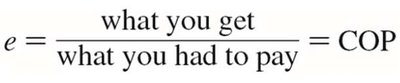
Efficiency:
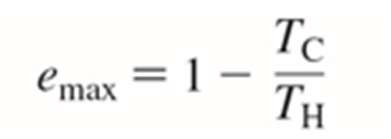
Maximum efficiency (Carnot):
Chapter 12: Thermal Properties of Matter
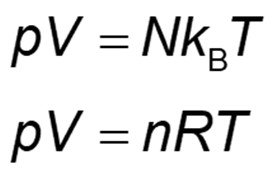
Ideal Gas Law and Heat Transfer
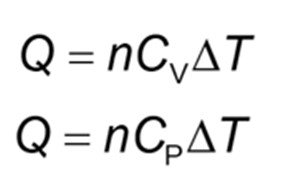
Heat transfer: (at constant volume), (at constant pressure)
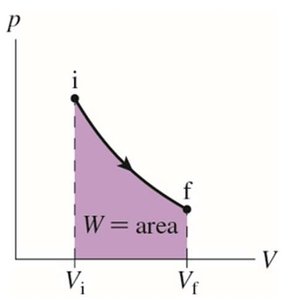
Work Done by a Gas
Work is the area under the p-V curve:
Chapter 13: Fluids
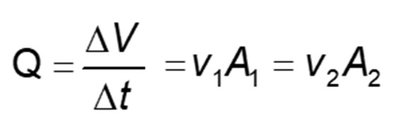
Fluid Dynamics
Continuity equation:
Chapter 14: Equilibrium and Oscillations
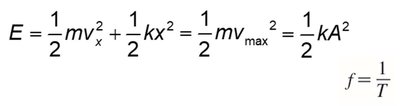
Simple Harmonic Motion (SHM)
Total energy in SHM:
Frequency:
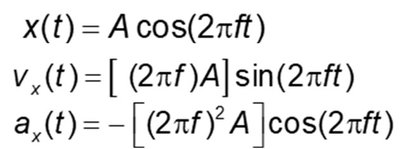
Position, velocity, acceleration:
Chapter 15: Traveling Waves and Sound
Wave Properties
Wave equation:
Speed of sound: m/s (in air at 20°C)
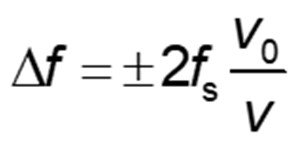
Doppler Effect
Chapter 16: Superposition and Standing Waves
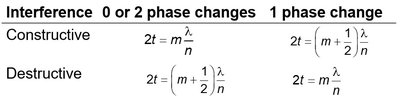
Interference Conditions
Constructive and destructive interference depend on phase changes and path differences.
Chapter 17: Wave Optics
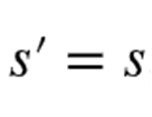
Reflection and Refraction
Law of reflection:
Snell's Law:
Chapter 18: Ray Optics
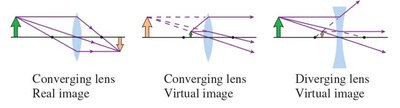
Image Formation by Lenses and Mirrors
Lens equation:
Magnification:

Chapter 19: Optical Instruments
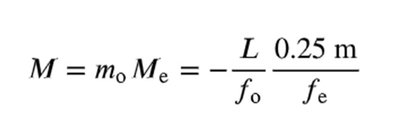
Microscopes and Telescopes
Total magnification:
Chapter 20: Electric Fields and Forces
Coulomb's Law and Electric Field
Chapter 21: Electric Potential
Potential and Capacitance
Chapter 22: Current and Resistance
Ohm's Law
Chapter 23: Circuits
Series and Parallel Circuits
Series resistance:
Parallel resistance:
Chapter 24: Magnetic Fields and Forces
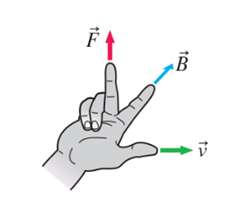
Magnetic Force and Right-Hand Rule
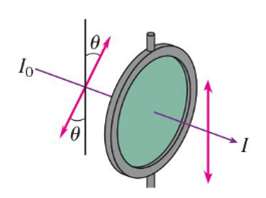
Chapter 25: Electromagnetic Induction and Waves
Faraday's Law and EM Waves
Chapter 26: AC Electricity
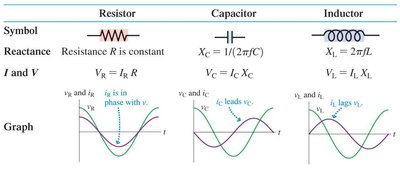
AC Circuit Elements
Resistor:
Capacitor:
Inductor:
Chapter 27: Relativity
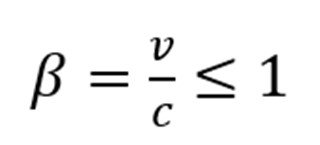
Special Relativity
Chapter 28: Quantum Physics
Photon Energy and Uncertainty Principle
Chapter 29: Atoms and Molecules
Atomic Structure and Spectra

Chapter 30: Nuclear Physics
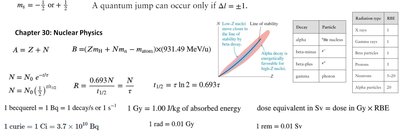
Radioactive Decay and Nuclear Reactions
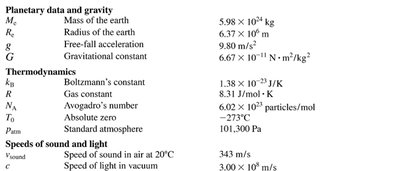
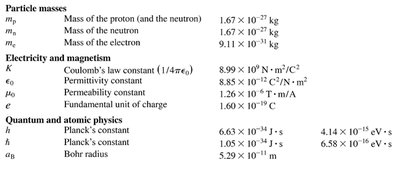
Appendix: Physical Constants
Common physical constants used in physics calculations.
Speed of light: m/s
Gravitational constant: N m2/kg2
Planck's constant: J·s
Elementary charge: C