 Back
BackCurrent, Resistance, and Direct-Current Circuits: Study Notes
Study Guide - Smart Notes
 Tailored notes based on your materials, expanded with key definitions, examples, and context.
Current, Resistance, and Direct-Current Circuits
Introduction to Electric Circuits
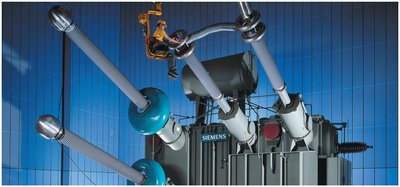
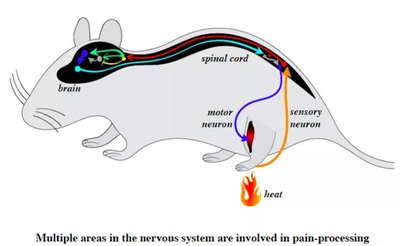
Electric circuits are fundamental to both technology and biology, powering devices and enabling communication within living organisms. Examples include radios, televisions, cell phones, power distribution systems, and the nervous system of animals.
Electric circuits are closed paths through which electric current flows.
Applications range from household electronics to biological systems.
Electric Current
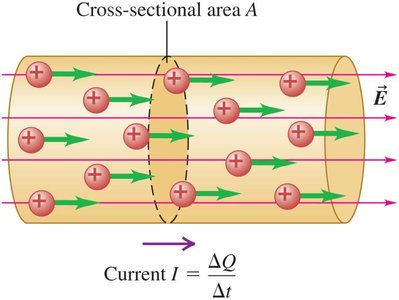
Electric current is the flow of electric charge through a conductor. It is a key concept in understanding how circuits operate.
Definition: Current (I) is the rate at which charge (Q) flows through a cross-sectional area of a conductor.
Formula:
Unit: 1 ampere (A) = 1 coulomb/second (C/s).
Direction: Conventional current flows in the direction of positive charge movement.
In metals, current is due to electron flow; in ionic solutions, both positive and negative ions contribute.
Electrons in metals exhibit random motion, but an applied electric field causes a slow drift (drift speed).
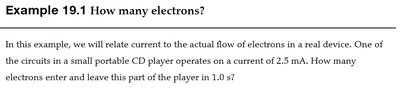
Example: How many electrons?
Relating current to electron flow: A circuit operating at 2.5 mA for 1.0 s—calculate the number of electrons entering and leaving.
Resistance and Ohm’s Law
Resistance quantifies how much a material opposes the flow of current. Ohm’s Law relates voltage, current, and resistance.
Ohm’s Law:
Units: V (volts), I (amperes), R (ohms, Ω).
Resistance is independent of voltage and current; it is a property of the material and geometry.
Resistivity: Resistance depends on material, length, and cross-sectional area:
Resistivity (\rho): Intrinsic property of material, units Ω·m.
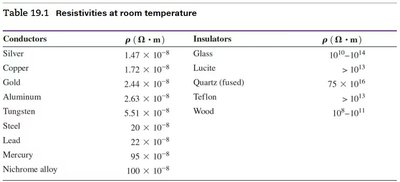
Table: Resistivities at Room Temperature
This table compares the resistivities of common conductors and insulators.
Conductors | ρ (Ω·m) | Insulators | ρ (Ω·m) |
|---|---|---|---|
Silver | 1.47 × 10⁻⁸ | Glass | 1010–1014 |
Copper | 1.72 × 10⁻⁸ | Lucite | 1013 |
Gold | 2.44 × 10⁻⁸ | Quartz (fused) | 75 × 1013 |
Aluminum | 2.63 × 10⁻⁸ | Teflon | 1020 |
Tungsten | 5.51 × 10⁻⁸ | Wood | 107–1011 |
Steel | 20 × 10-8 | ||
Lead | 22 × 10-8 | ||
Mercury | 95 × 10-8 | ||
Nichrome alloy | 100 × 10-8 |
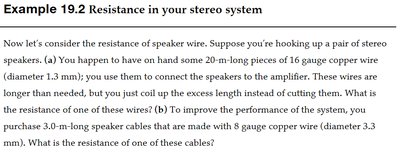
Example: Resistance in Speaker Wires
Calculating resistance for different lengths and gauges of copper wire used in stereo systems.
Problem: Resistivity Calculation
Given a spring made of metal wire, calculate the resistivity based on measured resistance and dimensions.

Temperature Dependence of Resistance
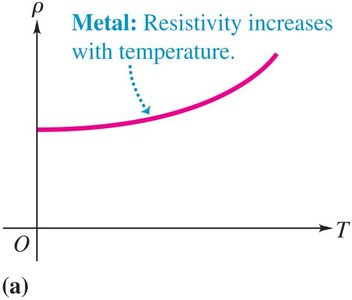
Resistance changes with temperature, especially in metals. The relationship is given by:
α: Temperature coefficient of resistivity (units: 1/°C).
For metals, resistivity increases with temperature.
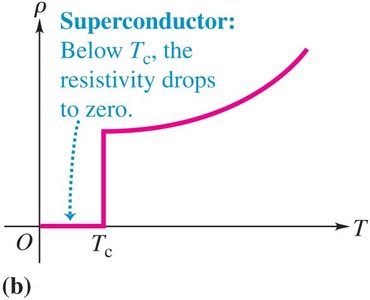
Superconductors exhibit zero resistivity below a critical temperature.
Non-Ohmic Conductors
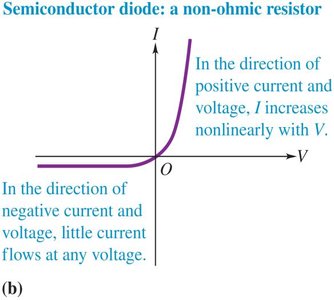
Some materials, such as semiconductor diodes, do not obey Ohm’s Law. Their current-voltage relationship is nonlinear.
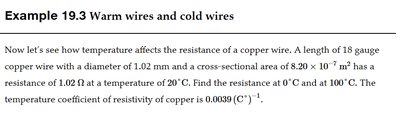
Example: Warm and Cold Wires
Calculating resistance of copper wire at different temperatures using the temperature coefficient.
Electromotive Force (emf) and Circuits
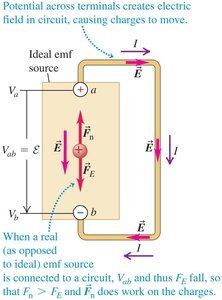
To sustain a steady current, a circuit must be closed and include a source of electromotive force (emf), such as a battery.
Emf (ε): Energy per unit charge supplied by a source.
For an ideal source:
Real sources have internal resistance (r):
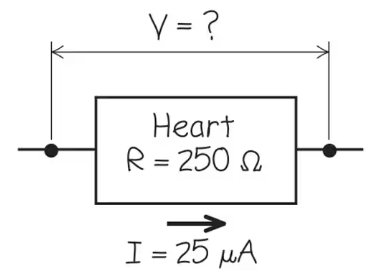
Example: Electrical Hazards in Heart Surgery
Calculating the minimum voltage that poses a danger to a patient during heart surgery, given the heart's resistance and a fatal current threshold.
Example: Internal Resistance in Batteries
Examining how internal resistance affects terminal voltage in a battery as it ages.
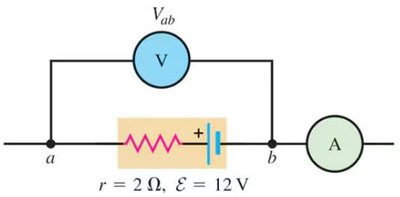
Example: Source in an Open Circuit
Internal resistance has no effect when no current flows. Calculating voltmeter and ammeter readings in an open circuit.
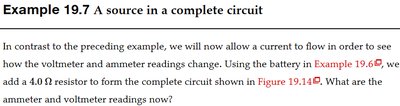
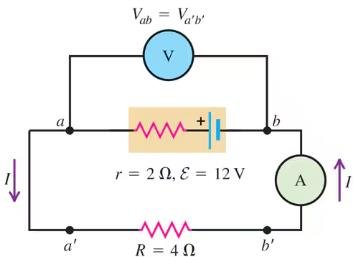
Example: Source in a Complete Circuit
Calculating readings when current flows through a circuit with internal and external resistance.
Problem: Battery and Resistor
Calculating potential difference and current for various resistor values connected to a nonideal battery.

Resistors in Series and Parallel
Resistors can be combined in series or parallel, affecting the total resistance and current distribution in a circuit.
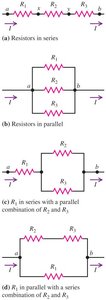
Series: Single path for current; current is the same through all resistors.
Parallel: Multiple paths; voltage is the same across all resistors.
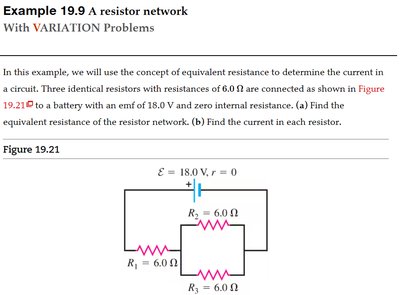
Example: Resistor Network
Finding equivalent resistance and current in a network of resistors.
Kirchhoff’s Rules
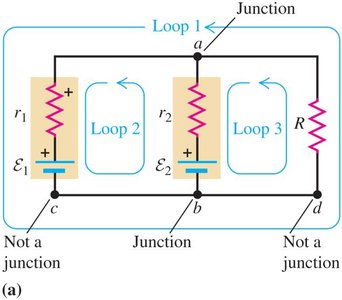
Kirchhoff’s rules are used to analyze complex circuits that cannot be simplified to series or parallel combinations.
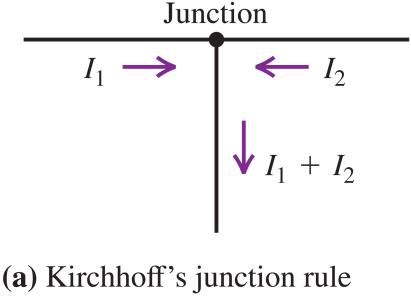
Junction Rule: The sum of currents entering a junction equals the sum leaving.
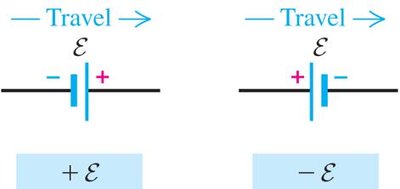
Loop Rule: The sum of potential differences around any closed loop is zero.
Rules are based on conservation of charge and energy.
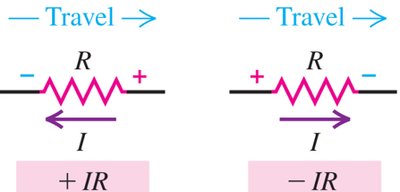
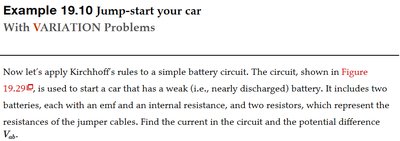
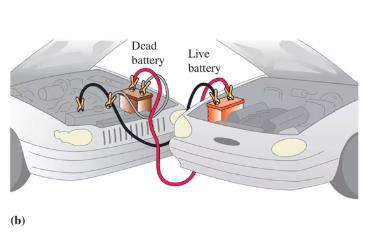
Example: Jump-Start Your Car
Applying Kirchhoff’s rules to a battery circuit used for jump-starting a car, including two batteries and resistors.
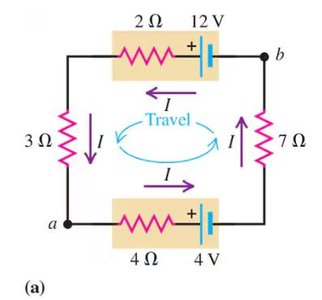
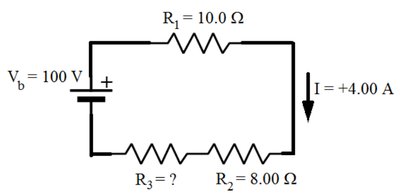
Problem: Series Circuit Calculation
Calculating unknown resistance in a series circuit given voltage and current.
Additional info: These notes expand on brief points with academic context, definitions, and examples to ensure completeness and clarity for exam preparation.
