 Back
BackDescribing Motion, Forces, and Newton’s Laws: Foundations of Physics
Study Guide - Smart Notes
 Tailored notes based on your materials, expanded with key definitions, examples, and context.
Describing Motion
Aristotle on Motion
Early ideas about motion were shaped by Aristotle, who classified motion into two types: natural motion (straight up or down, such as falling objects) and violent motion (imposed by external forces, such as pushing or pulling).
Galileo’s Concept of Inertia
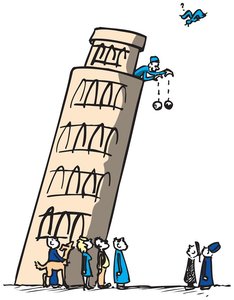
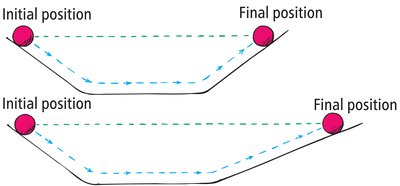
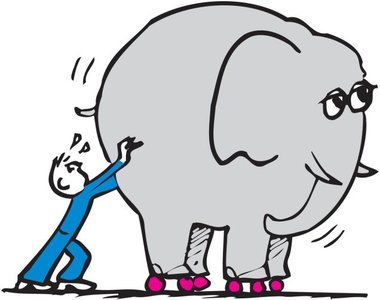
Galileo challenged Aristotle’s views through experiments, notably by dropping objects from the Leaning Tower of Pisa and using inclined planes. He discovered that, in the absence of friction, no force is needed to keep an object moving horizontally. Objects tend to maintain their state of motion unless acted upon by an external force—a property called inertia.
Inertia: The tendency of an object to resist changes in its state of motion.
Key Experiment: Balls rolling down and up inclined planes return to their original height, demonstrating inertia.

Mass—A Measure of Inertia
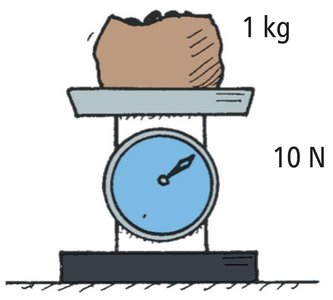
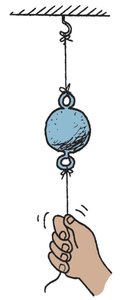
Mass is a measure of the amount of matter in an object and is directly related to inertia. The greater the mass, the greater the inertia. Weight is the gravitational force acting on an object and is proportional to mass. Density is the measure of how much mass occupies a given volume:
Density formula:
Forces and Equilibrium
Net Force
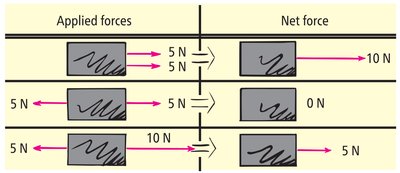
A force is a push or pull. The net force is the vector sum of all forces acting on an object. It is the net force that changes an object’s state of motion.
The Equilibrium Rule
An object is in equilibrium when the vector sum of all forces acting on it is zero:
Equilibrium equation:
The Support Force (Normal Force)
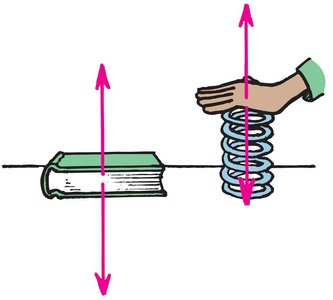
The support force (or normal force) is the upward force that balances the weight of an object on a surface.
Equilibrium of Moving Things
An object moving at constant velocity is also in equilibrium, as long as the net force is zero.
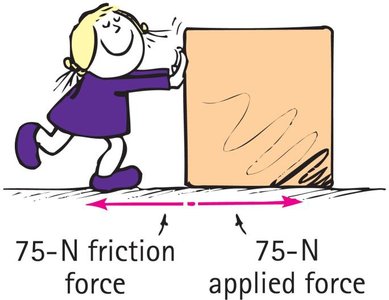
The Force of Friction
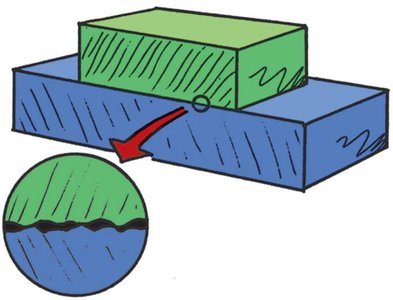
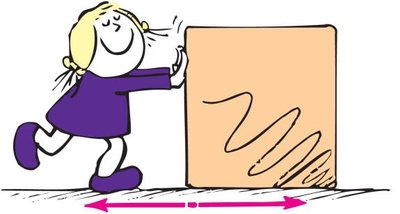
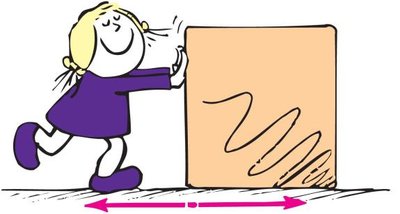
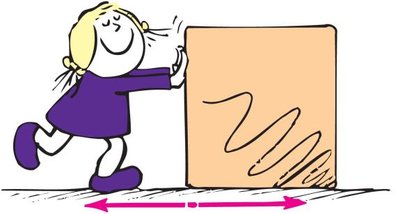
Friction is a resistive force that opposes motion or attempted motion between two surfaces in contact. It depends on the nature of the surfaces and how tightly they are pressed together.
Describing Motion: Speed, Velocity, and Acceleration
Speed and Velocity
Speed is the distance covered per unit time. Velocity is speed in a given direction. Average speed is total distance divided by total time, while instantaneous speed is the speed at any instant.
Speed formula:

Acceleration
Acceleration is the rate at which velocity changes with time. It can involve changes in speed, direction, or both.
Acceleration formula:
Free Fall
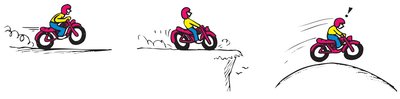
When the only force acting on an object is gravity (with negligible air resistance), the object is in free fall. The acceleration due to gravity near Earth’s surface is approximately .
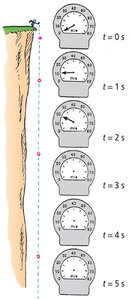
Table: Free Fall Data
Time of Fall (s) | Speed (m/s) | Distance (m) |
|---|---|---|
0 | 0 | 0 |
1 | 10 | 5 |
2 | 20 | 20 |
3 | 30 | 45 |
4 | 40 | 80 |
5 | 50 | 125 |
t | 10t | 5t2 |
Additional info: The distance fallen increases with the square of the time, as shown by .
