 Back
Dynamics I: Motion Along a Line, Equilibrium, and Friction
Study Guide - Smart Notes
 Tailored notes based on your materials, expanded with key definitions, examples, and context.
Dynamics I: Motion Along a Line
Static and Dynamic Equilibrium
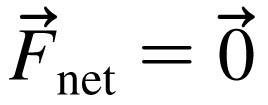
Equilibrium in physics refers to the state where the net force acting on a particle is zero. This can be either static (no movement) or dynamic (constant velocity). The conditions for equilibrium are:
Net force in x-direction:
Net force in y-direction:
If the net force is not zero, Newton's Second Law applies:
Free-Body Diagrams
Free-body diagrams are essential tools for analyzing equilibrium and dynamics problems. They visually represent all forces acting on an object, helping to identify knowns and unknowns.
List knowns: Forces, angles, masses
List unknowns: Forces to be found, directions
Example: Three-Way Tug-of-War
When multiple forces act on a knot, equilibrium requires the vector sum of all forces to be zero. Solve using component form and simultaneous equations to find the required force and direction.
Newton's Second Law and Applications
Mass, Weight, and Gravity
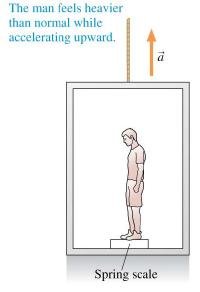
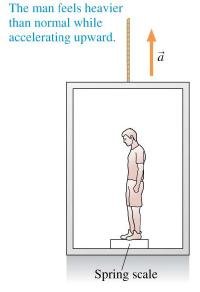
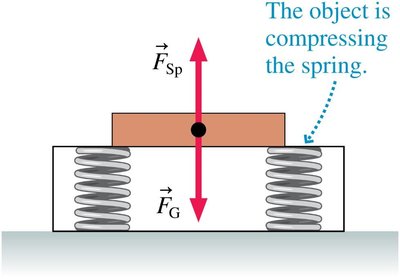
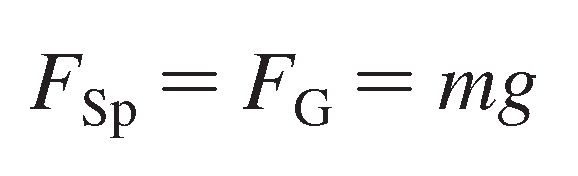
Weight is the force exerted by gravity on an object and is measured by a spring scale. The true weight is the gravitational force, while apparent weight is the contact force supporting the object.
Weight formula:
Apparent Weight and Free Fall
Apparent weight changes when an object is accelerating. In free fall, apparent weight is zero, as only gravity acts on the object.
Apparent weight formula:
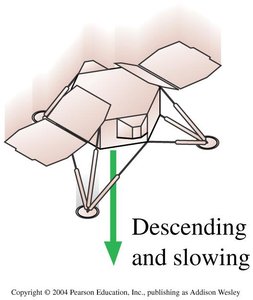
Example: Martian Lander
To find the thrust required to decelerate a lander, use Newton's Second Law, considering both gravity and the desired acceleration.
Friction: Static, Kinetic, and Rolling
Static Friction
Static friction prevents motion between two surfaces. It increases with the applied force up to a maximum value:
Maximum static friction:
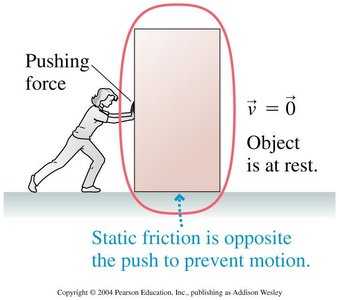

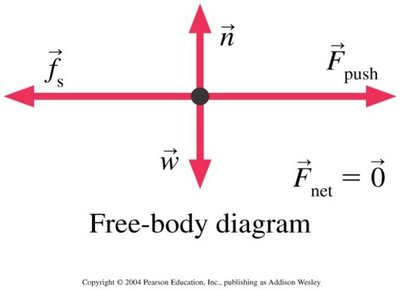

Kinetic Friction
Kinetic friction acts when surfaces are sliding past each other. It is generally less than static friction:
Kinetic friction:
Comparison:
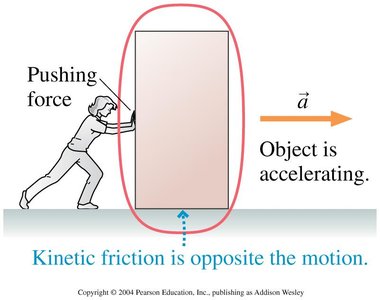
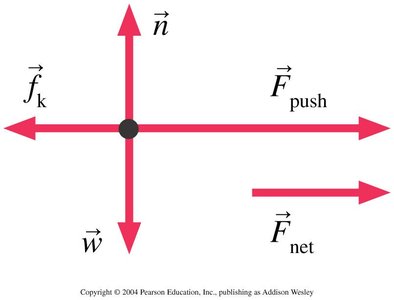
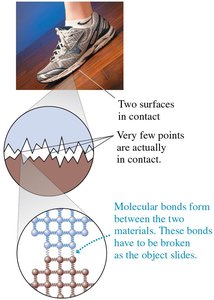
Cause of Friction
Friction arises from microscopic roughness and molecular bonds between surfaces. The amount of friction depends on material properties, surface smoothness, and normal force.
Rolling Friction
Rolling friction occurs when a wheel or object rolls over a surface. It is typically much less than sliding friction because the contact area is stationary relative to the surface.
Rolling friction:
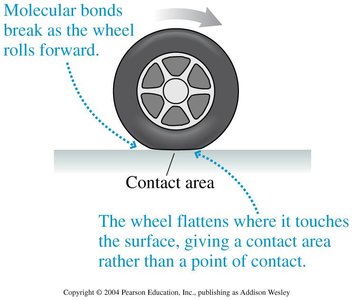
Drag Force and Terminal Speed
Drag Force
Drag is a resistance force experienced by objects moving through fluids (liquids or gases). It opposes the direction of motion and increases with speed, depending on the object's size and shape.
Terminal Speed
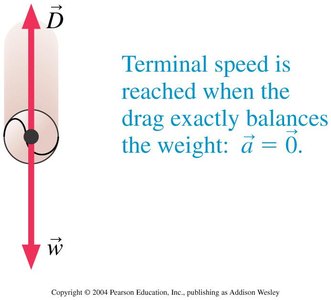
Terminal speed is reached when the drag force balances the weight, resulting in zero acceleration and constant velocity.
Condition for terminal speed: and
Worked Examples and Applications
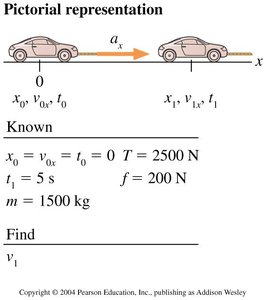
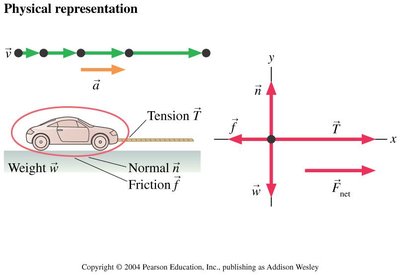
Example: Car Pulled by Tow Truck
To find the speed after a given time, use Newton's Second Law and kinematic equations, considering tension and friction forces.
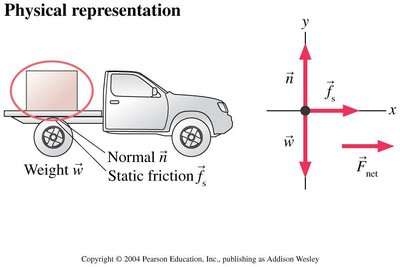
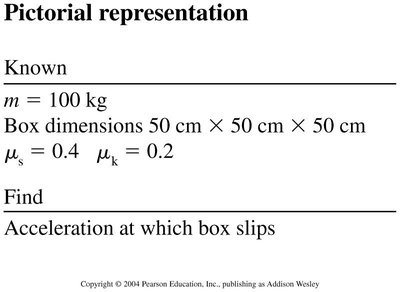
Example: Box on Truck
Determine the maximum acceleration before a box slips using static friction and Newton's Second Law.
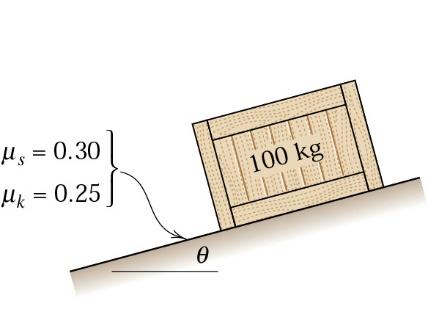
Example: Inclined Plane and Friction
Find the acceleration of a crate on an incline using the coefficients of friction and the angle of inclination.
Summary Table: Types of Friction
Type | Formula | Direction | Relative Magnitude |
|---|---|---|---|
Static | Opposes motion | Usually largest | |
Kinetic | Opposite to motion | ||
Rolling | Opposite to rolling | Smallest |
Key Equations
Additional info:
All examples and diagrams are directly relevant to the topics of equilibrium, Newton's laws, friction, and drag force, as covered in a college-level Physics with Calculus course.
