 Back
BackEarly Quantum Theory and Models of the Atom: Study Notes
Study Guide - Smart Notes
 Tailored notes based on your materials, expanded with key definitions, examples, and context.
Early Quantum Theory and Models of the Atom
Discovery of the Electron
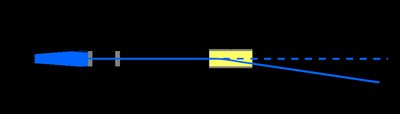
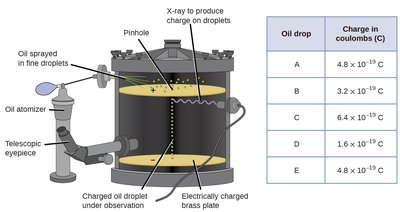
The electron was discovered in the late 19th century through experiments with cathode rays. These rays were found to be deflected by electric and magnetic fields, indicating they were composed of negatively charged particles, later named electrons. J. J. Thomson measured the charge-to-mass ratio of the electron, and Robert Millikan determined the elementary charge through his oil drop experiment.
Cathode Rays: Streams of electrons observed in vacuum tubes, deflected by electric and magnetic fields.
Thomson's Experiment: Measured the charge-to-mass ratio: .
Millikan's Oil Drop Experiment: Determined the elementary charge and electron mass .

Electromagnetic Radiation and Blackbody Radiation
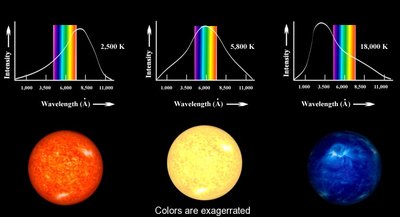
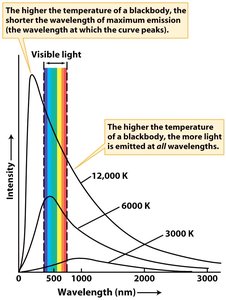
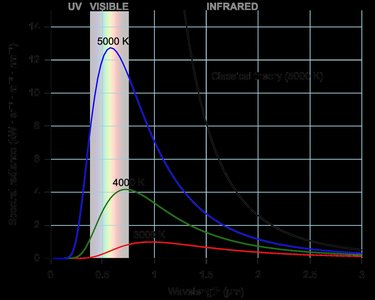
Blackbody radiation refers to the electromagnetic radiation emitted by an idealized object that absorbs all incident radiation. The study of blackbody radiation led to the development of quantum theory, as classical physics could not explain the observed spectrum (the ultraviolet catastrophe).
Wien's Law: The wavelength of maximum emission is inversely proportional to temperature: .
Stefan-Boltzmann Law: Total energy radiated per unit area: .
Planck's Hypothesis: Energy is quantized: , where .
Photoelectric Effect
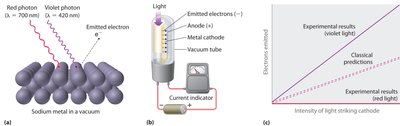
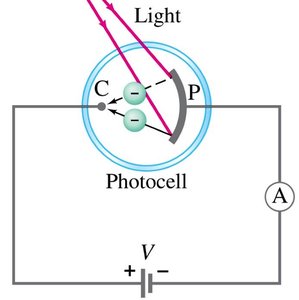
The photoelectric effect is the emission of electrons from a metal surface when light of sufficient frequency strikes it. Classical physics could not explain why light below a certain frequency, regardless of intensity, failed to emit electrons. Einstein proposed that light consists of photons, each with energy .
Key Observations: No electrons are emitted below a threshold frequency; kinetic energy of electrons increases with frequency, not intensity.
Einstein's Equation: , where is the work function of the metal.
Photon Concept: Light energy is delivered in discrete packets (photons).
Compton Effect
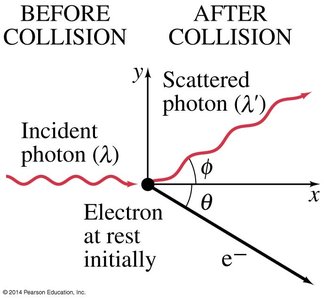
The Compton effect demonstrates the particle nature of light. When X-rays scatter off electrons, the wavelength of the scattered X-rays increases, depending on the angle of scattering. This effect can only be explained by treating light as photons with momentum.
Compton Shift Equation:
Significance: Confirms the photon model of light and conservation of energy and momentum in photon-electron collisions.
Wave Nature of Matter (de Broglie Hypothesis)
Louis de Broglie proposed that particles, such as electrons, have wave-like properties. The wavelength associated with a particle is inversely proportional to its momentum.
de Broglie Wavelength: , where is the momentum.
Energy Relation: , so for non-relativistic particles.
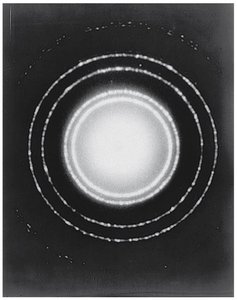
Electron Diffraction: Electrons can be diffracted by crystals, confirming their wave nature.
Early Models of the Atom
Several models were proposed to explain atomic structure before the modern quantum model.
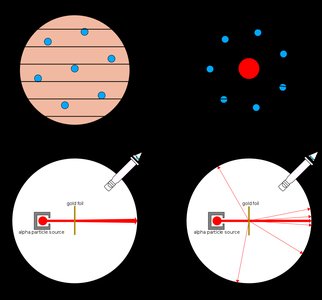
Thomson's Model: Electrons embedded in a uniform positive charge ('plum pudding' model).
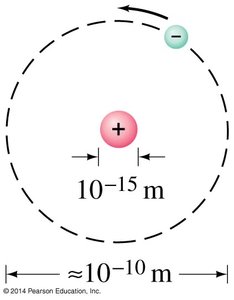
Rutherford's Model: Atom consists of a small, dense, positively charged nucleus surrounded by electrons.
Limitations: Rutherford's model could not explain atomic stability or discrete spectral lines.
Atomic Spectra
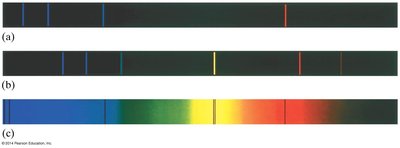
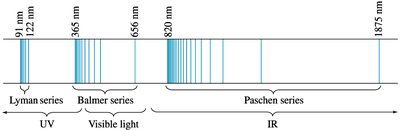
Atoms emit or absorb light at specific wavelengths, producing line spectra. The hydrogen atom's spectrum was found to follow a regular pattern, described by the Balmer and Rydberg formulas.
Line Spectrum: Only certain frequencies (colors) are emitted or absorbed by atoms.
Balmer Series (Hydrogen): ,
Rydberg Constant:

The Bohr Model of the Atom
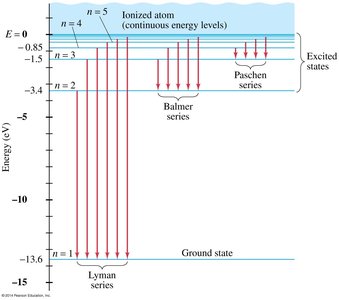
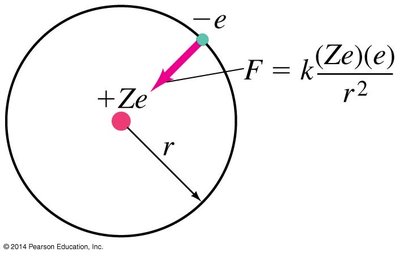
Niels Bohr proposed a model where electrons occupy quantized orbits around the nucleus. Transitions between these orbits explain the discrete lines in atomic spectra.
Quantized Energy Levels: ,
Angular Momentum Quantization:
Radius of Orbits: , where is the Bohr radius.
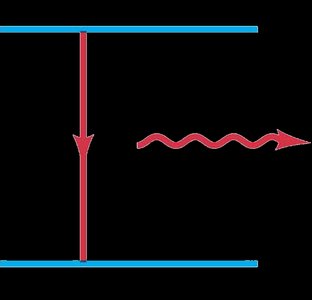
Spectral Lines: , where
de Broglie’s Hypothesis Applied to Atoms
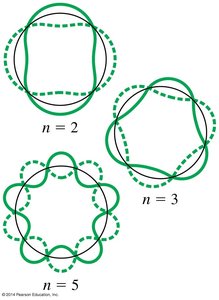
Bohr's quantization condition can be interpreted as requiring that the electron's orbit be a standing wave, with an integer number of wavelengths fitting into the circumference.
Standing Wave Condition:
Consistency with Bohr Model: This leads to the same quantized angular momentum as Bohr's postulate.
Additional info: These notes cover the foundational experiments and theories that led to the development of quantum mechanics and the modern understanding of atomic structure. They include key equations, experimental setups, and the transition from classical to quantum models of matter and light.
