 Back
BackEdexcel International GCSE Physics: Forces and Motion (Mini-Textbook Study Notes)
Study Guide - Smart Notes
 Tailored notes based on your materials, expanded with key definitions, examples, and context.
Forces and Motion
Introduction to Forces and Motion
Forces are responsible for making objects move, stop, change direction, or alter their shape. The study of forces and motion is fundamental in physics, as it helps us understand how and why objects behave the way they do in our universe.
Movement and Position
Units and Quantities
Base units: kilogram (kg) for mass, metre (m) for length, second (s) for time.
Derived units: metre per second (m/s) for speed and velocity, metre per second squared (m/s2) for acceleration, newton (N) for force.
Speed and Velocity
Speed is the rate at which an object moves, while velocity is speed in a particular direction (a vector quantity).
Average speed equation:
Rearranged equations:
Distance:
Time:
Example: A car travels 100 km in 2 hours. Average speed = 50 km/h.
Distance–Time Graphs
Distance–time graphs visually represent how far an object travels over time. The gradient (slope) of the graph gives the speed.
Straight line: constant speed
Horizontal line: stationary object
Curved line: changing speed (acceleration or deceleration)
Acceleration
Acceleration is the rate of change of velocity. It is a vector quantity.
Where = final velocity, = initial velocity, = time taken
Example: A car accelerates from 20 m/s to 30 m/s in 5 s: m/s2
Velocity–Time Graphs
The gradient of a velocity–time graph gives acceleration.
The area under the graph gives the distance travelled.
Equations of Uniformly Accelerated Motion (SUVAT Equations)
Forces and Shape
Types of Forces
Gravitational force (weight): Pulls objects toward the Earth.
Friction: Opposes motion between surfaces in contact.
Normal reaction force: Acts perpendicular to a surface supporting an object.
Magnetic and electrostatic forces: Act at a distance due to magnetic or electric fields.
Balanced and Unbalanced Forces
Balanced forces: No change in motion (object remains at rest or moves at constant velocity).
Unbalanced forces: Cause acceleration or deceleration.
Friction
Friction is a force that opposes motion. It can be desirable (e.g., car tires gripping the road) or undesirable (e.g., causing wear in machinery).
Elastic and Plastic Behavior
Elastic materials: Return to their original shape after the force is removed (e.g., springs, rubber bands).
Plastic materials: Undergo permanent deformation.
Hooke’s Law
For springs and some wires, the extension is proportional to the applied force up to the limit of proportionality.
Where = force, = spring constant, = extension
Forces and Movement
Newton’s Second Law
The acceleration of an object is proportional to the unbalanced force acting on it and inversely proportional to its mass.
Where = force (N), = mass (kg), = acceleration (m/s2)
Weight
The weight of an object is the force of gravity acting on it.
Where = weight (N), = mass (kg), = gravitational field strength (N/kg)
Stopping Distance
Thinking distance: Distance travelled during the driver’s reaction time.
Braking distance: Distance travelled while the brakes are applied.
Total stopping distance: Sum of thinking and braking distances.
Air Resistance and Terminal Velocity
As objects fall, air resistance increases with speed. Terminal velocity is reached when the upward force of air resistance balances the downward force of gravity, resulting in zero acceleration.
Momentum
Definition and Conservation
Momentum is the product of mass and velocity. It is a vector quantity.
Where = momentum (kg·m/s), = mass (kg), = velocity (m/s)
Conservation of Momentum: In a closed system, total momentum before a collision or explosion equals total momentum after.
Force and Change in Momentum
The force acting on an object is equal to the rate of change of its momentum.
Where = initial velocity, = final velocity, = time interval
Applications: Car Safety
Car safety features (e.g., crumple zones, seat belts, airbags) increase the time over which momentum changes during a collision, reducing the force experienced by passengers.
The Turning Effect of Forces (Moments)
Moment of a Force
The moment (turning effect) of a force about a pivot is given by:
Where = force (N), = perpendicular distance from the pivot (m)
Principle of Moments
For an object in equilibrium (not turning):
Centre of Gravity
The centre of gravity is the point where the entire weight of an object appears to act. For regular objects, it is at the geometric center.
Stability
Objects with a low centre of gravity and a wide base are more stable.
Relevant Images
Electromagnets in Action:
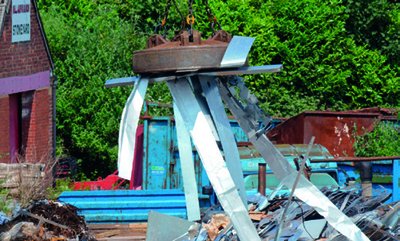
This image demonstrates the use of an electromagnet to lift iron or steel objects, illustrating the concept of magnetic fields and their practical applications in industry.
Rocket Launch:
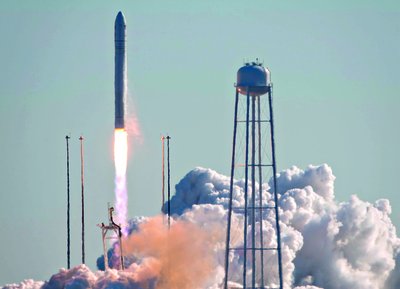
This image shows a rocket launch, which is an example of forces causing acceleration and the application of Newton's laws of motion.
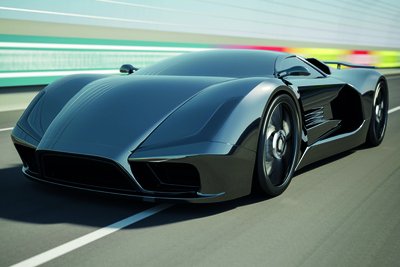
Formula 1 Car:

This image illustrates the importance of friction and aerodynamic design in high-speed vehicles, relevant to the study of forces, motion, and air resistance.
Stopwatch:
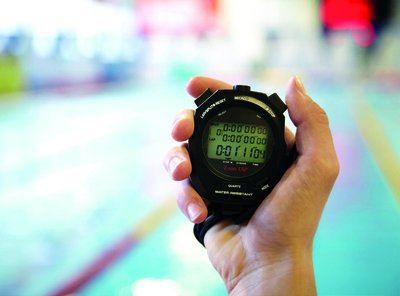
A stopwatch is essential for measuring time intervals in experiments involving speed, velocity, and acceleration.
Egg Deceleration:
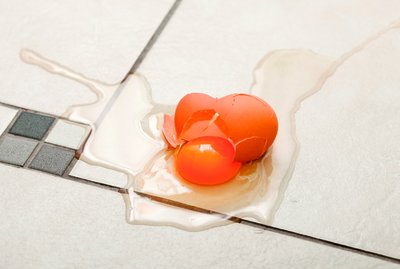
This image demonstrates the effects of rapid deceleration and the forces involved when an object comes to a sudden stop.
Air Track Experiment:
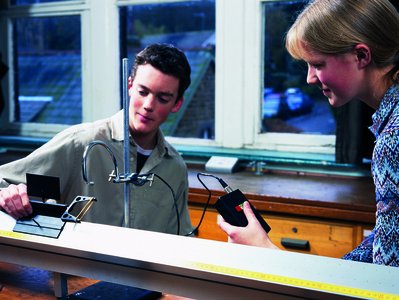
This image shows a modern experimental setup for measuring acceleration with minimal friction, reinforcing concepts of motion and acceleration.
Tugboat Pulling Ship:

This image demonstrates the application of force to move large objects, relevant to the study of unbalanced forces and motion.
Bungee Jump:
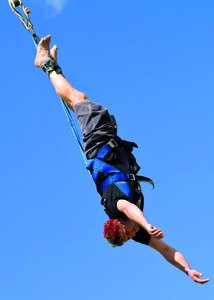
This image illustrates the effects of gravity and elastic forces in a bungee jump, relevant to the study of forces, motion, and elasticity.
Crane Crushing Car:
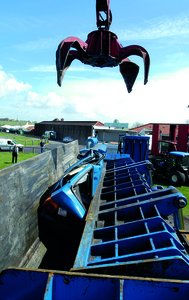
This image shows a car being crushed, demonstrating the effect of large forces causing permanent deformation (plastic behavior).
Comb and Hair (Electrostatics):
This image demonstrates electrostatic forces, where a comb attracts hair after being used, relevant to the study of non-contact forces.
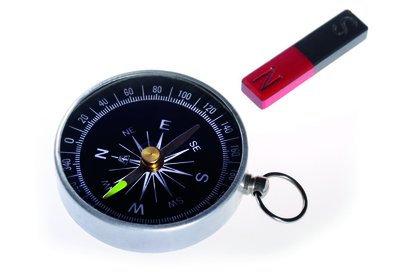
Compass and Magnet (Magnetism):

This image illustrates magnetic forces, showing the interaction between a compass needle and a bar magnet.
Tug of War (Balanced and Unbalanced Forces):
This image shows a tug of war, which is a practical example of balanced and unbalanced forces in action.
Race Cars (Friction and Motion):
This image illustrates the role of friction and aerodynamics in high-speed motion, relevant to the study of forces and motion.
