 Back
BackElectric Charge and Electric Field: Fundamental Concepts and Applications
Study Guide - Smart Notes
 Tailored notes based on your materials, expanded with key definitions, examples, and context.
Electric Charge and Electric Field
Introduction to Electric Charge
Electric charge is a fundamental property of matter responsible for electric phenomena. There are two types of electric charges: positive and negative. The study of electric charge and its interactions forms the basis of electrostatics.
Historical Experiments and Observations
Thales of Miletus (600 BC) observed that amber, when rubbed, could attract light objects, marking the earliest recorded observation of electric phenomena.
William Gilbert coined the term "electricity" from the Greek word for amber, electron.
Benjamin Franklin (1706–1790) established the convention of positive and negative charges and unified various observations into a coherent science.
Properties of Electric Charges
Two Types of Charge: Positive and negative. Like charges repel; unlike charges attract.
Charge Conservation: Electric charge is always conserved; it can be transferred but not created or destroyed.
Quantization of Charge: Charge exists in discrete packets, multiples of the elementary charge e ( C).
Carriers of Charge: Protons carry positive charge (+e), electrons carry negative charge (–e), and neutrons are neutral.
Examples of Charging
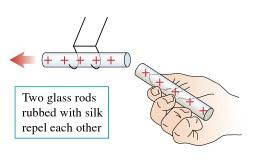
When two glass rods are rubbed with silk, both acquire positive charge and repel each other.
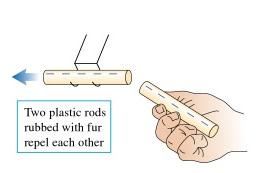
When two plastic rods are rubbed with fur, both acquire negative charge and repel each other.
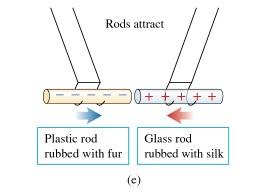
A glass rod rubbed with silk (positive) attracts a plastic rod rubbed with fur (negative).
Conductors, Insulators, and Semiconductors
Materials are classified based on how easily charges move through them:
Conductors: Charges move freely (e.g., metals like copper and silver).
Insulators: Charges do not move freely (e.g., glass, rubber).
Semiconductors: Intermediate properties (e.g., silicon, germanium).
Methods of Charging
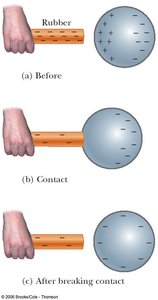
Charging by Conduction: Direct contact transfers charge, leaving both objects with the same sign of charge.
Charging by Induction: A charged object brought near a conductor causes redistribution of charges without direct contact, resulting in induced charges of opposite sign.
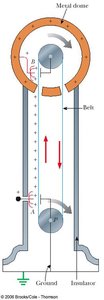
Van de Graaff Generator
An electrostatic generator that transfers charge to a metal dome using a moving belt, capable of generating very high voltages.
Polarization
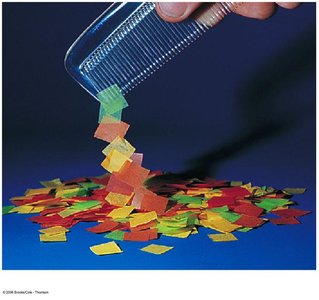
In neutral objects, the centers of positive and negative charge usually coincide. In the presence of a charged object, these centers can shift, causing polarization. This effect explains why neutral objects can be attracted to charged objects (e.g., a charged comb attracting bits of paper).
Elementary Particles and Charge
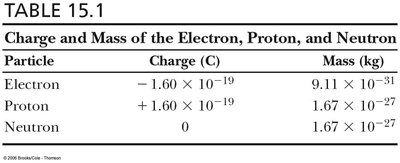
Particle | Charge (C) | Mass (kg) |
|---|---|---|
Electron | –1.60 × 10⁻¹⁹ | 9.11 × 10⁻³¹ |
Proton | +1.60 × 10⁻¹⁹ | 1.67 × 10⁻²⁷ |
Neutron | 0 | 1.67 × 10⁻²⁷ |
Coulomb’s Law and Electric Forces
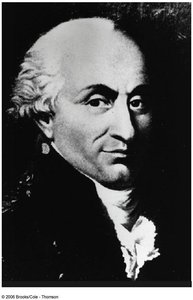
Coulomb’s Law
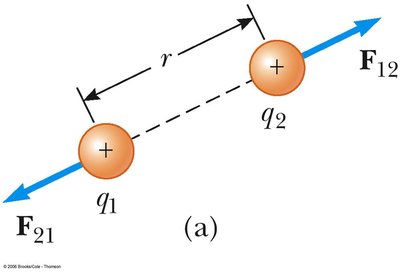
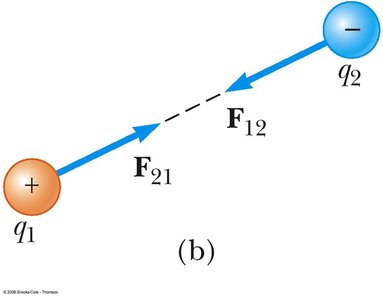
Coulomb’s Law quantifies the electric force between two point charges:
The force is proportional to the product of the charges and inversely proportional to the square of their separation.
The force acts along the line joining the charges.
Like charges repel; unlike charges attract.
Mathematical Form:
where
Vector Nature of Electric Forces
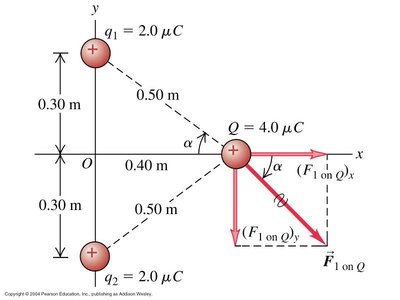
Electric force is a vector quantity. The net force on a charge due to multiple other charges is the vector sum of the individual forces (Principle of Superposition).
Comparison: Electric vs. Gravitational Forces
Both follow inverse-square laws.
Electric forces can attract or repel; gravitational forces only attract.
Electrostatic forces are much stronger than gravitational forces for elementary particles.
Electric Field
Definition and Properties
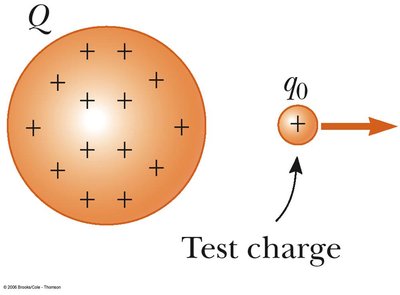
An electric field exists in the region around a charged object. It is defined as the force per unit charge experienced by a small positive test charge placed at a point:
The direction of the electric field is the direction of the force on a positive test charge.
The SI unit is newtons per coulomb (N/C).
Electric Field of a Point Charge
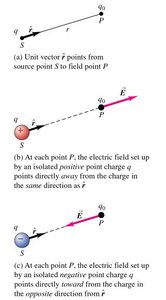
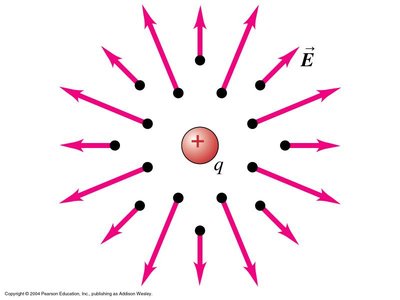
The electric field produced by a point charge at a distance is:
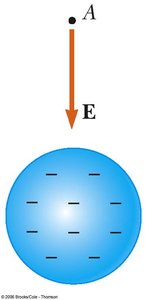
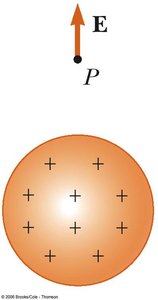
Field points away from positive charges and toward negative charges.
Superposition Principle for Electric Fields
The net electric field due to multiple charges is the vector sum of the fields produced by each charge:
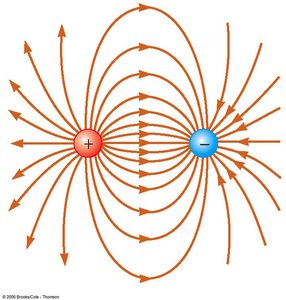
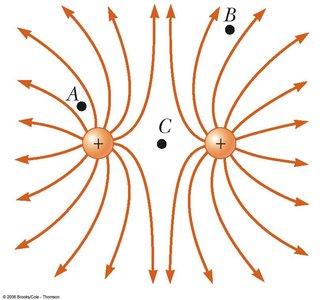
Electric Field Lines
Field lines indicate the direction and strength of the electric field.
Lines begin on positive charges and end on negative charges.
The density of lines represents the field's strength.
No two field lines cross.
Electric Dipoles
Definition and Properties
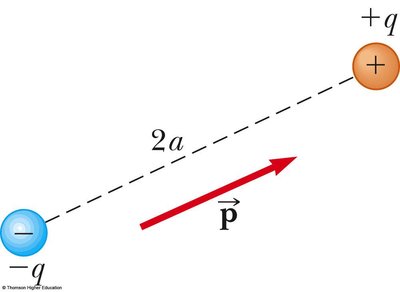
An electric dipole consists of two equal and opposite charges separated by a distance. The electric dipole moment is a vector pointing from the negative to the positive charge:
Torque and Potential Energy of a Dipole
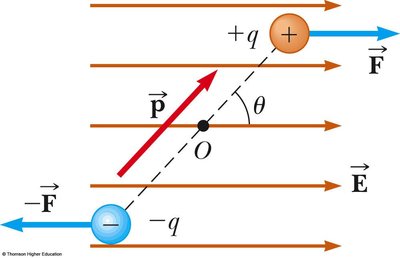
The torque on a dipole in a uniform electric field is:
The potential energy is:
Conductors in Electrostatic Equilibrium
The electric field is zero inside a conductor in equilibrium.
Any excess charge resides on the surface.
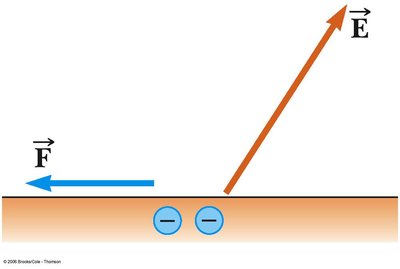
The field just outside a charged conductor is perpendicular to the surface.
Charge accumulates at sharp points where the radius of curvature is smallest.
Motion of Charged Particles in Electric Fields
Force and Acceleration
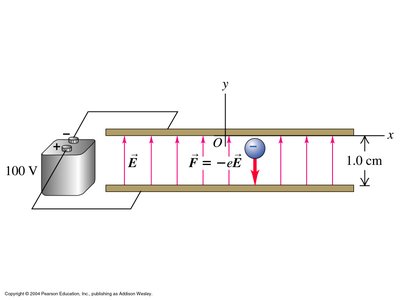
The force on a charge in an electric field is:
For a particle of mass , the acceleration is:
Example: Electron in a Uniform Electric Field
An electron released from rest between two parallel plates accelerates toward the positive plate.
Its motion can be analyzed using kinematics and the equations above.
Trajectory of a Charged Particle
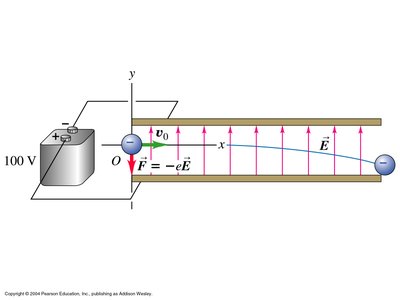
If a charged particle enters a uniform electric field with an initial velocity perpendicular to the field, its path is parabolic, similar to projectile motion under gravity.
Summary: This chapter introduces the foundational concepts of electric charge, methods of charging, Coulomb’s law, electric fields, field lines, dipoles, and the behavior of conductors and charged particles in electric fields. These principles are essential for understanding further topics in electromagnetism.
