 Back
Electric Charge and Electric Field: Physics with Calculus Study Notes
Study Guide - Smart Notes
 Tailored notes based on your materials, expanded with key definitions, examples, and context.
Electric Charge and Electric Field
Introduction to Electric Charge
Electric charge is a fundamental property of matter that governs electrical and magnetic interactions. It is quantized, conserved, and plays a central role in the behavior of atoms, molecules, and macroscopic objects.
Electric Charge (q or Q): Exists in two types—positive and negative. Electrons carry negative charge, protons carry positive charge.
Electrically Neutral: An object is neutral when it contains equal numbers of positive and negative charges.
Net Charge: The algebraic sum of all charges present in an object.
Like Charges Repel, Opposite Charges Attract: This fundamental law governs the interaction between charged particles.
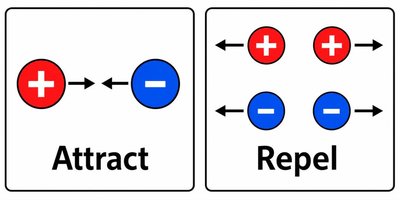
Quantization of Charge: Charge exists in discrete units, integer multiples of the elementary charge .
Conservation of Charge: The total charge in an isolated system remains constant; charge can be transferred but not created or destroyed.
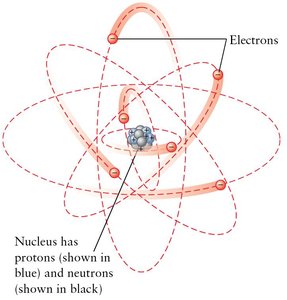
Conductors and Insulators
Materials are classified based on their ability to allow electric charges to move freely.
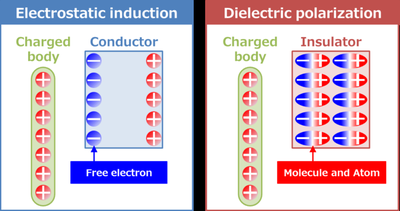
Conductors: Materials (e.g., metals like copper, silver) with loosely bound outer electrons that can move freely, allowing charge to flow easily.
Insulators: Materials (e.g., rubber, glass, plastic) with tightly bound electrons that do not move freely, preventing charge flow.
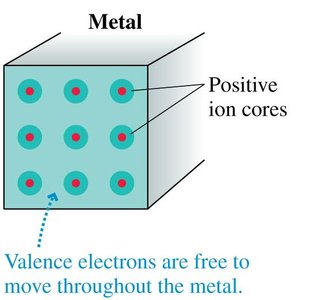
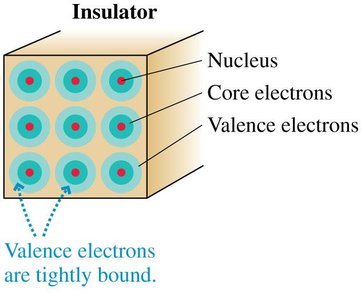
Surface Charge on Conductors: Excess charge in a conductor resides on its surface, spreading out as much as possible due to repulsion between like charges.
Sharp Points: Charge accumulates more densely at sharp points, which is the principle behind lightning rods.
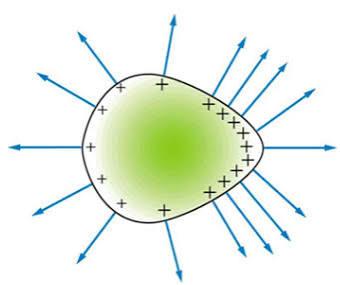
Charging Methods
Objects can be charged by friction, conduction, or induction.
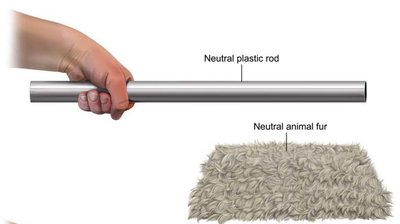
Friction: Rubbing two different insulators transfers electrons from one to the other, leaving both objects charged with equal magnitude and opposite sign.
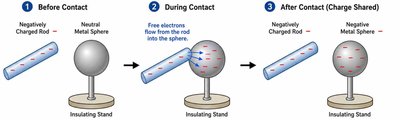
Conduction: Direct contact between a charged object and a conductor allows electrons to flow, resulting in both objects having the same sign of charge.
Induction: Charging without contact. A charged object brought near a conductor causes redistribution of charges; grounding allows one type of charge to escape, leaving the object with a net charge opposite to the inducing charge.
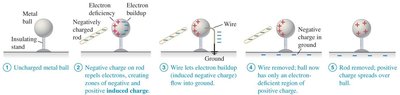
Grounding: Connecting an object to the Earth (a large conductor) allows excess charge to flow away, neutralizing the object.

Polarization and Induced Dipoles
In insulators, charges cannot move freely, but the charge distribution within molecules can shift, creating induced dipoles and polarization.
Polarization: The separation of positive and negative charges within a neutral object due to an external electric field.
Induced Dipole: A molecule becomes polarized, with one side slightly positive and the other slightly negative.
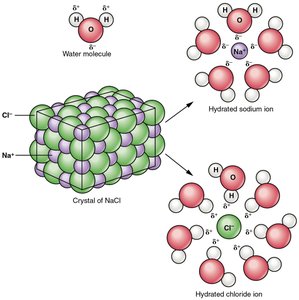
Permanent Dipoles: Some molecules, like water, are naturally polar and align in an electric field.
Coulomb's Law
Coulomb's law quantifies the force between two point charges.
Formula:
Coulomb Constant:
Permittivity of Free Space: ,
Force Direction: Acts along the line joining the two charges; repulsive for like charges, attractive for opposite charges.
Superposition Principle
The net force or electric field at a point due to multiple charges is the vector sum of the individual forces or fields from each charge.
Electric Field
The electric field is a vector field that describes the force per unit charge at every point in space due to electric charges.
Definition:
Units: Newton per coulomb (N/C)
Direction: The field points in the direction of the force on a positive test charge.
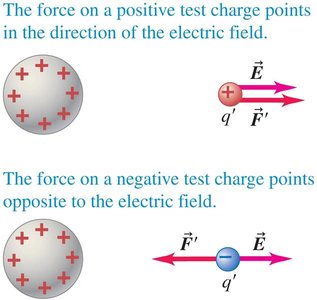
Electric Field of a Point Charge:
Field Lines: Visual representations of the electric field; lines begin on positive charges and end on negative charges or infinity. The density of lines indicates field strength.
Uniform Electric Field: Produced between two parallel plates with opposite charges; field lines are straight, parallel, and evenly spaced.
Applications and Examples
Biological Systems: In living organisms, electric charges are often carried by ions (e.g., Na+, K+, Cl-).
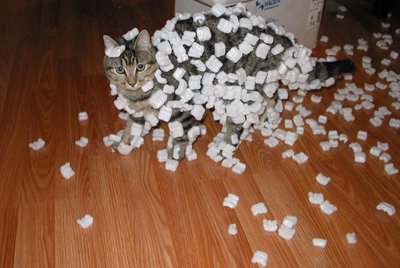
Static Electricity: Everyday phenomena such as static cling, lightning, and the attraction of dust to surfaces are explained by the movement and interaction of electric charges.


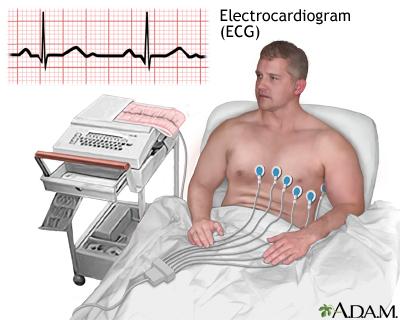
Medical Applications: Electric fields are used in devices such as electrocardiograms (ECG) to monitor heart activity.
Microscopic Examples: The structure of ionic crystals (e.g., NaCl) and the hydration of ions in solution are governed by electrostatic forces.
Nature: Bees can acquire electric charge while flying, which helps them collect pollen.

Summary Table: Conductors vs. Insulators
Property | Conductor | Insulator |
|---|---|---|
Electron Mobility | High (free electrons) | Low (tightly bound electrons) |
Charge Distribution | Spreads on surface | Remains localized |
Examples | Copper, Silver, Gold | Rubber, Glass, Plastic |
Key Equations
Coulomb's Law:
Electric Field (Point Charge):
Superposition Principle:
Additional info:
In biological systems, ions such as Na+ and Cl- are responsible for nerve impulses and muscle contractions.
Static electricity is commonly observed in dry environments where charge transfer is not easily dissipated.
