 Back
BackElectric Charge and Electric Field – Study Notes
Study Guide - Smart Notes
 Tailored notes based on your materials, expanded with key definitions, examples, and context.
Electric Charge and Electric Field
Concept: Electric Charge
Electric charge is a fundamental property of matter, analogous to mass, but it governs electric forces rather than gravitational forces. Atoms are composed of protons (positive charge), neutrons (neutral), and electrons (negative charge). The electric charge is quantized, meaning it exists in discrete amounts, specifically in integer multiples of the elementary charge, e.
Mass (m): Source of gravitational force; always attractive.
Electric Charge (Q): Source of electric force; can be attractive or repulsive.
Elementary charge (e): C
Proton charge:
Electron charge:
Neutral objects: Number of protons equals number of electrons, so net charge .
Formula for charge:
Example: An atom with 16 protons and 7 electrons has a net charge .
Example: Number of electrons in C:
Concept: Charging Objects
Electricity involves the movement of electrons and electric charge. Materials are classified as conductors or insulators based on their ability to allow charge movement.
Conductors: Allow electrons to move freely (e.g., metals).
Insulators: Do not allow electrons to move freely (e.g., plastics, rubber).
Charging by friction: Rubbing objects can transfer electrons, giving one object a negative charge and the other a positive charge.
Polarization: Separation of charges within an object without net charge transfer.
Conduction: Transfer of charge through direct contact, resulting in a net charge.
Like charges repel, unlike charges attract.
Concept: Charging by Induction
Induction is a method of charging an object without direct contact. It involves grounding and the influence of a nearby charged object to redistribute charges.
Connect neutral conductor to ground (allows charges to move freely).
Bring a charged rod near the conductor; charges are attracted or repelled to/from ground.
Disconnect the ground, trapping the redistributed charges.
Remove the charged rod; the conductor remains charged.
Key Point: Induction results in a net charge without direct contact.
Concept: Conservation of Charge
Electric charge is conserved in all processes; it can be transferred but not created or destroyed. When conductors are brought together, charges redistribute until equilibrium is reached (equal potential).
Conservation Law:
Equilibrium: Charges move until both objects have the same potential.
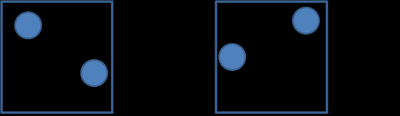
Example: If two spheres with charges 1 C and 3 C are brought together and one ends up with -2 C, the other must have .
Concept: Coulomb’s Law
Coulomb’s Law describes the electric force between two point charges. The force can be attractive or repulsive, depending on the sign of the charges.
Formula:
Coulomb’s constant:
Direction: Along the line joining the charges; repulsive for like charges, attractive for unlike charges.
Units: Newtons (N)
Example: The ratio of electric to gravitational force in a hydrogen atom is extremely large, showing the dominance of electric forces at atomic scales.
Practice: If the distance between two charges doubles, the force decreases by a factor of four ().
Concept: Electric Field
An electric field is produced by a charge and exerts a force on other charges in its vicinity. The field is a vector quantity, pointing away from positive charges and toward negative charges.
Electric field due to a point charge:
Force on a charge in an electric field:
Units: Newtons per Coulomb (N/C)
Example: If a 2 C charge experiences an electric field of 10 N/C, the force is N.
Concept: Capacitors and Uniform Electric Fields
Capacitors consist of two parallel plates with equal and opposite charges, creating a uniform electric field between them. The field points from the positive to the negative plate.
Electric field between plates:
Vacuum permittivity:
Capacitors store electric charge and energy.
Example: If the charge on the plates doubles and the area halves, the electric field increases by a factor of four.
Concept: Electric Field Lines
Electric field lines visually represent the direction and strength of the electric field. They originate from positive charges and terminate on negative charges. The density of lines indicates field strength.
Direction for positive charges: Field lines point away.
Direction for negative charges: Field lines point toward.
Force on a positive charge: In the direction of the field.
Force on a negative charge: Opposite to the field direction.
Concept: Electric Dipole and Dipole Moment
An electric dipole consists of two equal and opposite charges separated by a distance. The dipole moment is a vector pointing from the negative to the positive charge.
Dipole moment:
Potential energy in a field:
Torque in a field:
Example: A dipole in a uniform electric field experiences both a torque and a change in potential energy depending on its orientation.
Additional info: These notes cover the foundational concepts of electric charge, electric field, Coulomb’s law, and related applications, as outlined in Chapter 21 of a typical university physics curriculum.
