 Back
BackElectric Charge, Coulomb’s Law, and Gauss’ Law: Structured Study Notes
Study Guide - Smart Notes
 Tailored notes based on your materials, expanded with key definitions, examples, and context.
Electric Charge and Material Properties
Quantization and Conservation of Charge
Electric charge is a fundamental property of matter, quantized in units of the elementary charge C. The charge of any free particle is an integer multiple of , i.e., where . Quarks possess fractional charges ( or ), but are never found isolated. In all physical processes, the net charge is conserved.
Quantization: Charge exists only in discrete units.
Conservation: Total charge remains constant in any closed system.
Exchange: Objects can transfer charge, but the sum is unchanged.
Conductors and Insulators
Materials are classified based on the mobility of their charge carriers:
Conductors: Allow free movement of charge carriers (e.g., metals, ionized gases, electrolytes, plasmas).
Insulators: Electrons are bound and cannot move freely (e.g., glass, rubber, wood, plastic).
Charge Distribution: In conductors, charge spreads uniformly over the surface; in insulators, charge remains localized.
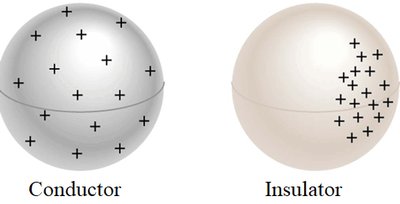
Charging Methods: Insulators are charged by friction, while conductors can be charged by induction.

Coulomb’s Law
Force Between Point Charges
Coulomb’s law describes the force between two point charges:
Magnitude: Proportional to the product of charges and inversely proportional to the square of the distance.
Direction: Acts along the line joining the charges; attractive for opposite charges, repulsive for like charges.
Mathematical Formulation:
Where N·m2/C2 and is the unit vector from to .
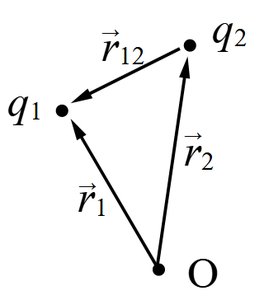
Vacuum Permittivity: C2/(N·m2), related to by .
Superposition Principle
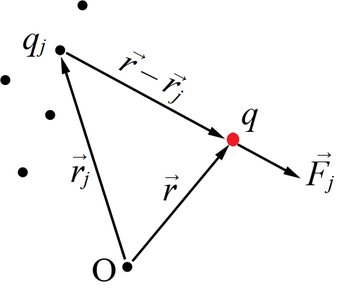
When multiple charges are present, the net force on any charge is the vector sum of individual Coulomb forces:
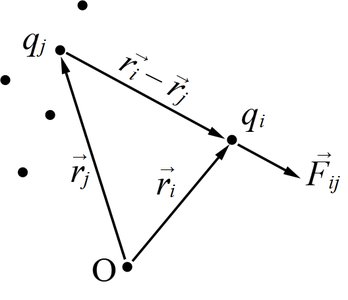
Note: , ensuring Newton’s third law is satisfied.
Example Problems
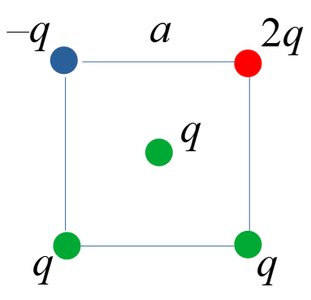
Square Arrangement: Four charges at corners of a square; find force on central charge for different configurations.
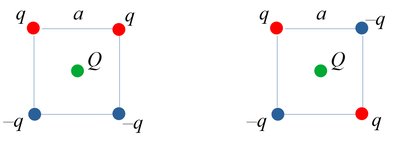
Variation: Different charge values and arrangements affect the net force.
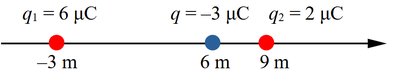
Linear Arrangement: Charges placed along the x-axis; calculate force on a given charge.
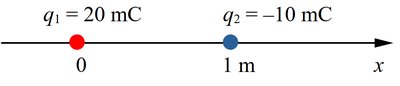
Equilibrium Point: Find position where net force on a charge is zero.
Electric Field and Its Effects
Definition and Properties
An electric field is a vector field defined at every point in space, representing the force per unit charge exerted by other charges:
For multiple point charges:
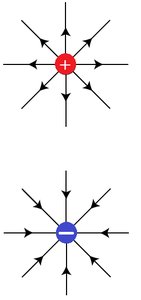
Direction: Points away from positive charges, toward negative charges.
Superposition: The total field is the sum of fields from all charges.
Electric Field Lines
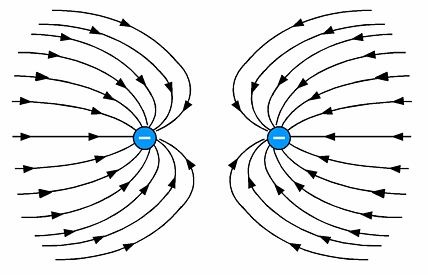
Electric field lines (EFLs) are a graphical tool to visualize electric fields:
Start at positive charges or infinity, end at negative charges or infinity.
Never form closed loops in static fields.
Density of lines indicates field strength.
Field direction is tangent to the line at any point.
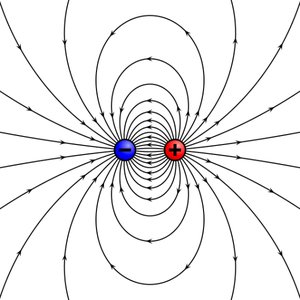
Examples of Electric Field Lines
Dipole: Field lines between equal and opposite charges.
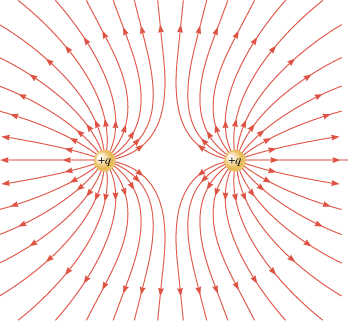
Two Positive Charges: Repulsive field pattern.
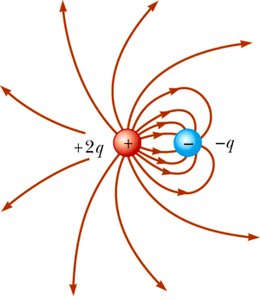
Asymmetric Dipole: Unequal charges, field lines reflect asymmetry.
Two Negative Charges: Repulsive field pattern for negative charges.
Electric Dipoles
Definition and Properties
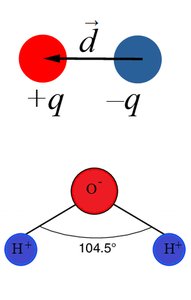
An electric dipole consists of two equal and opposite charges separated by a distance. Dipoles are electrically neutral but have a nonzero dipole moment.
Permanent Dipoles: Found in polar molecules (e.g., water, HCl).
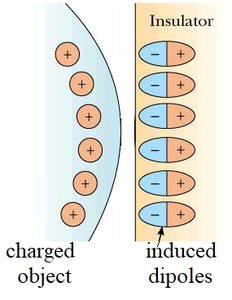
Induced Dipoles: Non-polar molecules become dipoles in an electric field.
Dipole Effects: Electrostatic interactions in media are weaker due to dipole effects.
Dipole Moment
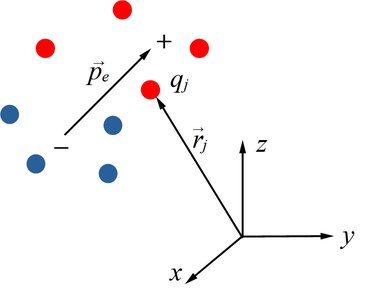
The electric dipole moment is defined as:
(for a collection of charges with )
For two charges and separated by :
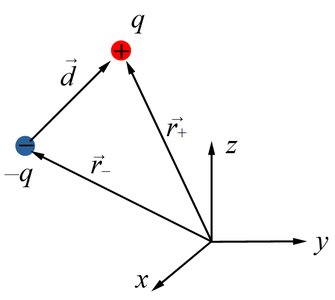
Units: C·m. The dipole moment is independent of the choice of origin.
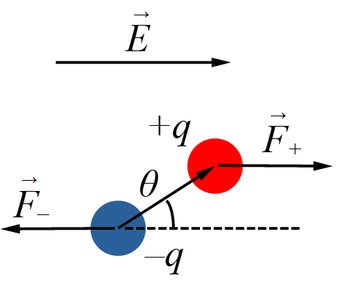
Dipole in a Uniform Electric Field
A dipole in a uniform electric field experiences:
No net force: Forces on each charge cancel.
Torque: Tends to align the dipole with the field.
Magnitude:
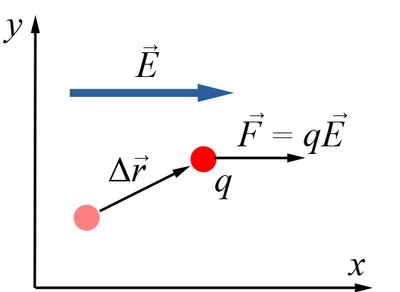
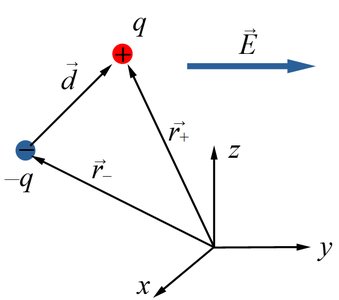
Potential Energy in an Electric Field
The potential energy of a point charge in a uniform electric field :
For a dipole:
Electric Field Calculation
Point Charges
The electric field at position due to a point charge at the origin:
For a charge at :
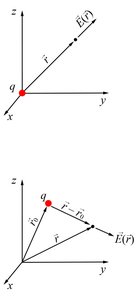
Continuous Charge Distributions
For continuous distributions, divide the region into infinitesimal elements:
Volume charge density: (C/m3),
Surface charge density: (C/m2),
Linear charge density: (C/m),
The total electric field:
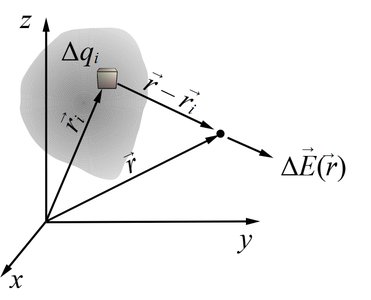
Common Integrals and Techniques
Integration is often required for continuous distributions. Common indefinite integrals and tricks include:
,
...and others as listed in the notes.
Gauss’ Law
Electric Flux
Electric flux through a surface quantifies the number of electric field lines passing through it:
Uniform field: (if field is perpendicular to area )
General case: , where is the area vector normal to the surface.
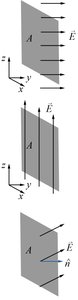
For non-uniform fields and curved surfaces:
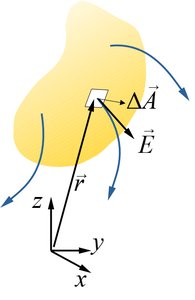
Gauss’ Law Statement
Gauss’ law relates the electric flux through a closed surface to the net charge enclosed:
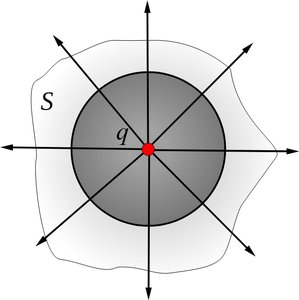
Only charges inside the surface contribute to the flux.
Charge distribution can be arbitrary within the surface.
Applications of Gauss’ Law
Gauss’ law is most useful for charge distributions with symmetry:
Planar symmetry: Charge density depends on distance to a plane.
Cylindrical symmetry: Charge density depends on distance to an axis.
Spherical symmetry: Charge density depends on distance to a point.
Strategy:
Identify symmetry.
Choose Gaussian surface matching symmetry.
Calculate enclosed charge.
Compute flux and solve for electric field.
Example Configurations
Dipole inside spherical surface: Calculate flux for dipole configuration.
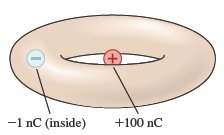
Charge inside toroidal surface: Flux depends only on enclosed charge.
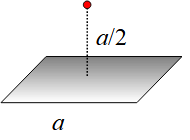
Charge above square: Find flux through square for point charge above it.
Summary Table: Types of Charge Distributions
Type | Symbol | Units | Expression for dq |
|---|---|---|---|
Volume | C/m3 | ||
Surface | C/m2 | ||
Linear | C/m |
Additional info: These notes cover the fundamental concepts of electric charge, Coulomb’s law, electric field, dipoles, and Gauss’ law, including their mathematical formulations, physical interpretations, and applications. Exercises and diagrams reinforce understanding of these principles.
