 Back
BackCH 21: Electric Current and DC Circuits
Study Guide - Smart Notes
 Tailored notes based on your materials, expanded with key definitions, examples, and context.
Electric Current and DC Circuits
Electric Current
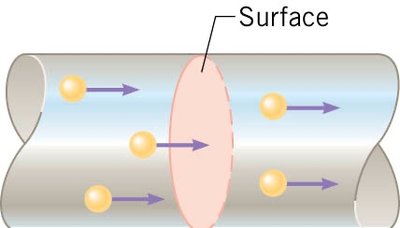
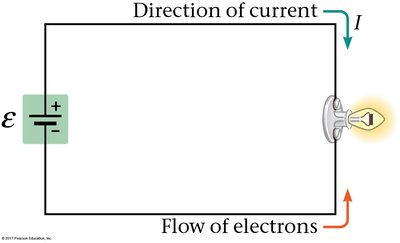
Electric current is defined as the amount of electric charge passing through a surface per unit time. In metallic conductors, this charge is carried by electrons moving through the wire. The direction of conventional current is taken as the direction positive charges would move, which is opposite to the actual flow of electrons.
Definition: Electric current, I, is given by , where is the charge passing through a surface in time .
Direct Current (DC): Charges move in the same direction at all times.
Alternating Current (AC): Charges reverse direction periodically.
Unit: The SI unit of current is the ampere (A), where 1 A = 1 C/s.
Batteries and Electromotive Force (emf)
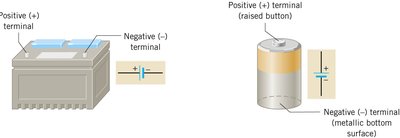
Batteries are sources of electrical energy that use chemical reactions to create a potential difference between their terminals. The maximum potential difference a battery can provide is called the electromotive force (emf), denoted by .
emf (): The maximum potential difference across the terminals of a battery.
Note: Despite its name, emf is a potential (measured in volts), not a force.
Current Direction: By convention, current flows from the positive terminal to the negative terminal of a battery.
Resistance and Ohm's Law
Resistance is the property of a material that opposes the flow of electric current. Ohm's Law states that the current through a conductor between two points is directly proportional to the voltage across the two points, provided the temperature remains constant.
Ohm's Law:
Resistance (R): Measured in ohms (Ω),
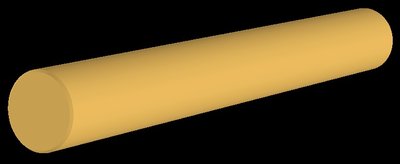
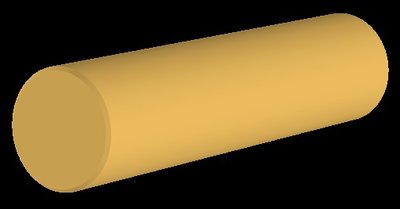
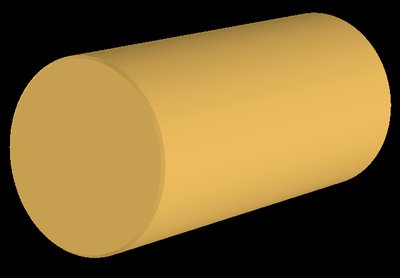
Resistivity (ρ): A material property that quantifies how strongly a material opposes current flow. , where L is the length and A is the cross-sectional area of the conductor.
Resistivity and Temperature
The resistivity of materials changes with temperature. For conductors, resistivity increases with temperature, while for semiconductors, it decreases.
Temperature Dependence:
α: Temperature coefficient of resistivity (positive for metals, negative for semiconductors)
Electric Power in Circuits
Electric power is the rate at which electrical energy is transferred by an electric circuit. It is given by the product of current and voltage.
Power:
Alternative Forms:
Energy Consumption: Electric companies measure energy in kilowatt-hours (kWh), where 1 kWh = 3.6 × 10⁶ J.
Resistors in Series and Parallel
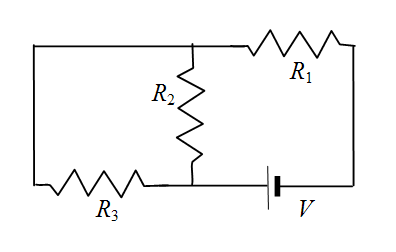
Resistors in Series
When resistors are connected in series, the same current flows through each resistor, and the total resistance is the sum of the individual resistances.
Total Resistance:
Current: Same through all resistors.
Voltage: The total voltage is divided among the resistors.
Resistors in Parallel
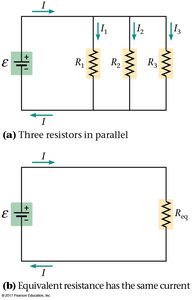
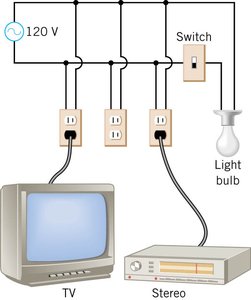
When resistors are connected in parallel, the voltage across each resistor is the same, but the current divides among the parallel branches.
Total Resistance:
Voltage: Same across all resistors.
Current: The total current is the sum of the currents through each resistor.
Capacitors in Circuits
Capacitors in Parallel
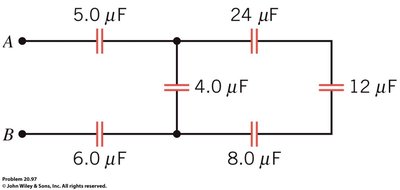
When capacitors are connected in parallel, the total capacitance is the sum of the individual capacitances. Each capacitor has the same voltage across its plates.
Total Capacitance:
Charge: The total charge stored is the sum of the charges on each capacitor.
Capacitors in Series
When capacitors are connected in series, the reciprocal of the total capacitance is the sum of the reciprocals of the individual capacitances. The same charge passes through each capacitor.
Total Capacitance:
Voltage: The total voltage is the sum of the voltages across each capacitor.
RC Circuits
Charging and Discharging a Capacitor
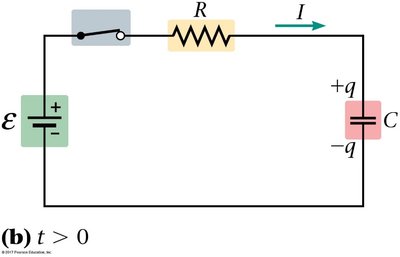
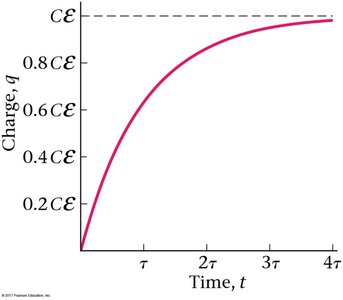
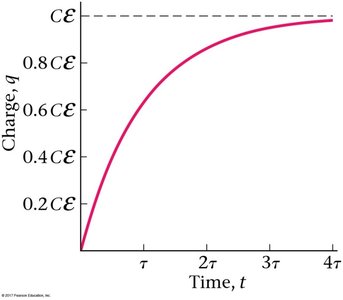
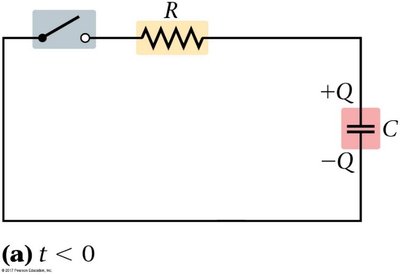
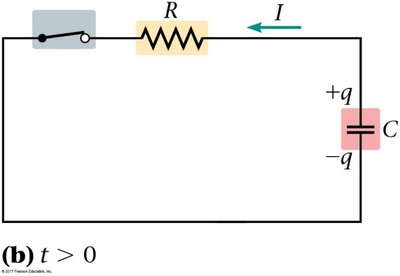
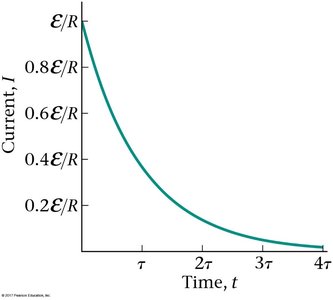
RC circuits contain both resistors and capacitors. The charging and discharging of a capacitor in such a circuit is not instantaneous but follows an exponential law characterized by the time constant .
Charging: The charge on the capacitor as a function of time is .
Discharging: The charge decreases as , where is the initial charge.
Time Constant (): ; after a time , the capacitor charges to about 63% of its maximum value or discharges to about 37% of its initial value.
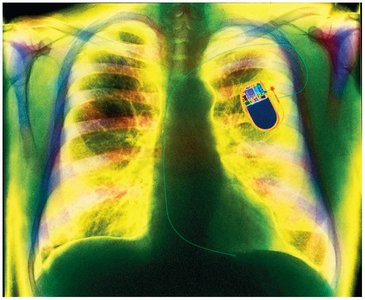
Applications: RC Circuits in Heart Pacemakers
RC circuits are used in devices such as heart pacemakers to control the timing of voltage pulses. The time constant determines the pulsing rate, which is critical for medical applications.
Example: In a pacemaker, a voltage pulse is delivered when the capacitor discharges to a preset level, after which it recharges rapidly. The pulsing rate is controlled by the RC time constant.
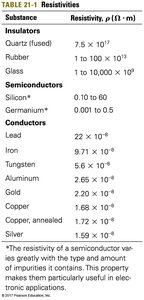
Summary Table: Resistivities of Common Materials
The table below classifies materials as insulators, semiconductors, or conductors based on their resistivity values.
Substance | Resistivity, () |
|---|---|
Quartz (fused) | 7.5 × 10¹⁷ |
Rubber | 1 × 10¹³ to 1 × 10¹⁵ |
Glass | 1 × 10¹⁰ to 1 × 10¹⁴ |
Silicon (semiconductor) | 0.10 to 60 |
Germanium (semiconductor) | 0.001 to 0.5 |
Lead | 22 × 10-8 |
Iron | 9.71 × 10⁻⁸ |
Tungsten | 5.6 × 10⁻⁸ |
Aluminum | 2.65 × 10⁻⁸ |
Gold | 2.20 × 10⁻⁸ |
Copper | 1.68 × 10⁻⁸ |
Copper, annealed | 1.72 × 10⁻⁸ |
Silver | 1.59 × 10⁻⁸ |
Additional info: These notes provide a comprehensive overview of electric current, resistance, Ohm's law, power, series and parallel circuits, capacitors, and RC circuits, suitable for exam preparation in a college-level physics course.
