 Back
BackElectric Dipole and Its Electric Field
Study Guide - Smart Notes
 Tailored notes based on your materials, expanded with key definitions, examples, and context.
Electric Dipole
Definition and Structure
An electric dipole consists of two equal and opposite charges (+q and -q) separated by a fixed distance d. The dipole moment p is defined as:
Dipole Moment: , where q is the magnitude of each charge and d is the vector pointing from the negative to the positive charge.
Physical Example: Many molecules, such as water, possess a permanent dipole moment.
Applications: Dipoles are fundamental in understanding molecular interactions, electric fields in materials, and biological systems.
Electric Field of a Dipole: Perpendicular Bisector
The electric field produced by a dipole at a point on the perpendicular bisector (a distance L from the center) can be calculated using superposition.
Key Steps:
Calculate the field from the positive charge (+q).
Calculate the field from the negative charge (-q).
Add the two fields vectorially.
Symmetry: The y-components of the fields cancel due to symmetry, leaving only the x-component.
Resulting Field: , where r is the distance from the dipole center to point P, and p = qd.
Direction: The field points opposite to the dipole direction on the perpendicular bisector.



Electric Field of a Dipole: Along the Axis
For points located on the axis of the dipole (y-axis), at distances much greater than the dipole size (r ≫ d), the field is derived using the binomial expansion.
Superposition Principle: Calculate the field from each charge and sum.
Binomial Expansion: Used to approximate the field for r ≫ d.
Resulting Field:
Comparison: The field along the axis is twice as strong as the field at the same distance on the perpendicular bisector.




Summary Table: Electric Field of a Dipole
Location | Electric Field Expression | Direction |
|---|---|---|
Perpendicular Bisector | Opposite to dipole moment | |
Along Axis (r ≫ d) | Same as dipole moment |
Physical and Biological Applications
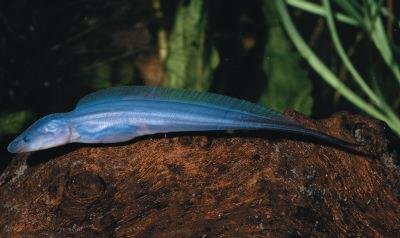
Biological Example: The African knifefish generates its own electric field using a dipole-like mechanism, allowing it to sense its environment in murky waters.
Mechanism: The fish charges its tail and head like a dipole, creating a sensory map.
Relevance: This demonstrates the practical importance of dipole fields in nature.
Key Equations and Constants
Dipole Moment:
Electric Field (Perpendicular Bisector):
Electric Field (Axis):
Coulomb's Constant:
Additional info:
The binomial expansion is used to approximate the electric field for points far from the dipole, where .
These equations are valid only for points much farther from the dipole than the separation of the charges.
