 Back
BackElectric Forces and Fields: Foundations and Applications in Life Sciences
Study Guide - Smart Notes
 Tailored notes based on your materials, expanded with key definitions, examples, and context.
Electric Forces and Fields
Introduction to Electric Phenomena
Electric forces and fields are fundamental to understanding a wide range of physical and biological phenomena. From the attraction and repulsion of charged objects to the essential roles of electricity in cellular processes, the study of electric forces provides a foundation for both physics and the life sciences.
Electric Charge: A property of matter that causes it to experience a force when placed in an electric and magnetic field. There are two types: positive and negative.
Electric Forces: The interactions between charged objects, which can be attractive or repulsive depending on the nature of the charges involved.
Electric Fields: A region around a charged object where other charges experience a force. The field can be visualized and calculated to predict the behavior of charges in space.

Example: A plastic comb, after being run through hair, can attract a stream of water due to the electric field it creates. This demonstrates the effect of electric charge and field on neutral objects.
Electricity in Biological Systems
Electricity is essential for life. Water's unique electrical properties enable complex biochemistry, and the arrangement of charges across cell membranes creates membrane potentials vital for nerve impulses and muscle contraction. Technologies such as gel electrophoresis and electrocardiograms rely on electric fields for biological and medical applications.
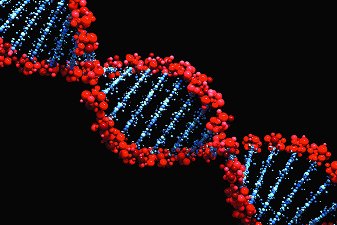
Example: The two strands of a DNA molecule are held together by hydrogen bonds, which are electric forces between electric dipoles.
Electric Fields in Nature
Lightning: Electric fields in storms can become strong enough to ionize air, resulting in lightning.
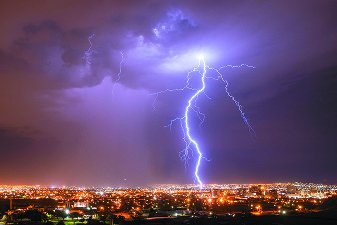
Example: Lightning is a dramatic demonstration of electric fields in the atmosphere.
The Charge Model
Basic Postulates
Frictional forces (such as rubbing) can transfer charge between objects, a process called charging.
There are two kinds of charge: positive and negative.
Like charges repel; opposite charges attract. These are electric forces.
The force between two charged objects is a long-range force that decreases with distance and increases with the amount of charge.
Neutral objects have equal amounts of positive and negative charge. Charging separates these charges.
Conservation of Charge: Charge cannot be created or destroyed, only transferred.
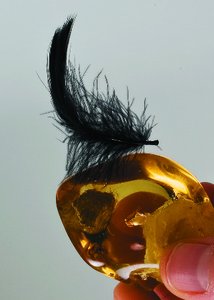
Example: The ancient Greeks observed that amber, after being rubbed, could attract small objects. This is the origin of the word "electricity."
Charge Transfer in Nature
Collisions between sand grains and dust particles in a sandstorm can transfer charges, electrifying the dust cloud and increasing particle movement.

Example: Electric forces between charged dust and sand grains can lift particles during a sandstorm.
Insulators and Conductors
Insulators: Materials where charges remain immobile (e.g., glass, plastic).
Conductors: Materials where charges move easily (e.g., metals, salt water).
Charge can be transferred by contact; both insulators and conductors can be charged, but only conductors allow charges to move freely.
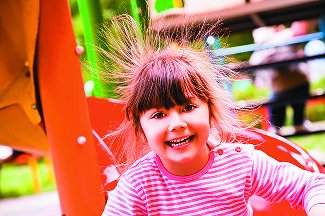
Example: A child going down a plastic slide on a dry day can become charged, causing hair to stand up due to repulsive electric forces.
Polarization and Attraction of Neutral Objects
A charged object can attract a neutral object by inducing a separation of charges within it, a process called polarization.
This results in a net attractive force, even if the neutral object is an insulator.
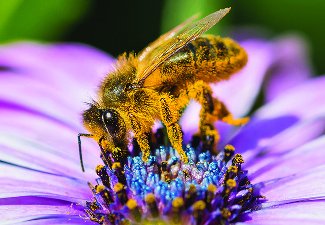
Example: Bees acquire a small positive charge while flying, which helps attract pollen grains to their bodies, enhancing pollination.
Visualizing and Measuring Electric Fields
Field Visualization
Electric fields can be visualized using field lines or by observing the alignment of small particles in a field.
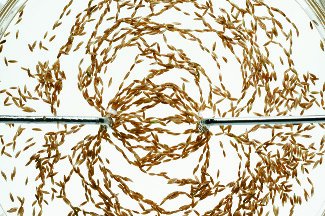
Example: Grass seeds floating on oil align themselves in patterns that reveal the presence and structure of an electric field.
Biological Sensing of Electric Fields
Some animals, such as the platypus, can sense electric fields generated by the muscle activity of prey.
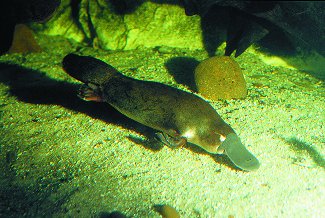
Example: The platypus uses its bill to detect electric fields in water, aiding in the search for food.
Summary Table: Types of Materials and Charge Behavior
Material Type | Charge Mobility | Examples |
|---|---|---|
Insulator | Charges are immobile | Glass, plastic, dry air |
Conductor | Charges move freely | Metals, salt water, human body (except dry skin) |
Applications and Biological Relevance
Electric fields are crucial in many biological processes, including nerve signaling, muscle contraction, and molecular interactions such as hydrogen bonding in DNA.
Technologies like gel electrophoresis use electric fields to separate DNA fragments by length, which is essential in genetics and forensics.
Key Equations
Coulomb's Law: , where
Electric Field of a Point Charge:
Electric Field in a Parallel-Plate Capacitor: , where
Force on a Charge in an Electric Field:
Conclusion
Understanding electric forces and fields is essential for explaining a wide range of physical and biological phenomena. The principles outlined here form the basis for further study in electricity, magnetism, and their applications in the life sciences.
