 Back
BackElectric Potential and Electric Potential Energy: Concepts, Calculations, and Biomedical Applications
Study Guide - Smart Notes
 Tailored notes based on your materials, expanded with key definitions, examples, and context.
Electric Charge and Electric Field
Electric Charge
Electric charge is a fundamental property of matter that causes it to experience a force when placed in an electric and magnetic field. There are two types of electric charges: positive and negative. Like charges repel, and unlike charges attract.
Conductors: Materials that allow electric charges to move freely (e.g., metals).
Insulators: Materials that do not allow charges to move freely (e.g., rubber, glass).
Coulomb's Law
Coulomb's Law quantifies the force between two point charges:
F: Magnitude of the force between charges
q_1, q_2: The two point charges
r: Distance between the charges
k_e: Coulomb's constant ( N·m²/C²)
Electric Field and Electric Forces
The electric field E at a point in space is defined as the force per unit charge experienced by a small positive test charge placed at that point:
Direction of E is the direction of the force on a positive test charge.
Electric Field Lines
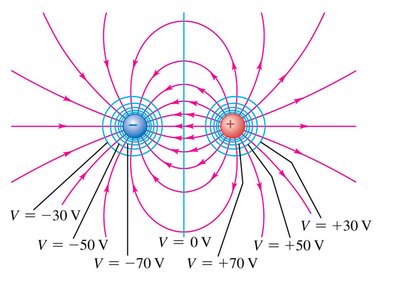
Field lines point away from positive charges and toward negative charges.
The density of lines indicates the strength of the field.
Gauss's Law
Gauss's Law relates the electric flux through a closed surface to the charge enclosed by that surface:
Useful for calculating electric fields of symmetric charge distributions.
Charges of Conductors and Faraday Cage
In electrostatic equilibrium, excess charge resides entirely on the surface of a conductor, and the electric field inside a conductor is zero. A Faraday cage is an enclosure made of conducting material that blocks external static and non-static electric fields.
Electric Potential and Electric Potential Energy
Work Done by an Electric Force
Work is done when a charge moves in an electric field. For a uniform field:
q: Charge
E: Electric field strength
d: Displacement in the direction of the field
Electric Potential Energy (U)
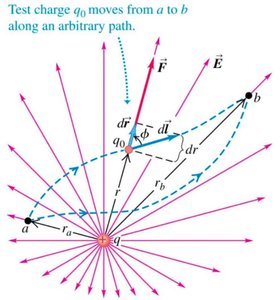
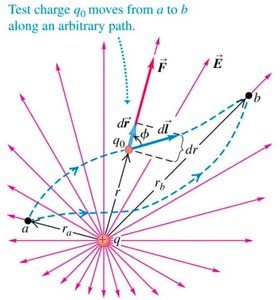
Electric potential energy is the energy a charge has due to its position in an electric field. For two point charges:
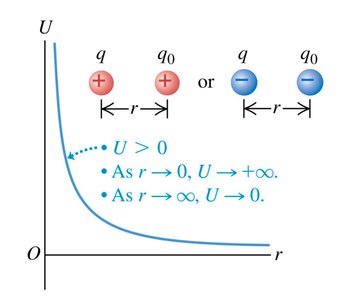
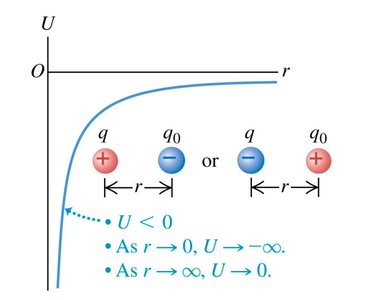
For like charges, U is positive (repulsion); for unlike charges, U is negative (attraction).
Electric Potential (V)
Electric potential at a point is the electric potential energy per unit charge at that point:
Unit: Volt (V), where 1 V = 1 J/C
Potential difference (ΔV) is the work done per unit charge to move a charge between two points.
Electric Potential Due to Point Charges
The electric potential at a distance r from a point charge q is:
For multiple charges, potentials add algebraically.
Electric Potential Energy of Two Point Charges
The potential energy of a system of two point charges q and q₀ separated by distance r:
Electric Potential Energy with Several Charges
The total electric potential energy for a charge q₀ in the presence of several other charges is the sum of the potential energies due to each charge:
Electric Potential and Electric Field Relationship
The electric field is related to the spatial rate of change of the electric potential:
Moving in the direction of the electric field decreases potential.
Moving against the field increases potential.
Equipotential Surfaces
An equipotential surface is a surface on which the electric potential is constant. Electric field lines are always perpendicular to equipotential surfaces.
E-Field and Potential of a Charged Conductor
Inside a solid conducting sphere, the electric field is zero.
The potential is constant throughout the conductor and equal to its value at the surface.
Ionisation and Corona Discharge
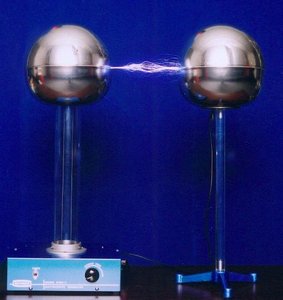
When the electric field at the surface of a conductor exceeds a critical value, air becomes ionized, leading to corona discharge. The maximum potential is given by:
Ebreakdown: Electric field at which air becomes conductive (about V/m)
R: Radius of the sphere
Biomedical Applications of Electric Potential
Applications – Biological Cells
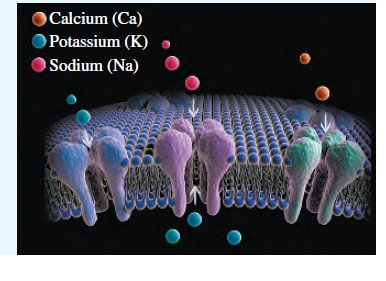
The interior of a human cell is at a lower electric potential than the exterior. This potential difference (resting membrane potential) is about -70 mV in neurons and -95 mV in skeletal muscle cells. The resulting electric field affects ion flow through membrane channels, which is crucial for nerve and muscle function.
Applications – Electrocardiogram (ECG/EKG)
Electrodes placed on the skin measure potential differences caused by the electrical activity of the heart. These measurements help diagnose cardiac abnormalities.

Applications – Cancer Radiotherapy
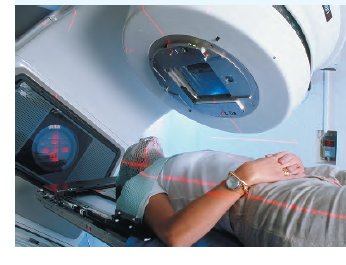
High-energy electrons (4–20 MeV) are used to treat superficial tumors. The electrons transfer their energy to the tumor through collisions, making this method effective for treating cancers near the surface.
Additional info: The notes above expand on the provided lecture content with definitions, formulas, and biomedical context to ensure a self-contained study guide suitable for exam preparation.
