 Back
Electric Potential and Energy: Physics with Calculus Study Guide
Study Guide - Smart Notes
 Tailored notes based on your materials, expanded with key definitions, examples, and context.
Electric Potential and Energy
Potential Energy: Concept and Examples
Potential energy is the energy stored in a system due to its position or configuration. It is a fundamental concept in physics, applicable to gravitational, elastic, and electric systems. Only changes in potential energy are physically meaningful, and the zero point can be chosen for convenience.
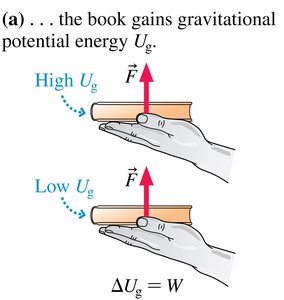
Gravitational Potential Energy (Ug): Energy stored when an object is lifted against gravity. The change in gravitational potential energy is equal to the work done: .
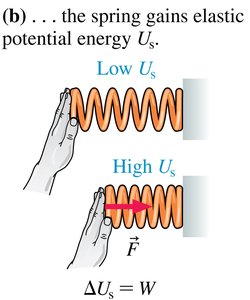
Elastic Potential Energy (Us): Energy stored in a compressed or stretched spring. The change in elastic potential energy is also equal to the work done: .
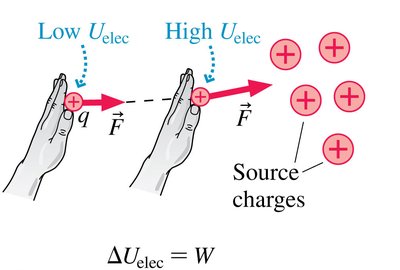
Electric Potential Energy (U_{elec}): Energy stored in a configuration of electric charges. Work is required to bring charges together against repulsive forces: .
Example: Lifting a book increases its gravitational potential energy; compressing a spring increases its elastic potential energy; moving a positive charge closer to other positive charges increases electric potential energy.
Electric Potential Energy and Work
Electric potential energy is associated with the position of charges in an electric field. The work-energy theorem relates changes in potential energy and kinetic energy to the work done by external forces:
Work-Energy Theorem:
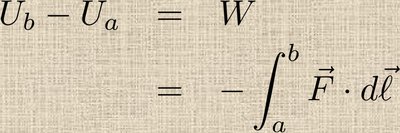
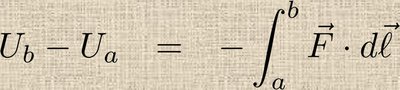
Link to Force: The change in potential energy when moving a charge from point A to B is given by the work done against the electric force:
Analogy Between Gravity and Electricity
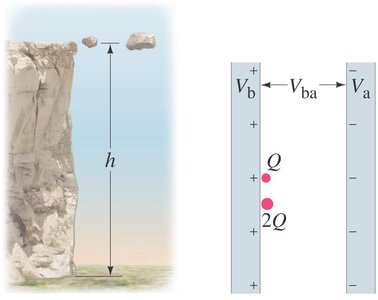
Both gravitational and electric forces have associated potential energies. As a rock falls, its gravitational potential energy decreases and its kinetic energy increases. Similarly, as a positive charge moves away from another positive charge, its electric potential energy decreases and it speeds up. For negative charges, the direction of force and potential change is different.
Electrostatic Potential (V)
Electrostatic potential, or simply potential, is a scalar quantity defined such that the change in potential energy for a charge q is:
SI unit: Volt (V), where
Electric Potential: Example with Negative Charge
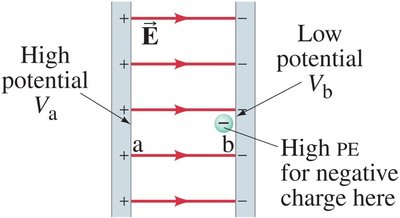
When a negative charge is placed near a negative plate, it will move from high to low potential, decreasing its electric potential energy as it moves.
Direction of motion: From right to left (toward higher potential)
Potential energy: Decreases as the charge moves
Electric potential: Increases in position
Typical Potential Differences
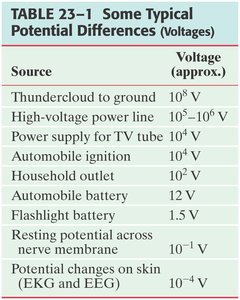
Various sources provide different potential differences (voltages). Batteries, generators, and natural phenomena like thunderstorms can create significant voltage differences.
Source | Voltage (approx.) |
|---|---|
Thundercloud to ground | V |
High-voltage power line | – V |
Power supply for TV tube | V |
Automobile ignition | V |
Household outlet | V |
Automobile battery | 12 V |
Flashlight battery | 1.5 V |
Resting potential across nerve membrane | V |
Potential changes on skin (EKG and EEG) | V |
Path Independence of Potential Changes
The change in electric potential between two points is independent of the path taken. Only the start and end points matter for calculating and .
Potential is unique at every point in space (after choosing where ).
Path independence:
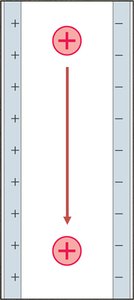
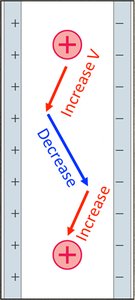
Calculating Electric Potential in a Constant Field
For a uniform electric field, the potential difference between two points is given by:
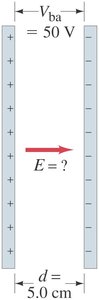
For parallel plate capacitors:
Example: If V and m, then V/m
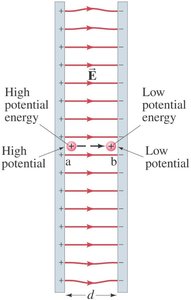
Electric Potential for Point Charges and Spherical Shells
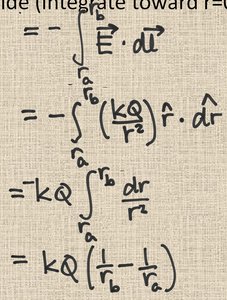
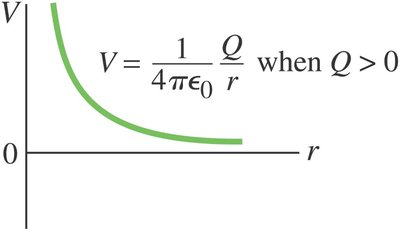
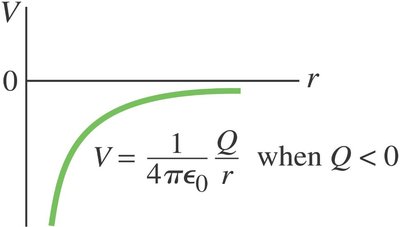
The electric potential due to a point charge Q at a distance r is:
For a spherical shell, inside and is constant; outside, $V$ decreases with .
Potential can be positive or negative depending on the sign of Q.

Electric Potential for Cylindrical Charge Distributions
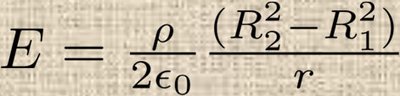
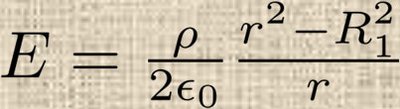
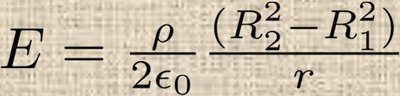
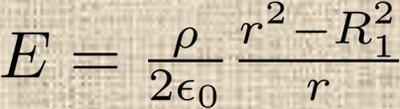
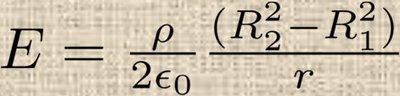
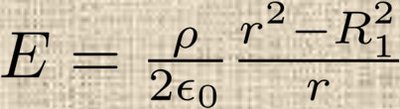
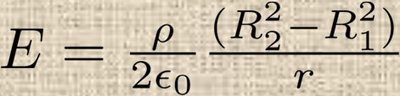
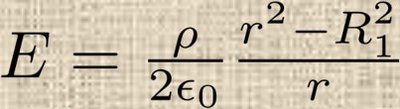
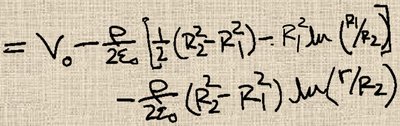
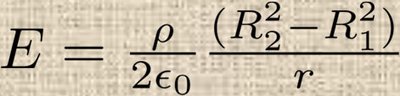
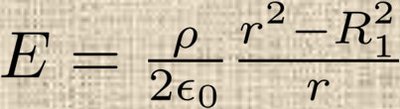
For a hollow cylinder with constant charge density between radii and , the electric field and potential are calculated piecewise for different regions:
Region A ():
Region B ():
Region C ():
Calculating Potential by Integration
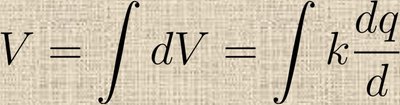
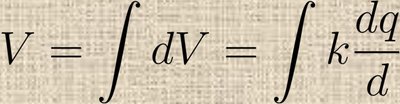
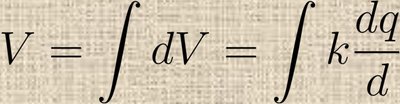
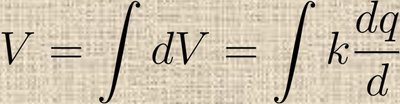
For continuous charge distributions, the potential at a point is calculated by integrating over all infinitesimal charge elements:
Example: Circular plate of charge, find potential at points on the x-axis.
Superposition Principle for Potentials
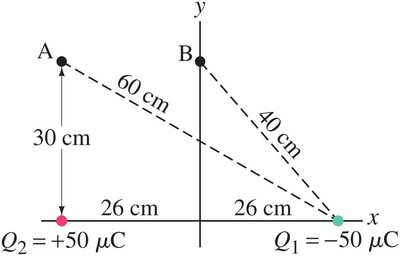
The total electric potential at a point due to multiple charges is the sum of the individual potentials:
Example: For two charges and ,
Energy Conservation in Electric Fields
In the absence of external work, the sum of potential and kinetic energy remains constant:
Any decrease in potential energy increases kinetic energy.
Electric Potential Energy for Multiple Charges
The energy required to assemble a system of charges is calculated by summing the work done to bring each charge from infinity:
Example: For three charges, calculate the work to assemble the system.
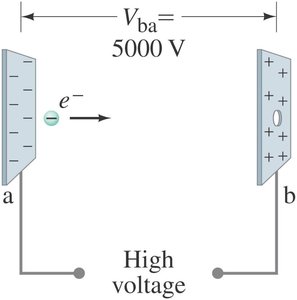
Electrostatic Potential: Electron Acceleration Example
When an electron is accelerated through a potential difference, its change in potential energy and final speed can be calculated:
Equipotential Surfaces
Equipotential surfaces are lines or surfaces where the electric potential is constant. Moving along an equipotential requires no work, and these surfaces are always perpendicular to electric field lines.
Analogy: Similar to contour lines of constant elevation in gravity.
For point charges: Equipotential surfaces are spheres.
Board Problems: Work and Electric Field Magnitude
Problems involving equipotential surfaces illustrate key concepts:
Work along equipotential:
Work across equipotential:
Field strength: The electric field is stronger where equipotential surfaces are closer together.
Electron Volt (eV): A Practical Energy Unit
The electron volt is a convenient unit of energy in electrostatics, defined as the energy gained by an electron moving through a potential difference of 1 V:
Summary of Key Equations
Energy conservation and equipotential surfaces are fundamental concepts.
