 Back
BackElectric Potential, Capacitance, and DC Circuits: Structured Study Notes
Study Guide - Smart Notes
 Tailored notes based on your materials, expanded with key definitions, examples, and context.
Electric Potential and Potential Energy
Potential Energy of a Test Charge
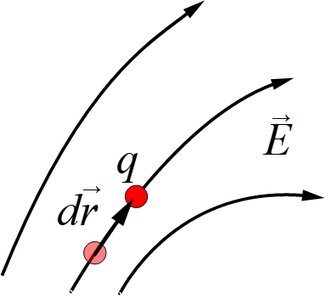
The potential energy of a test charge in an electric field is a fundamental concept in electrostatics. When a charge q is moved from point A to point B in a non-uniform electric field \vec{E}(\vec{r}), the work done by the field is equal to the change in the charge's potential energy:
Work Done:
Path Independence: This work is independent of the path taken, ensuring energy conservation.
Potential Energy:
Electric Potential
Electric potential is defined as the potential energy per unit charge. It is a scalar quantity and is measured in volts (V):
Definition:
Units:
Electron-Volt:
Relationship Between Electric Potential and Electric Field
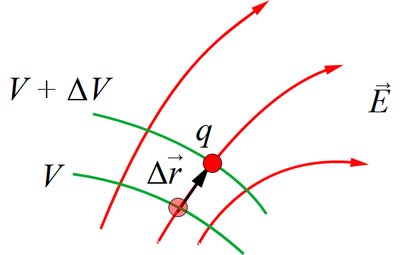
The electric field is related to the spatial variation of the electric potential. The change in potential as a charge moves by is:
Potential Change:
Component Form: , ,
Gradient Operator:
Electric Field:
Equipotential Surfaces
Properties and Representation
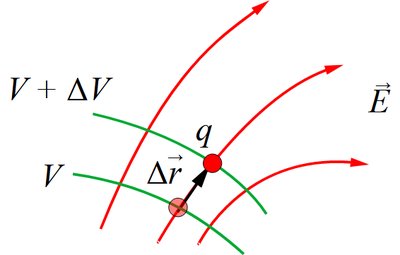
Equipotential surfaces are imaginary surfaces where the electric potential is constant. They are useful for visualizing electric fields:
Definition: on an equipotential surface
Field Lines: Electric field lines are always perpendicular to equipotential surfaces
Density: The denser the equipotential surfaces, the stronger the electric field
Field Direction: cannot be tangential to the surface
Electric Potential of Point Charges and Charge Distributions
Point Charge
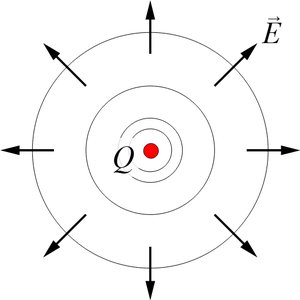
The electric potential due to a point charge Q at the origin is:
Electric Field:
Potential:
Equipotential Surfaces: Concentric spheres around the origin
Multiple Charges and Continuous Distributions
Discrete Charges:
Continuous Distribution:
Capacitance and Capacitors
Capacitance
Capacitance is the ability of two conducting objects to store charge while remaining electrically neutral. The charge stored is proportional to the potential difference:
Definition:
Units:
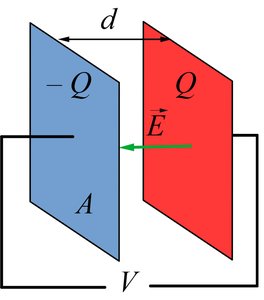
Parallel-Plate Capacitor
Surface Charge Density:
Electric Field:
Voltage:
Capacitance:
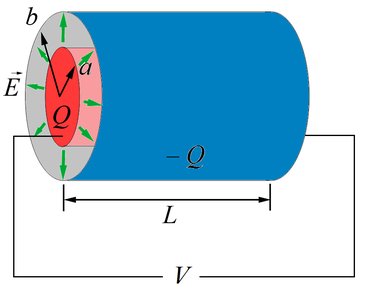
Cylindrical Capacitor
Electric Field:
Voltage:
Capacitance:
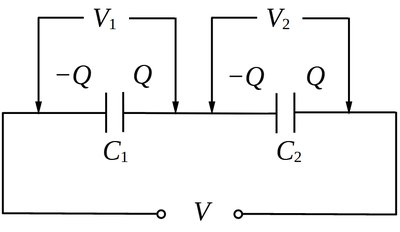
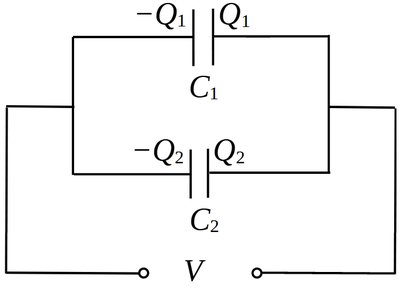
Capacitors in Series and Parallel
Series:
Parallel:
Electric Field in Dielectrics and Energy Storage
Energy Density of the Electric Field
The energy stored in a capacitor is the work required to establish the electric field:
Energy:
Energy Density:
Electric Field in Dielectrics
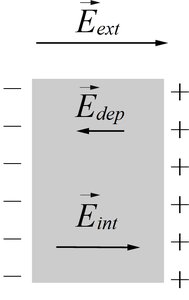
Dielectrics are materials without mobile charge carriers. An external field polarizes the atoms, inducing dipole moments that generate a depolarization field:
Net Internal Field:
Dielectric Constant:
Capacitance with Dielectric:
Electric Current, Resistivity, and Resistance
Electric Current and Current Density
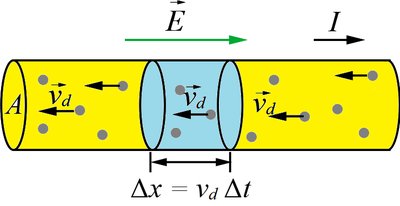
Electric current is the rate of charge transfer, and current density is the charge transferred per unit time through a unit surface:
Current:
Current Density:
Mobility, Conductivity, and Resistivity
Drift Velocity:
Conductivity: ,
Resistivity:
Resistance and Ohm's Law
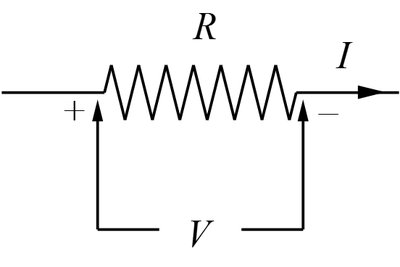
Ohm's Law:
Resistance:
Units:
Resistivity Temperature Dependence
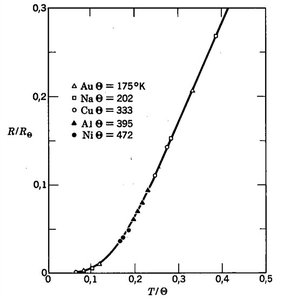
Resistivity of metals increases with temperature due to increased lattice vibrations:
Linear Relation:
Temperature Coefficient: varies by material
Electromotive Force (emf) and Batteries
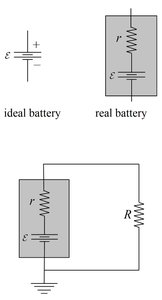
Ideal vs. Real Batteries
Real batteries have internal resistance, which affects the voltage delivered to a load:
Emf:
Current:
Short Circuit: ,
Open Circuit: ,
Joule Heating (Ohmic Heating)
Power Dissipated:
Resistor Networks and Kirchhoff's Rules
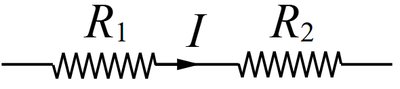
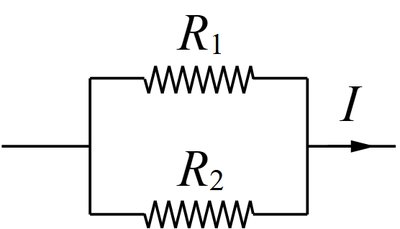
Resistors in Series and Parallel
Series:
Parallel:
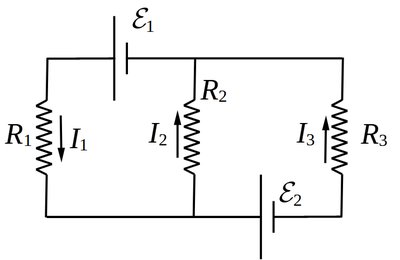
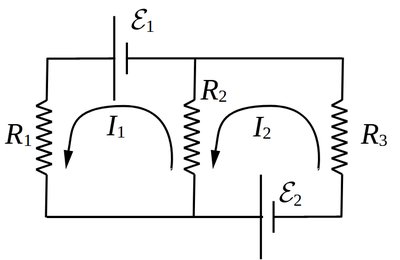
Kirchhoff's Rules
Junction Rule: (conservation of charge)
Loop Rule: (conservation of energy)
Algorithm: Divide circuit into loops, assign current directions, apply rules, solve equations
RC Circuits
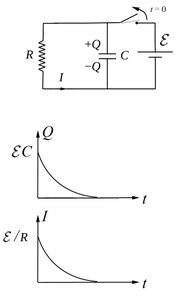
Discharging a Capacitor
Charge Decay: ,
Current Decay:
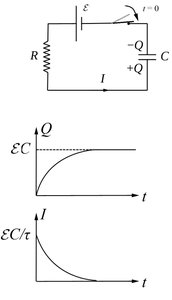
Charging a Capacitor
Charge Growth:
Time Constant:
Summary Table: Dielectric Constants of Common Materials
Material | Dielectric Constant (K) |
|---|---|
Air | 1.00006 |
Benzene | 2.28 |
Oil | 2-4 |
Glass | 5-10 |
Water | 80 |
Additional info: Academic context and expanded explanations were added to ensure completeness and clarity for exam preparation.
