 Back
BackElectromagnetic Induction and Its Applications
Study Guide - Smart Notes
 Tailored notes based on your materials, expanded with key definitions, examples, and context.
Electromagnetic Induction
Introduction to Electromagnetic Induction
Electromagnetic induction is the process by which a changing magnetic flux induces an electromotive force (emf) and, consequently, a current in a closed circuit. This phenomenon is fundamental to the operation of many electrical devices and is governed by Faraday's Law and Lenz's Law.
Magnetic Flux (ΦB): The measure of the magnetic field passing through a given area. It is defined as:
Induced emf: An emf is induced in a circuit whenever the magnetic flux through the circuit changes with time.
Constant magnetic flux does not induce a current; only changes in flux do.
Faraday's Law of Induction
Faraday's Law quantifies the induced emf in a circuit due to a changing magnetic flux:
N: Number of turns in the coil
ΦB: Magnetic flux through one loop
The negative sign indicates the direction of the induced emf as given by Lenz's Law.
Lenz's Law
Lenz's Law states that the direction of the induced current is such that it creates a magnetic field opposing the change in magnetic flux through the loop. This is a consequence of the conservation of energy.
Opposition Principle: Any induction effect opposes its cause.
If the magnetic field through a loop increases, the induced current will flow in a direction that creates a field opposing the increase.
Applications of Faraday's Law
Electric Generators: Devices that convert mechanical energy into electrical energy by rotating coils in a magnetic field.
Transformers: Devices that transfer electrical energy between circuits through electromagnetic induction.
Induction Stoves: Use changing magnetic fields to induce currents in metal pans, heating them directly.
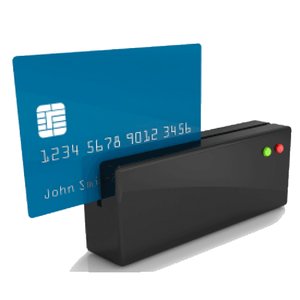
Magnetic Tape Readers and Credit Card Readers: Use electromagnetic induction to read data encoded in magnetic strips.
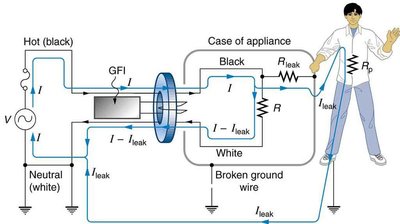
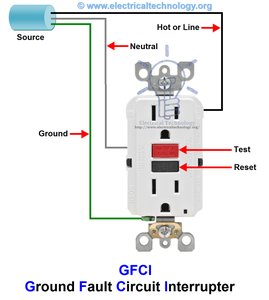


Methods of Inducing emf
1. Rotating Loop in a Magnetic Field (AC Generator)
When a loop of wire rotates in a magnetic field, the magnetic flux through the loop changes sinusoidally, inducing an alternating emf:
ω: Angular speed of rotation
A: Area of the loop
B: Magnetic field strength
2. Slide-Wire Generator (Motional emf)
A conducting rod moves through a magnetic field, changing the area of the loop and thus the magnetic flux. The induced emf is:
ℓ: Length of the rod
v: Speed of the rod
3. Moving Conductor in a Magnetic Field
When a conductor moves perpendicularly through a magnetic field, the charges inside experience a force, leading to a separation of charges and an induced emf:
4. Changing Area or Orientation of a Loop in a Magnetic Field
Changing the area of a loop or its orientation with respect to the magnetic field changes the magnetic flux, inducing an emf as described by Faraday's Law.
Induced Electric Fields
Nature of Induced Electric Fields
A changing magnetic flux induces an electric field, even in the absence of a conducting loop. This field is non-conservative and forms closed loops, unlike the electrostatic field from stationary charges.
Non-conservative Field: The work done by the induced electric field depends on the path taken.
Field Lines: Induced electric field lines form closed loops, not beginning or ending on charges.
Displacement Current and Maxwell's Equations
Displacement Current
To resolve inconsistencies in Ampere's Law for time-varying fields, Maxwell introduced the concept of displacement current, which accounts for the changing electric flux between capacitor plates:
Displacement current allows Ampere's Law to be valid even in regions where no conduction current exists, such as between capacitor plates.
Maxwell's Equations (Integral Form)
(Gauss's Law for Electricity)
(Gauss's Law for Magnetism)
(Faraday's Law of Induction)
(Ampere-Maxwell Law)
Eddy Currents
Definition and Applications
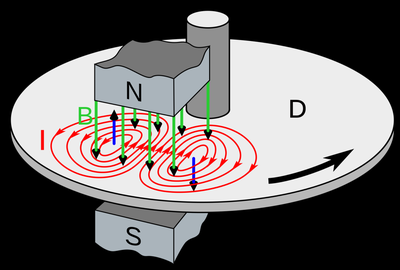
Eddy currents are circulating currents induced in large masses of conducting material when exposed to changing magnetic fields. These currents can cause energy losses due to heating but are also used in various applications.
Applications: Metal detectors, coin recognition, security scanners, electromagnetic braking systems, and induction heating.
Energy Loss: Eddy currents can cause unwanted heating in electrical machines and transformers.

Back emf (Counter emf)
Concept and Effects
Back emf is the emf induced in a coil or motor that opposes the change in current that created it, as described by Lenz's Law. This effect is crucial in the operation of electric motors and generators.
Motor Operation: When a motor starts, little back emf is present, so it draws a large current. As it speeds up, back emf increases, reducing the current draw.
Protection: Back emf prevents motors from drawing excessive current at normal operating speeds, protecting them from overheating.
Summary Table: Key Equations and Concepts
Concept | Equation | Description |
|---|---|---|
Magnetic Flux | Magnetic field through area A at angle θ | |
Faraday's Law | Induced emf in N loops | |
Motional emf | Emf from conductor of length ℓ moving at speed v | |
Induced Electric Field | Non-conservative field from changing magnetic flux | |
Displacement Current | Current equivalent from changing electric flux | |
Maxwell's Equations | See above | Fundamental laws of electromagnetism |
