 Back
BackElectromagnetism and Electric Circuits: Study Notes for College Physics
Study Guide - Smart Notes
 Tailored notes based on your materials, expanded with key definitions, examples, and context.
Magnetic Fields Due to a Current
Electromagnetism and Magnetic Fields
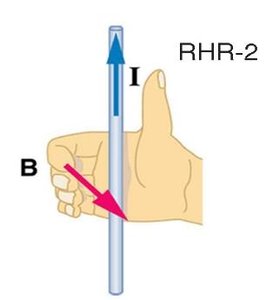
Electromagnetism explores the relationship between electric and magnetic fields. A key principle is that a current-carrying wire generates a magnetic field around it. The direction of this field can be determined using the Right-Hand Rule.
Right-Hand Rule: Point your right thumb in the direction of the current (I); your curled fingers indicate the direction of the magnetic field (B) around the wire.
Notation: A dot (⊙) represents current coming out of the page; a cross (⊗) represents current going into the page.
Like repels, opposites attract: This concept applies to both electric and magnetic fields.
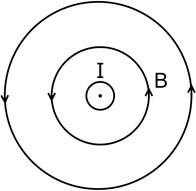
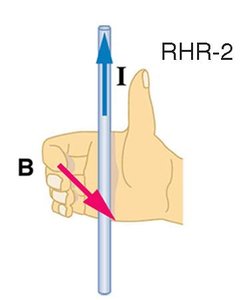
Sketching Magnetic Fields
Magnetic fields can be visualized using field lines. For a straight wire, the field forms concentric circles around the wire. For a loop or solenoid, the field lines become more complex.
Current Loop: The magnetic field inside the loop is stronger and points in a specific direction determined by the Right-Hand Rule.
Solenoid: A coil of wire (solenoid) produces a uniform magnetic field inside, with field lines running from one end to the other and looping back outside.
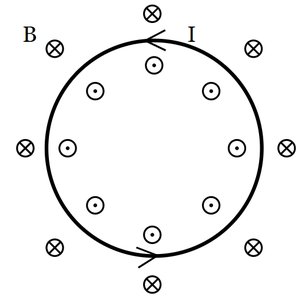
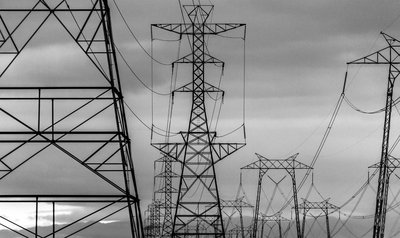
Environmental Impact of Overhead Electrical Cables
Effects on Wildlife and Communication
High-voltage power lines, while essential for electricity distribution, can negatively impact the environment:
Wildlife: Birds, especially large species, are at risk of electrocution or collision with power lines, resulting in thousands of deaths annually.
Radio Interference: Power lines can generate electromagnetic signals that interfere with nearby radio communications.
Faraday's Law of Electromagnetic Induction
Induced EMF and Magnetic Flux
Faraday's Law describes how a changing magnetic flux through a circuit induces an electromotive force (emf):
Induced EMF (ε): Generated only when the magnetic field through a conductor changes (e.g., moving a magnet near a coil).
Formula:
N = number of loops, φ = magnetic flux, Δt = time interval.
Magnetic Flux (Φ): Measures the number of magnetic field lines passing through a surface.
B = magnetic field strength, A = area, θ = angle between field and normal to the surface.
Unit: Weber (Wb).
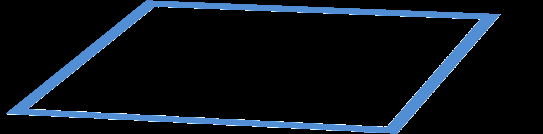
Why the Angle Matters
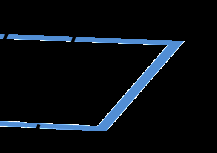
Only the component of the magnetic field perpendicular to the surface contributes to the flux. The parallel component does not affect the flux.
Direction of Induced Current (Lenz's Law)
The induced current always opposes the change in magnetic flux (Lenz's Law):
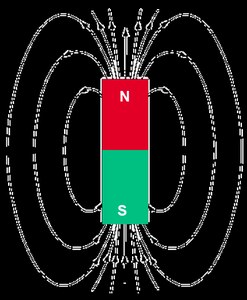
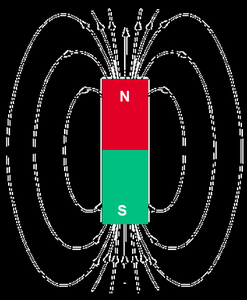
If a magnet's south pole approaches a coil, the coil generates a south pole to repel it.
If the south pole moves away, the coil generates a north pole to attract it.
Induced Current in a Solenoid
For a solenoid, use the Right-Hand Rule: fingers point in the direction of current, thumb points to the north pole. The induced current direction is such that it opposes the change in magnetic flux.
Ohm's Law and Electric Circuits
Ohm's Law
Ohm's Law relates the current (I), voltage (V), and resistance (R) in a circuit:
or equivalently,
Current (I): Rate of flow of charge (A).
Voltage (V): Energy per unit charge (V).
Resistance (R): Opposition to current flow (Ω).
Ohmic and Non-Ohmic Conductors
Ohmic Conductors: Obey Ohm's Law; resistance remains constant as voltage and current change (e.g., resistors).
Non-Ohmic Conductors: Do not obey Ohm's Law; resistance changes with voltage or current (e.g., light bulbs).
Series and Parallel Resistors
Resistors can be connected in series or parallel, affecting total resistance, voltage, and current:
Connection | Resistance | Voltage | Current |
|---|---|---|---|
Series | |||
Parallel |
Electrical Energy, Work, and Power
Work and Power in Electric Circuits
Work (W): Energy transferred when a charge moves through a potential difference.
Power (P): Rate at which work is done or energy is transferred.
Using Ohm's Law, power can also be written as:
Cost of Power Consumption
Electricity is billed in kilowatt-hours (kWh).
Cost = Power consumption (kWh) × Tariff (cents or rands per kWh).
Example: A 60 W bulb used for 2.5 hours at a tariff of 164.29 c/kWh costs:
Exam-Style Questions and Applications
Faraday's Law and Circuits
Calculation of induced emf, change in magnetic flux, and effects of changing coil windings.
Application of Ohm's Law and power equations to analyze circuits with series and parallel resistors.
Interpretation of circuit diagrams and calculation of energy, power, and cost in practical scenarios.
Key Equations Summary
(Faraday's Law)
(Magnetic Flux)
(Ohm's Law)
(Power)
Additional info: These notes integrate foundational concepts in electromagnetism and electric circuits, including environmental considerations and practical applications, suitable for college-level physics exam preparation.
