 Back
BackElectrostatics and Charge: Mini-Textbook Study Notes
Study Guide - Smart Notes
 Tailored notes based on your materials, expanded with key definitions, examples, and context.
Electrostatics
Introduction to Static Electricity
Electrostatics is the study of stationary electric charges and the forces they exert. It forms the foundation for understanding electric fields, charge interactions, and the behavior of materials under the influence of electric forces.
Static electricity refers to the accumulation of electric charge on the surface of objects.
Charges interact via attractive or repulsive forces depending on their nature.
Subatomic Particles and Charge
Structure of Atoms
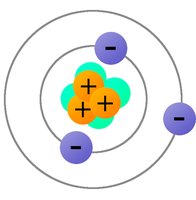
Atoms are composed of subatomic particles:
Electrons (e-): Negatively charged particles found in orbitals around the nucleus.
Protons (p+): Positively charged particles located in the nucleus.
Neutrality of Objects
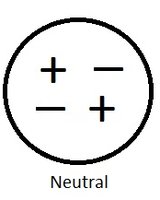
Most objects are electrically neutral, meaning they have equal numbers of protons and electrons.
Neutral objects: No net charge; the positive and negative charges balance each other.
Charging and Transfer of Electrons
Charging by Electron Transfer
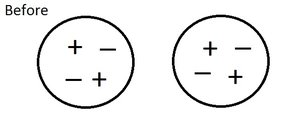
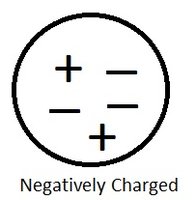
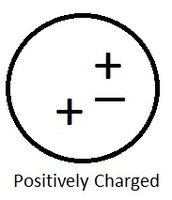
Objects can become charged by gaining or losing electrons.
Gaining electrons: Results in a negatively charged object.
Losing electrons: Results in a positively charged object.
Negative and Positive Charges
Negatively charged: More electrons than protons.
Positively charged: Fewer electrons than protons.
Law of Conservation of Charge
Charge Conservation Principle
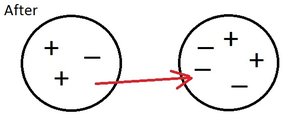
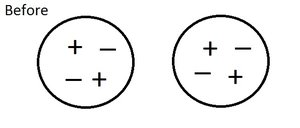
The total charge in a closed system remains constant. When electrons are transferred, the loss in one object equals the gain in another.
Conservation of charge: Charge cannot be created or destroyed, only transferred.
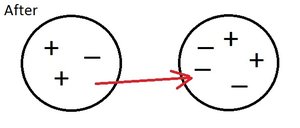
Methods of Charging
Friction
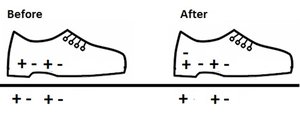
Charging by friction occurs when two objects are rubbed together, causing electrons to transfer from one to the other.
The object with a rougher surface (furrier) tends to lose electrons.
Conduction
Charging by conduction involves direct contact between a charged object and a neutral object, resulting in electron transfer.
The more negatively charged object loses electrons to the other.
Conductors and Insulators
Conductors
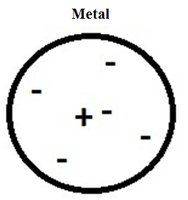
Conductors are materials, typically metals, that allow free movement of electrons.
Can be easily charged by contact or friction.
Insulators
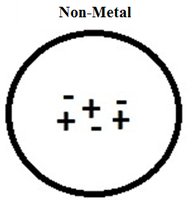
Insulators are materials, usually non-metals, with tightly held electrons that do not move freely.
Can be charged, but the charge does not move easily.

Grounding
Ground as a Charge Reservoir
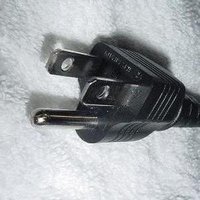
The ground acts as a large reservoir that can accept or supply electrons without becoming noticeably charged.
Used to neutralize objects by transferring excess charge.
Electrostatic Fields
Electric Field Lines
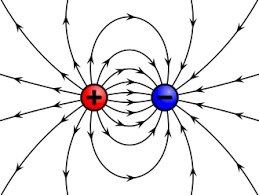
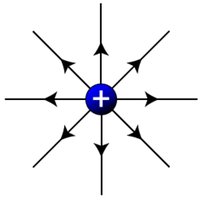
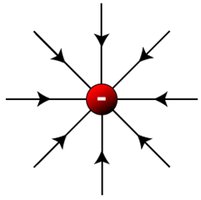
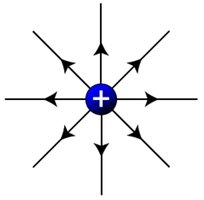
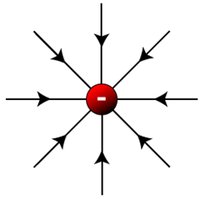
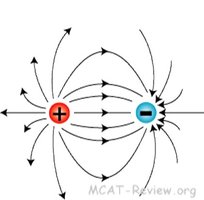
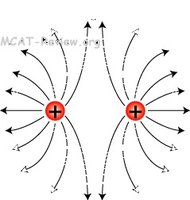
Electric fields represent the region around a charged object where forces are exerted on other charges.
Field lines point away from positive charges and toward negative charges.
Field Direction and Charge Interaction
Field lines originate from positive charges and terminate at negative charges.
Opposite charges attract; like charges repel.
Charge and Force Relationships
Direct Proportionality
The force between two charged objects increases as the magnitude of the charges increases.
Force is directly proportional to the product of the charges.
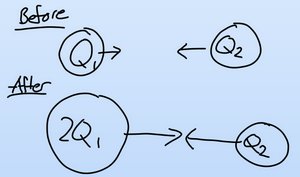
Inverse Square Law
The force decreases as the distance between the charges increases, following an inverse square relationship.
Force is inversely proportional to the square of the distance between charges.
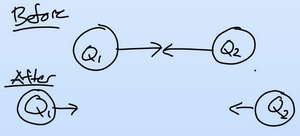
Coulomb's Law
Mathematical Expression
Coulomb's Law quantifies the force between two point charges:
Formula:
k: Coulomb's constant ( Nm2/C2)
q1, q2: Charges in coulombs (C)
r: Distance between charges in meters (m)
Example Calculation
Two objects each have a charge of 20.0 C. If the distance between them is 0.5 m, what is the force?
Using Coulomb's Law:
Summary Table: Charge Types and Properties
Type | Charge | Behavior |
|---|---|---|
Neutral | Equal e- and p+ | No net charge |
Negative | More e- than p+ | Attracts positive, repels negative |
Positive | Less e- than p+ | Attracts negative, repels positive |
Key Terms
Electrostatics: Study of stationary electric charges
Conductor: Material with free-moving electrons
Insulator: Material with tightly held electrons
Ground: Large reservoir for charge
Coulomb's Law: Mathematical law describing force between charges
