 Back
BackFinding the Components of Vectors from a Diagram
Study Guide - Smart Notes
 Tailored notes based on your materials, expanded with key definitions, examples, and context.
Q1. Compute the x- and y-components of the vectors \( \vec{A} \), \( \vec{B} \), \( \vec{C} \), and \( \vec{D} \) as shown in the diagram.
Background
Topic: Vector Components
This question tests your ability to break down vectors into their x- and y-components using trigonometric relationships. Understanding vector components is fundamental in physics, as it allows you to analyze motion and forces in two dimensions.
Key Terms and Formulas
Vector: A quantity with both magnitude and direction.
Component: The projection of a vector along the x- or y-axis.
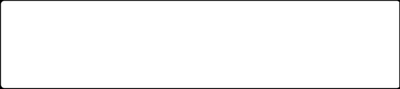
To find components:
\( V \) = magnitude of the vector
\( \theta \) = angle measured counterclockwise from the x-axis
Step-by-Step Guidance
Identify the magnitude and angle for each vector from the diagram:
\( \vec{A} \): 8.00 m, angle = 270.0°
\( \vec{B} \): 15.0 m, angle = 30.0°
\( \vec{C} \): 12.0 m, angle = 205.0°
\( \vec{D} \): 10.0 m, angle = 143.0°
For each vector, use the formulas for x- and y-components:
Plug in the values for \( \vec{A} \):
Repeat for \( \vec{B} \), \( \vec{C} \), and \( \vec{D} \) using their respective magnitudes and angles.
Check the signs of your components based on the quadrant in which each vector lies. For example, a vector pointing downward or to the left will have negative components.
Try solving on your own before revealing the answer!
Final Answer:
\( \vec{A} \): , m \( \vec{B} \): , m \( \vec{C} \): , m \( \vec{D} \): , m
Each component is calculated using the magnitude and angle provided, applying the cosine for x-components and sine for y-components. The signs reflect the direction of each vector in the coordinate system.
