 Back
BackFoundations of Physics: Measurement, Vectors, and Kinematics
Study Guide - Smart Notes
 Tailored notes based on your materials, expanded with key definitions, examples, and context.
Physical Quantities and Measurement
Introduction to Physics and Measurement
Physics is the study of matter, energy, and the fundamental laws governing natural phenomena. Measurement is central to physics, allowing us to quantify observations and compare results. Physical quantities are properties that can be measured and expressed with a numerical value and a unit.
Physical Quantity: Any property of a material or system that can be quantified by measurement (e.g., length, mass, time).
Unit: A standard quantity used to specify measurements (e.g., meter, kilogram).
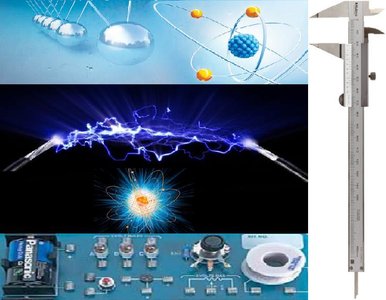
Measurement Tools: Devices such as calipers are used for precise measurement of length and dimensions.
SI Units: Basic and Derived Units
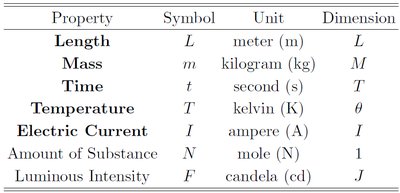
The International System of Units (SI) is the standard for measurement in science. It includes seven base units from which all other units (derived units) are constructed.
Property | Symbol | Unit | Dimension |
|---|---|---|---|
Length | L | meter (m) | L |
Mass | m | kilogram (kg) | M |
Time | t | second (s) | T |
Temperature | T | kelvin (K) | \theta |
Electric Current | I | ampere (A) | I |
Amount of Substance | N | mole (N) | 1 |
Luminous Intensity | F | candela (cd) | J |
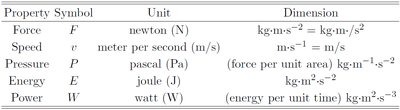
Derived units are combinations of base units, used for quantities like force, speed, pressure, energy, and power.
Property Symbol | Unit | Dimension |
|---|---|---|
Force (F) | newton (N) | kg·m·s-2 |
Speed (v) | meter per second (m/s) | m·s-1 |
Pressure (P) | pascal (Pa) | kg·m-1·s-2 |
Energy (E) | joule (J) | kg·m2·s-2 |
Power (W) | watt (W) | kg·m2·s-3 |
Unit Conversion
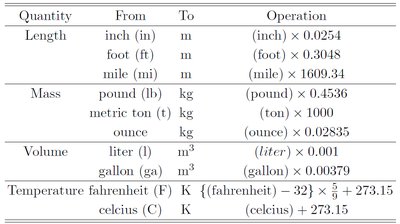
Unit conversion is essential for expressing measurements in different systems. Conversion factors are used to translate between units.
Quantity | From | To | Operation |
|---|---|---|---|
Length | inch (in) | m | (inch) × 0.0254 |
Length | foot (ft) | m | (foot) × 0.3048 |
Length | mile (mi) | m | (mile) × 1609.34 |
Mass | pound (lb) | kg | (pound) × 0.4536 |
Mass | metric ton (t) | kg | (ton) × 1000 |
Mass | ounce (oz) | kg | (ounce) × 0.02835 |
Volume | liter (l) | m3 | (liter) × 0.001 |
Volume | gallon (ga) | m3 | (gallon) × 0.00379 |
Temperature | fahrenheit (F) | K | {(fahrenheit) - 32} × 5/9 + 273.15 |
Temperature | celcius (C) | K | (celcius) + 273.15 |
Vectors: Composition and Resolution
Vector Representation and Addition
Vectors are quantities with both magnitude and direction (e.g., displacement, velocity, force). Scalars have only magnitude (e.g., mass, temperature).
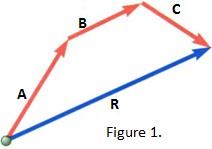
Graphical Method: Vectors are represented as arrows. The resultant vector is found by connecting vectors head-to-tail.
Resultant Vector: The single vector equivalent to the sum of two or more vectors.
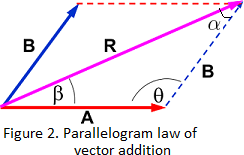
The parallelogram law of vector addition states that if two vectors are represented as adjacent sides of a parallelogram, their resultant is the diagonal from the same point.
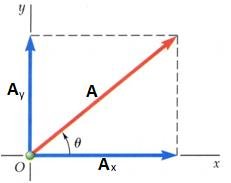
Components of a Vector
Any vector in a plane can be resolved into perpendicular components, usually along the x and y axes. The components are found using trigonometric functions:
x-component:
y-component:
Magnitude:
Kinematics: Motion in One and Two Dimensions
Free Fall Motion
Free fall is the motion of an object under the influence of gravity alone. The acceleration due to gravity near Earth's surface is downward.
Key Equations:
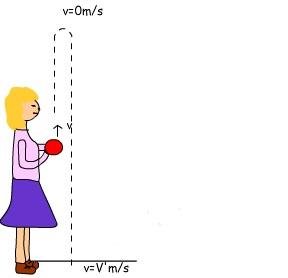
Example: A ball thrown upward returns with the same speed (but opposite direction) when it reaches the thrower's hand.
Projectile Motion
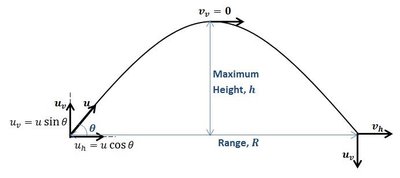
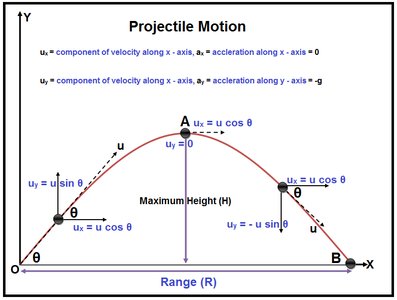
Projectile motion describes the two-dimensional motion of an object under gravity, with an initial velocity at an angle to the horizontal. The path is a parabola.
Horizontal motion: (no horizontal acceleration)
Vertical motion:
Maximum height:
Range:
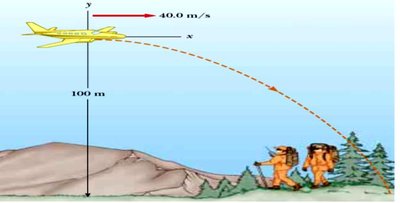
Example: A plane drops a package while flying horizontally. The package follows a parabolic path and lands directly below the point where it was released if there is no air resistance.
Forces and Newton's Laws
Types of Forces
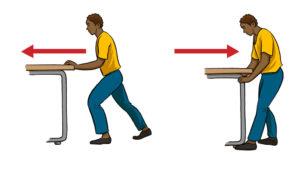
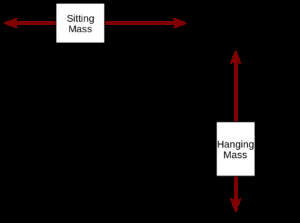
Forces can be contact (e.g., muscular, frictional, normal, tension, spring) or non-contact (e.g., gravitational, magnetic, electrostatic).
Muscular Force: Force exerted by muscles.
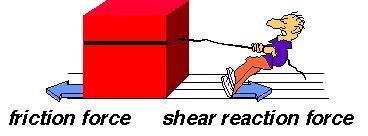
Frictional Force: Resists motion between surfaces.
Normal Force: Perpendicular to the surface.
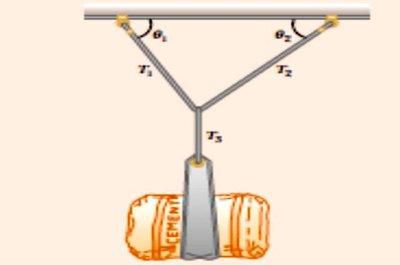
Tension: Force in a stretched string or cable.
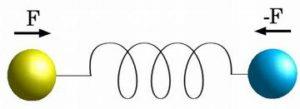
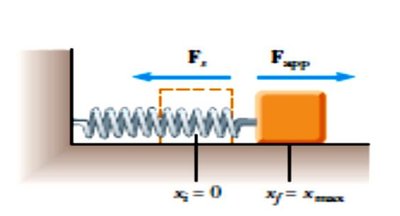
Spring Force: Restoring force in a spring (Hooke's Law: ).
Gravitational Force: Attraction between masses.
Electrostatic Force: Attraction/repulsion between charges.

Newton's Laws of Motion
First Law (Inertia): An object remains at rest or in uniform motion unless acted upon by a net force.
Second Law:
Third Law: For every action, there is an equal and opposite reaction.
Friction
Friction is the resistive force between two surfaces in contact. It is proportional to the normal force:
Static friction:
Kinetic friction:
Equilibrium and Tension
When an object is in equilibrium, the sum of all forces and torques is zero. Tension problems often involve forces at angles and require resolving components.
Gravitation and Planetary Motion
Kepler's Laws
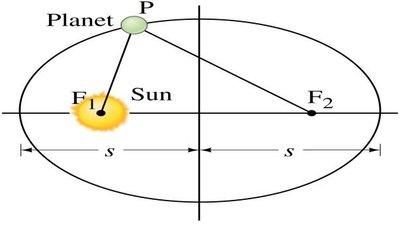
First Law: Planets move in ellipses with the Sun at one focus.
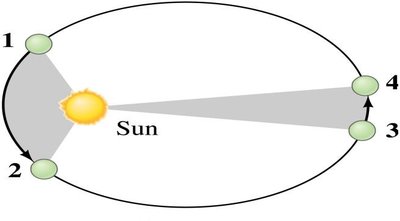
Second Law: A line joining a planet and the Sun sweeps out equal areas in equal times.
Third Law: (the square of the orbital period is proportional to the cube of the semi-major axis).
Weightlessness
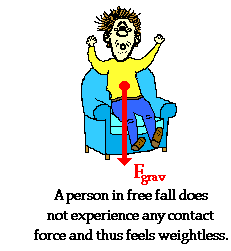
Weightlessness occurs when there is no contact force supporting an object, such as in free fall. The object experiences only gravity and feels 'weightless.'
Work, Energy, and Power
Work and Energy
Work:
Kinetic Energy:
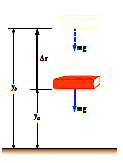
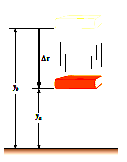
Potential Energy (gravity):
Conservation of Energy: Total mechanical energy is conserved in the absence of non-conservative forces.
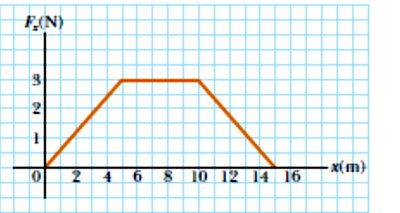
Work from Force-Displacement Graphs
The area under a force vs. displacement graph gives the work done by the force.
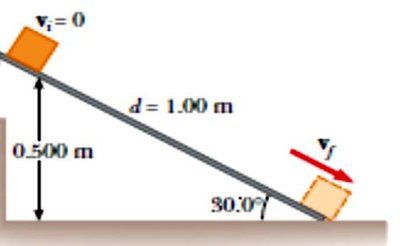
Inclined Planes and Energy
On an inclined plane, gravitational potential energy is converted to kinetic energy as an object slides down.
Momentum and Collisions
Elastic and Inelastic Collisions
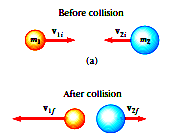
Elastic Collision: Both momentum and kinetic energy are conserved.
Inelastic Collision: Only momentum is conserved; kinetic energy is not.
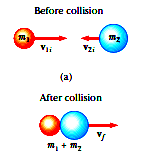
Perfectly Inelastic Collision: Colliding objects stick together after collision.
Center of Mass
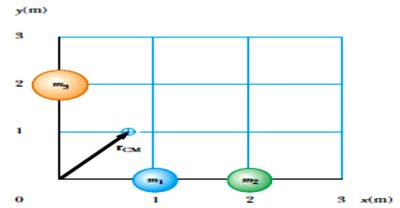
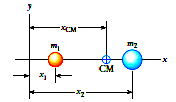
The center of mass is the point where the mass of a system can be considered to be concentrated for analysis of motion.
Additional info: This study guide covers the foundational topics in introductory physics, including measurement, vectors, kinematics, forces, energy, and momentum, with relevant images and tables to reinforce key concepts.
