 Back
BackFree Body Diagrams, Newton’s Laws, Friction, Springs, and Circular Motion
Study Guide - Smart Notes
 Tailored notes based on your materials, expanded with key definitions, examples, and context.
Free Body Diagrams and Newton’s Second Law
Introduction to Free Body Diagrams (FBDs)
Free Body Diagrams are essential tools in physics for visualizing the forces acting on an object. They help in applying Newton’s Second Law, which relates the net force on an object to its acceleration.
Newton’s Second Law:
Purpose of FBDs: Identify all forces, represent them as vectors, and resolve them into components to analyze motion.
Catalog of Common Forces
Force | Symbol | Formula | Description |
|---|---|---|---|
Weight | or | Force due to gravity, always downward | |
Spring | Force exerted by a spring, opposite to displacement | ||
Tension | or | Calculated via N2L | Force in a string, direction of string |
Normal | or | Calculated via N2L | Perpendicular to surface |
Kinetic Friction | Opposes motion, constant value | ||
Static Friction | Opposes start of motion, variable up to max |
Drawing and Interpreting Free Body Diagrams
To construct an FBD, represent the object as a dot or box and draw vectors for each force acting on it. The direction and relative length of each vector indicate the direction and magnitude of the force.
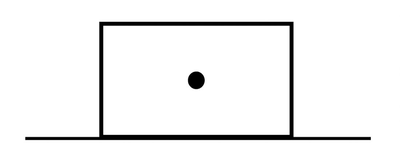
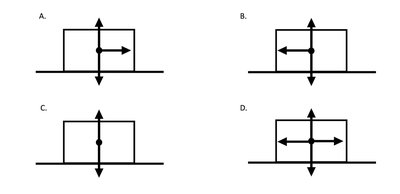
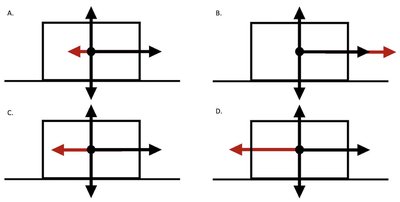
Example: A box sliding right on a rough surface. Which diagram is correct?
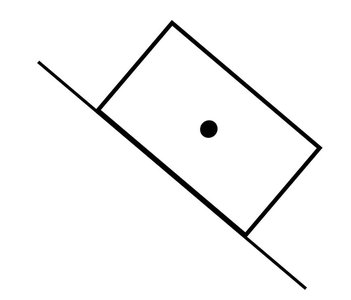
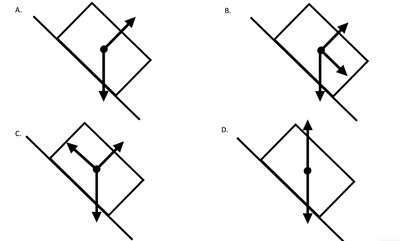
Example: A box sliding up a frictionless ramp. Which FBD is correct?
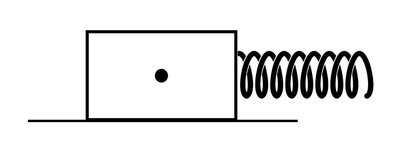
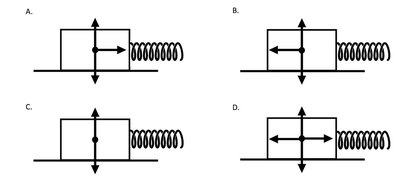
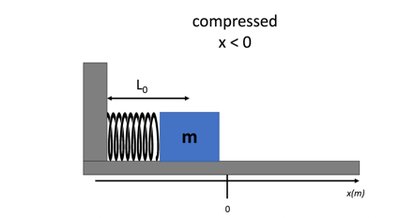
Example: A box compressing a spring. Which FBD is correct?
Component Analysis and Newton’s Second Law
For each FBD, resolve forces into x and y components. Apply Newton’s Second Law in each direction:
Friction: Static and Kinetic
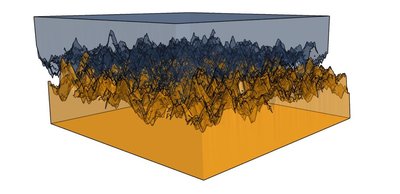
Nature of Friction
Friction is a resistive force between two surfaces. It depends on the normal force and the materials in contact (coefficient of friction ).
Kinetic Friction: (object is moving)
Static Friction: (object is at rest)
Friction in Free Body Diagrams
Friction always acts parallel to the surface and opposite to the direction of motion (or intended motion).
Examples of Friction in FBDs
Box at rest with external force applied:
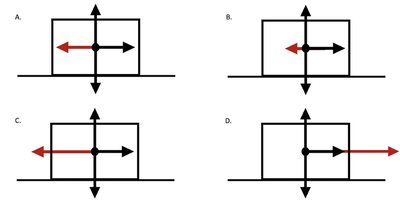
Box at rest with weaker external force:
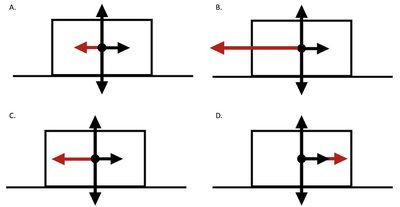
Box at rest with stronger external force:
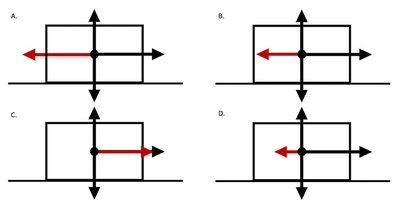
Box moving to the right and speeding up:
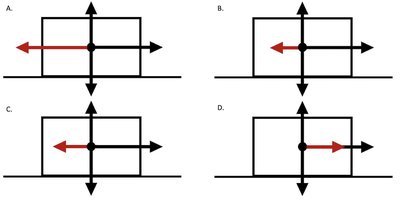
Box moving to the left and slowing down:
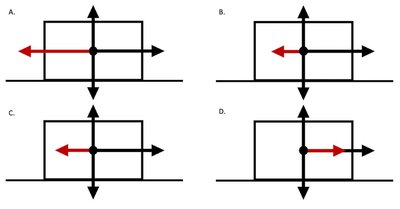
Box moving to the right at constant velocity:
Springs and Elasticity
Hooke’s Law and Spring Force
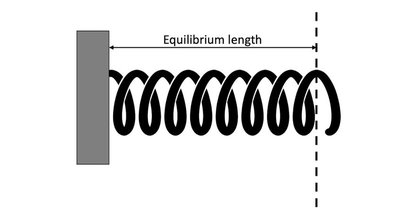
The force exerted by a spring is proportional to its displacement from equilibrium:
Hooke’s Law:
is the spring constant (N/m)
Spring Compression and Extension
When a spring is compressed or stretched, the force always acts to restore equilibrium.
Elasticity of Materials
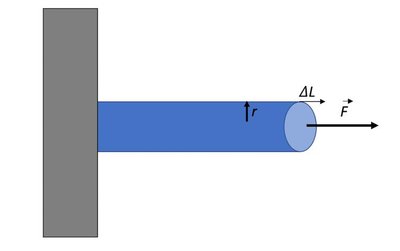
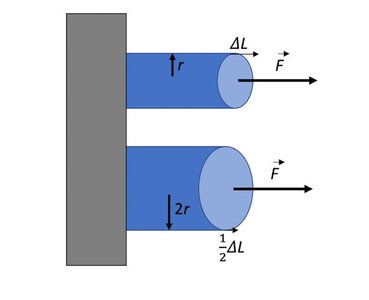
Materials deform under stress. The relationship between force, area, and deformation is described by Young’s modulus ():
Tensile stress: , Tensile strain:
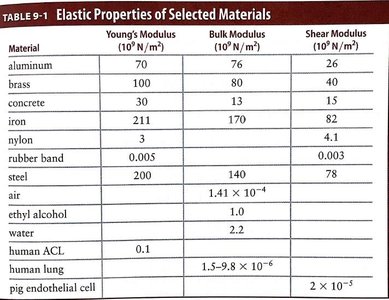
Elastic Properties Table
Material | Young’s Modulus ( N/m) | Bulk Modulus ( N/m) | Shear Modulus ( N/m) |
|---|---|---|---|
Aluminum | 70 | 76 | 26 |
Brass | 100 | 80 | 40 |
Concrete | 30 | 13 | 15 |
Iron | 211 | 170 | 82 |
Nylon | 3 | 4.1 | |
Rubber band | 0.005 | 0.003 | |
Steel | 200 | 140 | 78 |
Air | 1.41 × 10 | ||
Ethyl alcohol | 0.98 | ||
Water | 2.2 | ||
Human ACL | 0.1 | ||
Human lung | 1.5–9.8 × 10 | ||
Pig endothelial cell | 2 × 10 |
Circular Motion and Centripetal Force
Uniform Circular Motion
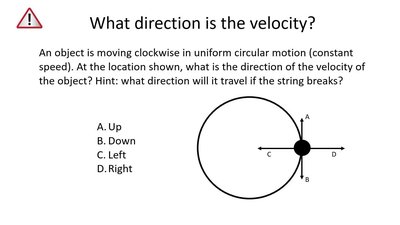
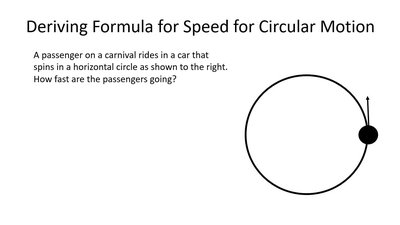
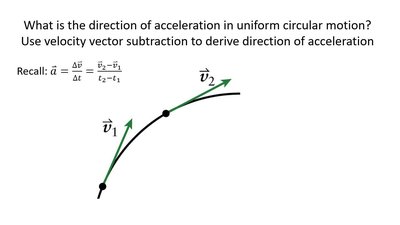
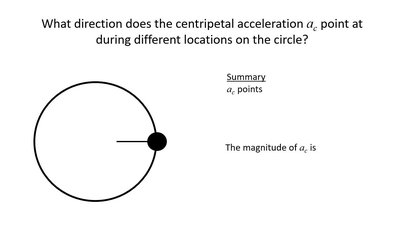
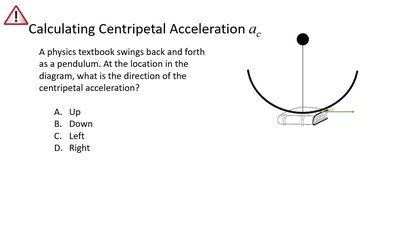
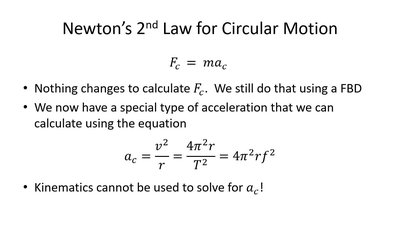
When an object moves in a circle at constant speed, it experiences a centripetal acceleration directed toward the center of the circle.
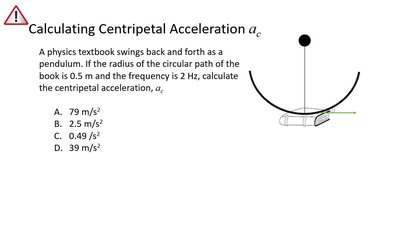
Centripetal Acceleration:
Centripetal Force:
Key Vocabulary
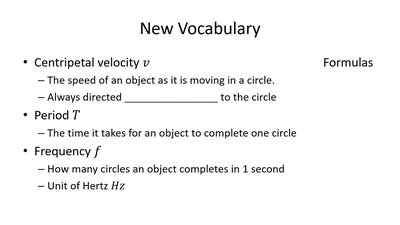
Centripetal velocity (): Speed along the circle, always tangent to the path.
Period (): Time for one complete revolution.
Frequency (): Number of revolutions per second (Hz).
Direction of Forces in Circular Motion
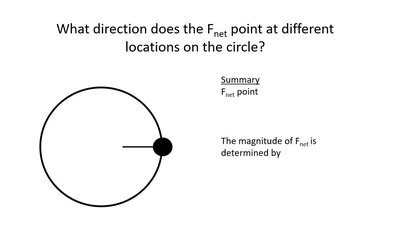
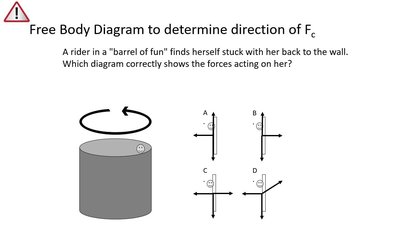
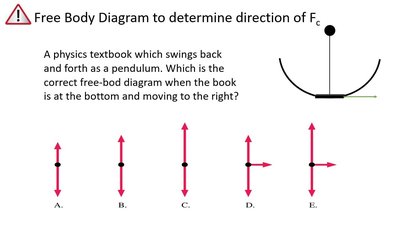
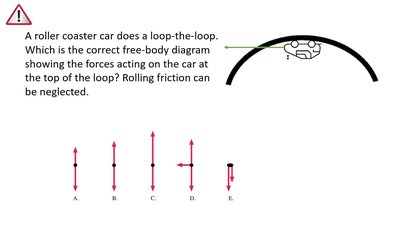
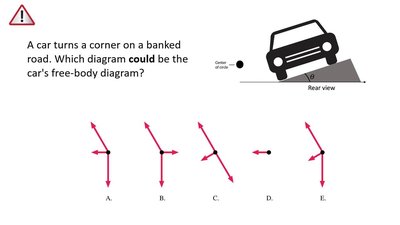
Both the net force and acceleration always point toward the center of the circle. Free body diagrams help identify the forces responsible for centripetal acceleration (e.g., tension, friction, gravity).
Newton’s Second Law for Circular Motion
Apply Newton’s Second Law to circular motion problems by identifying the net inward force and equating it to .
Common forces: friction (car on road), tension (string), gravity (orbit)
Applications: Orbits and Gravity
Uniform circular motion applies to planetary orbits, where gravity provides the centripetal force.
Example: For a car of mass making a turn of radius at speed , the frictional force required is .
Additional info: The study of free body diagrams, friction, springs, and circular motion forms the foundation for analyzing more complex systems in mechanics, including equilibrium, oscillations, and energy conservation.
