 Back
BackFundamentals of Physics I: Representing Motion, Measurement, and Vectors
Study Guide - Smart Notes
 Tailored notes based on your materials, expanded with key definitions, examples, and context.
Chapter 1: Representing Motion
Introduction to Physics and Course Structure
Physics is the study of the fundamental principles governing the natural world. This course introduces students to the foundational concepts of motion, measurement, and vectors, which are essential for understanding more advanced topics in physics.
Course Materials and Assignments
Required Materials: Scientific calculator, access to Mastering Physics, ExpertTA for labs, and the course textbook.
Homework: Regular assignments reinforce lecture material and are crucial for learning.
Quizzes and Exams: Weekly quizzes and three semester exams (lowest score dropped), plus a cumulative final exam.
Collaboration: Group work and communication skills are emphasized.
Measurements, Standards, and Units
Fundamental Quantities and SI Units
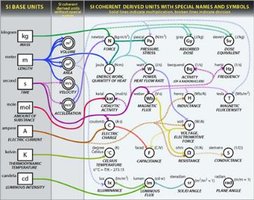
Physics relies on precise measurement of fundamental quantities: length, time, and mass. The International System of Units (SI) is the standard system used worldwide.
Length: Measured in meters (m).
Time: Measured in seconds (s).
Mass: Measured in kilograms (kg).
Modern Definitions of Units
Length: Defined by the distance light travels in a vacuum in 1/299,792,458 seconds.
Time: Defined by atomic transitions in cesium atoms.
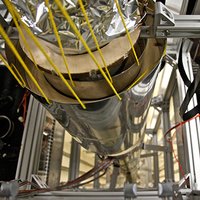
Mass: As of 2019, defined by the Planck constant using the Kibble balance.


Unit Prefixes and Orders of Magnitude
Prefixes are used to express larger or smaller units. Orders of magnitude help estimate and compare quantities.
Kilo- (k):
Milli- (m):
Micro- (μ):
Nano- (n):
Accuracy, Precision, and Significant Figures
Measurement quality is described by accuracy (closeness to true value) and precision (repeatability). Significant figures indicate uncertainty.
Multiplication/Division: Result has as many significant figures as the least precise factor.
Addition/Subtraction: Result has as many decimal places as the least precise term.
Exact Numbers: Do not affect significant figures.
Scientific Notation
Scientific notation simplifies writing very large or small numbers and clarifies significant figures.
For numbers greater than 10: Move decimal left, multiply by .
For numbers less than 1: Move decimal right, multiply by .
Estimation and Modeling in Physics
The Estimation Tool
Estimation uses personal knowledge to build numbers in complex situations. It helps develop intuition and decide what matters in modeling.
Use rough values and 1-digit arithmetic.
Check answers for reasonableness.
Order-of-magnitude estimates use the symbol for approximate values.
Example: Estimating Walking Speed
Estimate walking speed in meters per second using everyday experience.
Distance: 1 mile ( 1600 m)
Time: 30 minutes ( 1800 s)
Speed:
Motion: A First Look
Types of Motion and Trajectories
Motion is the change of an object's position or orientation with time. The path is called the trajectory.


Motion Diagrams and the Particle Model
Motion diagrams visually represent an object's position at successive times. The particle model simplifies objects to points for analysis.
Position, Coordinate Systems, and Time
Position is specified relative to an origin and direction. Coordinate systems use axes to mark positions. Time is labeled for each frame in a motion diagram.
Displacement and Time Intervals
Displacement: Difference between final and initial position:
Time Interval: (always positive)
Velocity and Speed
Uniform motion is constant speed in a straight line. Speed is how fast; velocity is speed with direction.
Average velocity:
Speed:
Scalars, Vectors, and Trigonometry
Scalars and Vectors
Scalars are quantities described by a single number and unit. Vectors have both magnitude and direction, represented by arrows.
Magnitude: Length of the vector
Direction: Orientation in space
Displacement Vectors
Displacement vectors show the straight-line distance and direction from initial to final position.
Adding Vectors
Place the tail of the second vector at the tip of the first.
Draw the resultant from the tail of the first to the tip of the second.
Vectors and Trigonometry
Trigonometry is used to calculate lengths and angles in right triangles, essential for vector analysis.
Pythagorean theorem:
Sine:
Cosine:
Tangent:
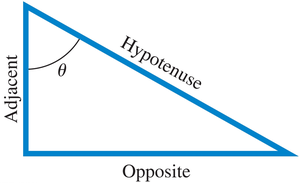
Example: Displacement Using Trigonometry
To find the net displacement when moving east then north, use the Pythagorean theorem and trigonometric ratios.
East: 90 m, North: 50 m
Resultant displacement: m
Angle: north of east
Velocity Vectors
Velocity vectors point in the direction of motion and have magnitude equal to speed.
Summary Table: SI Base Units and Derived Units
Quantity | Unit | Symbol |
|---|---|---|
Length | meter | m |
Time | second | s |
Mass | kilogram | kg |
Electric current | ampere | A |
Temperature | kelvin | K |
Amount of substance | mole | mol |
Luminous intensity | candela | cd |
Additional info: These notes cover the foundational concepts of Chapter 1: Representing Motion, including measurement, estimation, and vector analysis, as outlined in the course syllabus for Fundamentals of Physics I.
