 Back
BackHeat and Phase Changes: Physics Study Notes
Study Guide - Smart Notes
 Tailored notes based on your materials, expanded with key definitions, examples, and context.
Heat and Phase Changes
Phases of Matter
The concept of a phase refers to a homogeneous region of a substance with definite boundaries. In physics, phases are commonly understood as the distinct states of matter: solid, liquid, and gas. There are also special states such as plasma, glass, and liquid crystals. For example, water can exist in three familiar phases: ice (solid), liquid water, and water vapor (gas).
Solid: Molecules are tightly packed and vibrate in place.
Liquid: Molecules are less tightly packed and can move past each other.
Gas: Molecules are far apart and move freely.
One phase can change into another through a phase change or phase transition.
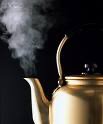
Conventional Phase Changes
In physics, conventional phase changes include:
Melting (Fusion): Solid to liquid
Freezing (Solidification): Liquid to solid
Boiling (Vaporization): Liquid to gas
Condensation: Gas to liquid
Sublimation: Solid to gas (without passing through liquid)
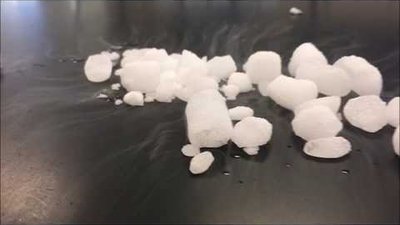
Sublimation is the transition of a substance directly from the solid to the gas phase, without passing through the intermediate liquid phase. For example, dry ice (solid CO2) sublimates because CO2 cannot exist in the liquid form at atmospheric pressure.
Phase Change and Temperature
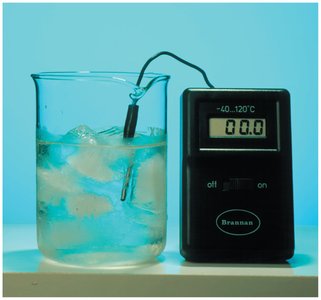
For any given pressure, a phase change occurs at a definite temperature, known as the point of phase transition. For example, at normal atmospheric pressure, water freezes at 0°C and boils at 100°C. During a phase change, heat must be supplied to the system, but the temperature does not change until the phase transition is complete.
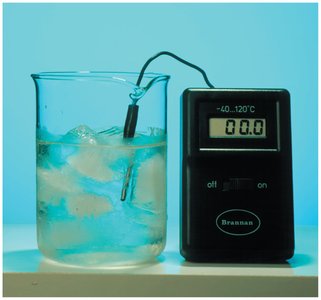
When ice at 0°C is heated, the temperature remains constant until all the ice melts.
At the phase transition point, added heat changes the phase, not the temperature.
Latent Heat
Latent heat (L) is the heat required to change the phase of a unit mass of a substance at the phase transition temperature. For example, the latent heat of fusion is the heat required to melt ice at 0°C. The heat transferred during a complete phase change is given by:
Latent heat of fusion (Lf): Melting/freezing
Latent heat of vaporization (Lv): Boiling/condensation
The formula for heat transfer during a phase change is:
where Q is the heat transferred, m is the mass, and L is the latent heat for the phase change. The ± indicates the direction of heat transfer (positive for heat entering, negative for heat leaving).
Heat of Fusion: Example with Gallium
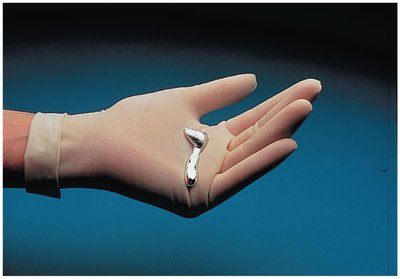
The metal gallium (Ga) is notable for melting at room temperature (29.8°C). Its latent heat of fusion is , much smaller than that of ice (). This means gallium requires less energy to melt compared to ice.
Latent Heat of Vaporization
During the phase change between liquid and gas (vaporization and condensation) at the boiling point, the heat of transformation is called the latent heat of vaporization (Lv). For water:
1 kg of liquid water at 100°C requires J to become water vapor at 100°C.
To heat 1 kg of water from 0°C to 100°C:
Less than one fifth of the energy required to vaporize water is needed to heat it from 0°C to 100°C.
This demonstrates that breaking intermolecular forces during vaporization requires much more energy than simply raising the temperature.
Boiling vs. Evaporation
Boiling and evaporation are distinct phenomena:
Boiling: Occurs only at the boiling point, throughout the entire volume, and requires input of energy (latent heat of vaporization).
Evaporation: Can occur at any temperature below the boiling point, is a surface effect, and involves the release of the highest energy molecules from the surface.
Evaporation causes cooling, such as feeling cold when stepping out of a swimming pool, because the fastest water molecules are removed from the skin.
Effect of Pressure on Phase Changes
The points of phase transitions are defined by both temperature and pressure. For example:
Normal boiling point of water is 100°C at 1 atm (101 kPa).
In Denver (1609 m elevation, 84 kPa), water boils at 95°C.
On Mount Everest (8848 m, 34 kPa), water boils at 71°C.
All combinations of pressure and temperature at which phase changes occur are found on the boundary curves in phase diagrams.
Phase diagrams graphically represent the regions of stability for each phase and the boundaries where phase transitions occur.
