 Back
BackHeat Transfer: Convection, Conduction, and Radiation- lecture 28
Study Guide - Smart Notes
 Tailored notes based on your materials, expanded with key definitions, examples, and context.
Heat Transfer Mechanisms
Overview of Heat Transfer
Heat transfer is a fundamental concept in thermodynamics, describing how thermal energy moves from regions of higher temperature to regions of lower temperature. There are three primary methods by which heat is transferred: convection, conduction, and radiation. Each method operates under distinct physical principles and is relevant in various natural and engineered systems.
Convection: Transfer of heat through the motion of fluids (liquids, gases, or plasma).
Conduction: Transfer of heat through direct physical contact.
Radiation: Transfer of heat via electromagnetic waves.
Convection
Principles of Convection
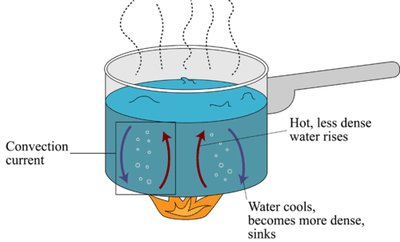
Convection is the process by which heat is transferred through the movement of a fluid. When a portion of the fluid is heated, its density decreases, causing it to rise due to buoyant forces. As the warmer, less dense fluid rises, cooler, denser fluid moves in to take its place, creating a convection current. This cycle repeats, efficiently transferring heat throughout the fluid.
Convection Current: The continuous flow of fluid caused by temperature-induced density differences.
Archimedes’ Principle: The buoyant force acting on the less dense, warmer fluid causes it to rise.
Example: Heating water in a pot demonstrates convection, as hot water rises and cooler water sinks, forming a convection current.
Examples of Convection in Nature
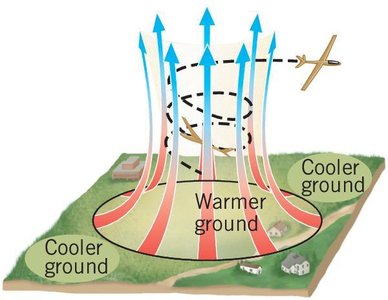
Convection is responsible for many natural phenomena, such as atmospheric updrafts and cloud formation. When the ground is heated by sunlight, the air above it warms and rises, creating updrafts that birds and gliders can utilize. These updrafts also contribute to cloud formation as water vapor is carried to higher, cooler altitudes and condenses.
Updrafts: Rising warm air due to convection.
Cloud Formation: Water vapor condenses in cooler altitudes.
Example: Gliders use updrafts created by convection to stay aloft.
Convection in the Sun
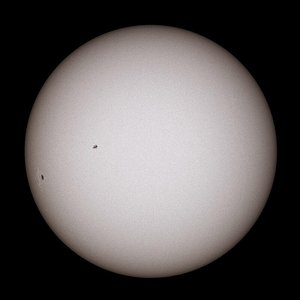
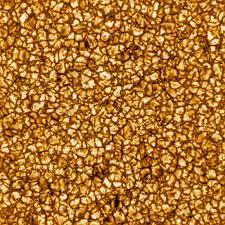
Convection also occurs in the Sun, where hot plasma rises and cooler plasma sinks, forming granules visible on the solar surface. This process is essential for energy transport within stars.
Solar Granules: Patterns on the Sun's surface caused by convection currents.
Conduction
Principles of Conduction
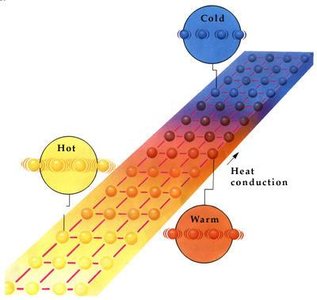
Conduction is the transfer of heat through direct contact between materials. It occurs when molecules in a material vibrate and transfer energy to neighboring molecules. In metals, free electrons also play a significant role in transferring heat.
Molecular Vibration: Heated molecules vibrate and transfer energy to adjacent molecules.
Free Electrons: In metals, electrons move freely and transfer heat efficiently.
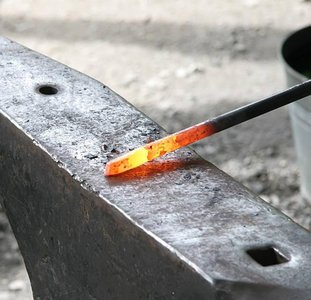
Example: Heating one end of a metal rod causes the other end to become warm due to conduction.
Factors Affecting Conduction
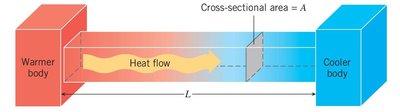
The amount of heat transferred by conduction depends on several factors:
Time (t): Duration of heat transfer.
Temperature Difference (ΔT): Between the ends of the material.
Cross-sectional Area (A): Area through which heat flows.
Length (L): Distance between the hot and cold regions.
Thermal Conductivity
Thermal conductivity (k) is a property that measures how well a material conducts heat. Materials with high thermal conductivity are called thermal conductors, while those with low conductivity are thermal insulators.
Thermal Conductors: Metals like copper and silver.
Thermal Insulators: Materials like wool and Styrofoam.
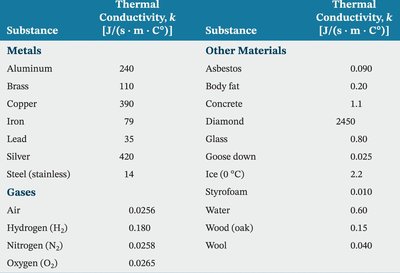
Substance | Thermal Conductivity, k [J/(s·m·°C)] |
|---|---|
Aluminum | 240 |
Copper | 390 |
Diamond | 2450 |
Water | 0.60 |
Wood (oak) | 0.16 |
Wool | 0.040 |
Air | 0.0256 |
Styrofoam | 0.025 |
Glass | 0.80 |
Steel (stainless) | 14 |
Silver | 420 |
Lead | 35 |
Iron | 79 |
Brass | 110 |
Asbestos | 0.090 |
Body fat | 0.20 |
Concrete | 1.1 |
Goose down | 0.025 |
Ice (0°C) | 2.2 |
Calculating Heat Transfer by Conduction
The amount of heat Q transferred by conduction is given by:
Q: Heat transferred (Joules)
k: Thermal conductivity (J/(s·m·°C))
A: Cross-sectional area (m2)
ΔT: Temperature difference (°C)
t: Time (s)
L: Length (m)
Conduction Example: Composite Wall
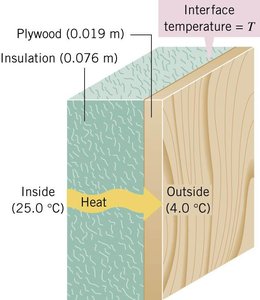
When heat flows through a composite wall (e.g., plywood and insulation), the interface temperature must be determined to calculate the total heat transfer. The heat flow through each layer is equal, and the interface temperature is found using:
Once the interface temperature is known, the heat conducted through the wall can be calculated using the formula above.
Radiation
Principles of Radiation
Radiation is the transfer of heat via electromagnetic waves, such as photons. Unlike convection and conduction, radiation does not require a medium and can occur in a vacuum. All objects emit photons, and the energy carried by these photons constitutes radiant heat.
Emitters: Objects that give off energy via radiation.
Absorbers: Objects that receive energy via radiation.

Emissivity and Absorption
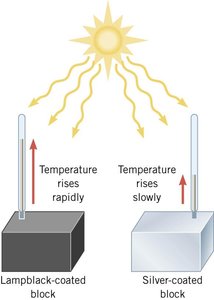
The ability of a material to emit or absorb radiation is characterized by its emissivity. Materials with high emissivity are good emitters and absorbers, while those with low emissivity are poor emitters and absorbers. Reflective materials (e.g., silver) have high albedo and absorb less radiation, while dark materials absorb more.
Emissivity (e): Ratio of an object's radiated energy to that of a perfect blackbody (unitless, 0 to 1).
Albedo: Reflectivity of a surface.
Blackbody Radiation
A blackbody is an idealized object that absorbs all incident electromagnetic radiation and emits the maximum possible energy. Blackbodies are perfect emitters and absorbers, and their emission is described by the Stefan-Boltzmann law.
Perfect Blackbody: Absorbs all EM waves; appears black due to no reflection.
Real Objects: May approximate blackbody behavior but are not perfect.
Stefan-Boltzmann Law
The total heat Q radiated by an object is given by:
e: Emissivity (unitless)
σ: Stefan-Boltzmann constant ( J/(s·m2·K4))
T: Temperature (K)
A: Surface area (m2)
t: Time (s)
For net radiant power when an object is hotter than its surroundings:
Radiation Example: Stellar Luminosity
Stars are treated as blackbodies, and their luminosity (intrinsic brightness) is calculated using:
The ratio of luminosity between two stars (e.g., VY Canis Majoris and the Sun) is:
This allows comparison of their brightness based on radius and temperature.
